
10 Great Quotes About Poets, Poetry, and Writing by Karl Shapiro

Today’s post is the fourth in a series of interviews with poets reposted on this blog that originally appeared in the Virtual Poetorium. This interview with poet Therese Gleason was first published a little over two years ago in the May 26, 2022 edition of the Virtual Poetorium (I hope you will enjoy reading it)…
Therese Gleason is author of two chapbooks: Libation (2006), selected by Kwame Dawes as co-winner of the South Carolina Poetry Initiative chapbook competition, and Matrilineal (Finishing Line, 2021). She was a finalist in the 2022 Wolfson Press chapbook competition, and received an honorable mention for the 2020 Frank O’Hara Prize from The Worcester Review. Her work has appeared/is forthcoming in 32 Poems, Indiana Review, Rattle, New Ohio Review, Painted Bride Quarterly, America, and elsewhere. Originally from Louisville, KY, Therese currently works as literacy teacher at an elementary school in Worcester, MA, where she lives with her spouse and three children. She reads for The Worcester Review and has an MFA in Poetry from Pacific University. Find her online at theresegleason.com. Copies of Therese’s most recent chapbook Matrilineal may be purchased online through her publisher Finishing Line Press by clicking here.
RON: My first question is so who is Therese Gleason anyway?
THERESE; Mom of three, poet, educator, quasi-southerner with a midwestern twist, wife, double-twin (I’m a twin and the mother of twins), friend, unofficial family historian, astrology buff, non-native Spanish speaker, former marathon runner, erstwhile vegetarian, sweet tooth, inveterate napper, ceiling gazer, not necessarily in that order.
RON: Where have you come from, (meaning what city and state)?
THERESE: I was born in Springfield, Illinois, moved to St. Louis, Missouri when I was a toddler, and then spent most of my formative years in Kentucky, growing up in Louisville and then attending the University of Kentucky in Lexington for my undergraduate degree in Spanish and my masters in English. I also spent a summer living in Cape Coast, Ghana, and lived two years in Madrid, Spain, two years in Washington, D.C., and over a decade in Columbia, South Carolina. We moved to Worcester from South Carolina five years ago this summer for my husband to take a position directing the International Development, Community, and Environment department at Clark University, and I’m proud to call central Massachusetts home. I heart Worcester!
RON: Who influenced your abilities in writing?
THERESE: I am fortunate to come from a family of readers and lovers of literature and art. I grew up being read to from as far back as I can remember, including my father reading me and my two sisters picture books and then The Little House on the Prairie series when we were in preschool. My mother is a voracious reader and I have always marveled at her ability to completely lose herself in a book – probably a survival mechanism for a mother of five. She took us to the library practically weekly and we read rather than watch much T.V., which she limited stringently.
My grandfather, too, was a huge influence, never failing to ask me (and his other two-dozen plus grandchildren and great-grandchildren), what I was reading. He introduced me to Emily Dickinson and Elizabeth Barrett Browning, whose poems he could quote by heart. A medic in World War II at age nineteen, he went on to father seven children and have a long career as a cardiologist, after which, in his retirement, in between learning French and golfing daily, he wrote three memoirs and was at work on his fourth at the time of his death. Not long before he died, he passed the torch to me when I congratulated him on his third self-published book, saying “you’re next.”
RON: Who is your most loved poet (or poets) and why?
THERESE: This is so hard to answer…but it’s probably Stanley Kunitz, for his humanity, imagination, intelligence, and the beauty of his language and insights. I could go on for pages about all the others I also adore…so I’ll spare everyone and stick with just one.
RON: Do you have children and do you write anything for them? Or about them?
THERESE: I have three spirited children who amaze me and make me laugh every day: my oldest daughter is thirteen and my twins, a boy, and a girl, just turned ten. They sometimes find their way into my writing, but I don’t tend to write things specifically for them.
RON: How much time do you spend writing? Like, do you write every day?
THERESE: I write almost every day, but that has not always been true. When my children were younger, I had long dry spells of not reading or writing poetry. I find it’s an ongoing process to carve out the time and space I need to write while being flexible based on my other roles and responsibilities, namely parenting and teaching literacy/reading intervention to students with dyslexia and other learning differences.
RON: Paul, do you have any questions you’d like to ask Therese?
PAUL: Yes, thank you, Ron. I do have a few… Therese, can you tell us what it is like to pursue your Master of Fine Arts in Writing, and do you think that is something every poet should do?
THERESE: I couldn’t speak to what other poets should do, but I am infinitely grateful that I took the plunge and have been able to pursue my MFA at Pacific University. I pondered doing this for years, and finally decided on a low-residency format, to allow me to keep working and taking care of my family while learning from a roster of poets so outstanding that I literally pinch myself that I get to study with them: Kwame Dawes, Mahtem Shiferraw, Marvin Bell, Dorianne Laux, Joseph Millar, Ellen Bass, and Shara McCallum, to name a few. In fact, I sought out Pacific University knowing Kwame Dawes was on the faculty, having been fortunate to work with him before. My main goals in undertaking the MFA were to cultivate a daily/near daily and regular reading and writing practice that I can sustain and maintain in the midst of ‘real life’ and my other family and work responsibilities; to improve my craft, and to find a community that supports and inspires me.
So far, one year into the program, I can say my investment is already paying off in spades. I am so glad I gave myself this gift and fortunate to have this opportunity. The way the program works is that over two years, we attend five intensive, in-person residencies with daily workshops, craft talks, and readings of 10 days each, which happen to be in beautiful Forest Grove and Seaside Oregon. During each of the four semesters, we are matched with a faculty mentor and advisor, with whom five packets of work are exchanged throughout the semester; these include about 4-6 poems each, and three reading commentaries on poetry collections. Each semester, our faculty advisors help us create a reading list of 20 books; third semester includes a critical essay and the fourth semester includes a creative thesis. The program at Pacific has an inimitable combination of rigor and warmth and is genuinely friendly and supportive while also challenging each writer to be their best.
PAUL: Do you ever do research while writing a poem, and if so, are there any particular subjects that you learned a lot more about now because of your poetry?
THERESE: I have benefited from the extensive genealogical research that my great aunt did on my maternal line: I have used the citations in her two meticulously researched books as a springboard for continued digging via ancestry.com and other online and archival sources. This has informed a cycle of poems (some of which were featured here), and that I am continuing to work on. Something I learned through this research is that one branch of my family has deep roots in New England going back to the earliest days of the colonies, with involvement in such formative events as the Salem witch trials and the American Revolution.
PAUL: Can you tell us a bit about your process of writing a poem (especially how you usually begin)?
THERESE: Well, usually I begin writing by hand in a composition notebook, one of those speckled black and white ones with a mechanical pencil, sometimes from a prompt and sometimes when the spirit moves me. Then I move to the computer and type the poem, which allows me to manipulate the lines and language more easily. I tend to make many versions and changes, sometimes printing poems out and marking them up, sometimes emailing them to myself and reading them over and over at different times of day and in different places. I also read my poems out loud to try to refine the lineation and sonic elements. I’m lucky to have a couple of wonderful writing groups in which we read and share comments on each other’s work every week/biweekly. Having community to help refine the work and be in conversation with other poets is something I sought for a long time, and I am grateful to have this in my life now.
PAUL: How did your chapbook Libation come about? For instance, is this a collection of poetry you previously wrote, or did you write poems specifically for this chapbook?
THERESE: I didn’t set out to write a chapbook; Libation (Stepping Stones Press, 2006) came about from my daily journaling and poetry writing during the summer of 2000, when I spent May to August in Cape Coast, Ghana, with my now-husband Ed Carr, who was working on archaeological and ethnographic research in two small villages called Ponkrum and Dominase, just inland from Cape Coast. I carried my notebook everywhere and crafted poems out of my observations and experiences. I returned to Kentucky and workshopped some of the poems in my classes led by James Baker Hall, with a phenomenal group of peers. Then for two years the poems sat while I taught English in Madrid. When we moved to Columbia for my husband to take a position at the University of South Carolina, I was incredibly lucky to encounter the South Carolina Poetry Initiative at the university, headed by Kwame Dawes.
This is kind of like a fairy tale, but he graciously offered to read my manuscript and provided detailed, generous feedback. I also participated in the SC Poetry Initiative’s First Book Project, a small (free, open to the public) group of poets with manuscripts they were working to arrange into collections. We took turns reading each other’s manuscripts and providing feedback on the order and coherence of the pieces as a whole as well as making other editorial suggestions. It was led by Ed Madden, an incredible poet and teacher, and several of us ended up getting published afterward. I entered my chapbook in the inaugural South Carolina Poetry Initiative Chapbook Competition, and it was a co-winner, selected by Kwame Dawes and published by the Poetry Initiative at the University of South Carolina. It was a dream come true and a combination of luck and timing that I happened to be in the right place at the right time to access such a marvelous poetry community. I didn’t quite realize at the time how unusual and charmed my experience was, but I do now, and will always be grateful.
Dear Readers,
Here is the link to our very first edition of the International Imaginarium for Word & Verse (which is the new name for the Virtual Poetorium) posted last night on our brand new Imaginarium website for you to hopefully peruse and enjoy at your leisure: https://internationalimaginarium.blogspot.com/2022/07/the-international-imaginarium-for-word.html
I want to thank my fellow bloggers John Ormsby for being the Imaginarium’s very first featured poet, Angela Wilson (AKA poetisatinta) and Noah Sweet for contributing to the Imaginarium’s very first group poem, and (Gypsie) Ami Offenbacher-Ferris, and Diane Puterbaugh for participating in the Imaginarium’s very first open mic. I have decided not to repost the entire International Imaginarium here on this blog as I have often done with previous editions of the Virtual Poetoriums because I feel that it is probably too long a read and thus far too overwhelming for most of my readers (as a result, some really excellent poetry might be skipped, and that would be a real shame). So instead, I will just post the poem that I closed this month’s Imaginarium with. With the Virtual Poetorium, I normally would close with a poem of my own, but I’ve been thinking a lot about my mom and dad recently, especially since their 63rd wedding anniversary would have been just a bit over a week ago on July 19th. They both passed away quite a few years ago, my father in 1993 and my mother in 2013. Although I don’t know if my father did (he was fairly secretive, and might have hidden it from me), my mother wrote poetry throughout her life and was a big influence on me becoming a poet myself. In fact, she was often my co-host when I ran my first poetry venue The Poet’s Parlor. So I decided to close the first Imaginarium with what was probably my mom’s most popular poem (and one of my own personal favorites) with many people fondly remembering it and requesting for her to read it at The Poet’s Parlor throughout its thirteen years of existence (I hope you will enjoy it as much as they did and I still do):
I have declared a war on slugs,
not bugs or drugs, but slugs.
You know those nasty things
that look like snails without a shell?
At least, you can eat snails
(if you like that sort of thing).
I can’t see much purpose for slugs.
They leave a slimy goo behind them
everywhere they go. Even on your hands
if you touch them. It won’t wash off,
even with soap and water.
The stuff has to be scraped off.
Every time I pick cherry tomatoes,
I get a handful of slime & slugs,
and have to throw away all
the tomatoes that they touched.
I tried picking the slugs by hand
into a tin can, but it’s real messy
even with a plastic bag covering my hand.
One day I picked over 250 slugs,
but there was still hundreds crawling around.
I figured there had to be a better way,
finally deciding to try a friend’s advice.
“Get a quart bottle of the cheapest beer”
She said. “Go to the discount liquor store,
it’s cheaper there than the grocery store.
Put the beer in a pie tin,
and watch the slugs go at it.”
So at the age of 72,
I bought my very first bottle of beer.
I didn’t know what to ask for.
Rather embarrassed, I asked for
the cheapest, biggest bottle they had.
I tried to explain what it was for,
but the cashier, a young man, just stared at me
A customer told me where the beer was.
I picked up one bottle, paid for it,
then got out of there fast, my face burning.
First I tried a couple of shallow pans.
The slugs soon found it, drank & left.
It seemed to me they were much happier.
Then I used narrow deeper bowls,
sinking them down into the ground.
This time they drank, fell in, and drowned.
In a couple of days, the little bowls were
packed like sardines with dead slugs.
I then needed more beer. This time I marched
into the discount liquor store, my head held high.
I went right to the beer, picking up two bottles.
Two young men and several customers
were at the check-out counter. When I paid
for my beer, I didn’t even explain
what the beer was for. As I was leaving,
they said “ Have a good evening, Lady,
have fun!” I really didn’t care this time
what they thought because the beer really works!
Although the battle isn’t over,
I’m sure I’m winning the war:
“The slugs ate my tomatoes.
They just ate and ate.
Because of that,
they sealed their fate.
I threw a party
and served them beer.
So now, the slugs
are no longer here.”
—Pauline Szlosek

Dear Readers,
I’d like to invite all of you to participate in our very first edition of what was previously known as the Virtual Poetorium under its new name of The International Imaginarium For Word & Verse this month (to be posted on our brand new Inaginarium website on the evening of July 26th) with John Ormsby, a very talented writer, poet, and blogger (originally from Canada but now living in the United Kingdom) as our featured poet.
To be part of our Imaginarium open mic this month,, please send us one to three of your own original poems or stories (under 2000 words altogether please) either in a Word document file or pasted in the body of an email along with your name, any opening remarks you care to make, and where your poem has appeared if it was previously published to poetorium@mail.com by Sunday, July 24th.. Also if you like, you can send us a photo of yourself to be posted above your poem, but that is totally optional.
We will also need contributions for our very first Imaginarium Group poem. We will be trying something a bit different this month, and write a group ekphrastic cento (ekphrastic meaning inspired by a work of art such as a photo, painting, or sculpture while a cento is a patchwork poem consisting completely of lines taken from other poems or writing). To participate, please write and send us a six-line poem inspired by the following photo:
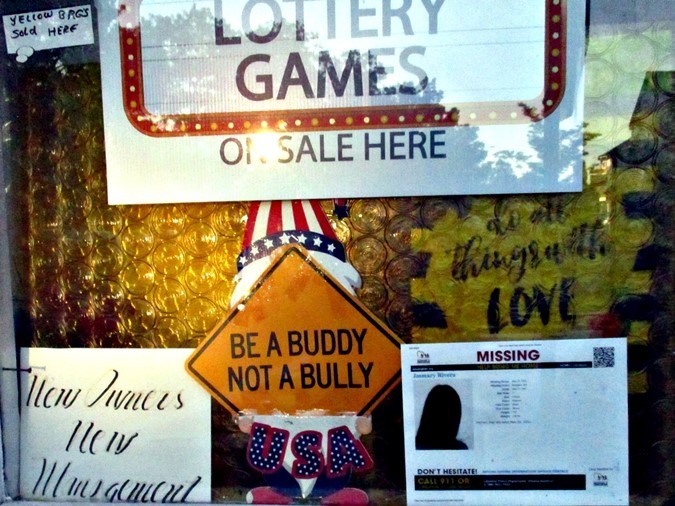
At least one line (but probably more) from each submission will then be taken and rewoven into one long seamless, flowing poem that hopefully can stand on its own by the editor (which in this case will be me). We will retain our usual policy on anonymity that we used for the Poetorium group poem, but that is totally optional, and poets can receive credit for their contribution and have their individual poems published alongside the collaborative poem if they wish. Please try to send me your individual poems by Sunday, July 24th, so I will have time to edit the resulting cento. Also kindly let me know if you want to have your identity known and/or your original poem published.
If you have any questions about submitting to the virtual open mic, the group Imaginarium poem, or anything else about the International Imaginarium For Word & Verse itself, please leave them in the comments of this post, and I will try to answer them right away.
Thank you so very much for reading, folks! As always, I really appreciate everyone’s continued support of this blog, and hope to hear from you soon with your contributions to our very first edition of the International Imaginarium!

My dear readers, please forgive me for being so neglectful! It’s hard for me to believe, but I haven’t posted a post on invented poetry forms (a series that has always been the mainstay of this blog) here on “Paul’s Poetry Playground” since last February, so it’s certainly time for me to do another one. Today I will discuss the Mariannet, a name I coined for the previously unnamed poetic form that the poet Marianne Moore created to write her classic poem “The Fish” first published in 1918. Since the form was invented over a hundred years ago, it isn’t exactly new, but in many ways, it will be to most poets, because as far as I can tell, I may be the first to start writing them again since Moore.
The mariannet is an isosyllabic rhyming poem, consisting of one or more five-line stanzas (quintains) with one syllable in the first line, three in the second, nine in the third, six in the fourth, and eight in the fifth and final line. The first two lines rhyme with each other, and so does the third and fourth, but the fifth is nonrhyming and does not rhyme with any other lines. Thus its rhyme scheme can be expressed as aabbx for each individual quintain (with x representing the nonrhyming line). In Moore’s original formatting of the form, the third and fourth lines were indented five spaces and the fifth ten spaces. Unfortunately, such formatting would be very difficult for me to do in WordPress, so I’m treating the indentations as optional. However, if you are writing one, and you can indent, I highly recommend that you do – it will make your own mariannet more authentic and pleasing to the eye. To serve as a model for your own attempt at the form, here is the very first mariannet ever written, Marianne Moore’s The Fish (sadly, sans indentations):
After reading such a poetic masterpiece as “The Fish”, I doubt you will need any more inspiration to try your hand at writing your own mariannets. But in case you do, here are my own humble (and obviously inferior) attempts at the form:
So what do you think of the mariannet, my dear readers? Like with all the invented poetry forms that I have the pleasure of introducing to you on this blog, I sincerely wish you will try writing one for yourself, and if you do, please don’t hesitate to share. I hope you enjoyed this post, and thank you so much for reading!
Dear Readers,
I have some major news about the Poetorium to announce! First, it’s official – our live Poetorium at Starlite shows will finally begin again (after a hiatus of two years due to Covid) with our first show to be on Thursday, June 30th, 2022, from 7 pm to 10 pm at the newly reopened Starlite Bar and Art Gallery at 39 Hamilton Street in Southbridge, MA. With this new development, you may be wondering “What will happen to the Virtual Poetorium now that the live Poetorium shows are beginning again?”. Although there certainly won’t be one next month in June, I am committed to continue doing them at least for now, already having scheduled some wonderful featured poets for July and August. After that, we may still stay monthly (with occasional hiatuses) until the end of the year, but next year in 2023, it most likely will change to quarterly, with a new edition every March, June, September, and December (with perhaps a special Halloween-themed Scaretorium in October). It will also probably undergo a name change to avoid confusion with the live Poetorium shows. I promise I’ll keep you updated on this blog as the status of the Virtual Poetorium changes, but meanwhile, here is the link to the May 31st, 2022 edition of the Virtual Poetorium posted last night on the Poetorium website for you to hopefully peruse and enjoy at your leisure: https://poetorium.home.blog/virtual-poetorium-may-31-2022/
I want to thank my fellow bloggers (Gypsie) Ami Offenbacher-Ferris, Poetisatinta, Goutam Dutta, Selma Martin, and tommywart for graciously accepting my invitation to participate which I previously posted on this blog. Once again, I have decided not to repost the entire Virtual Poetorium here on this blog as I have often done with previous editions because I feel that it is probably too long a read and thus far too overwhelming for most of my readers (as a result, some really excellent poetry might be skipped, and that would be a real shame). So instead, I will just post this month’s Poetorium group poem (which is always one of my favorite segments of the Poetorium). I’m not exactly sure why, but for some reason, the response to the group poem this month was tremendous with the number of contributions being probably the most we ever had, and making this perhaps our longest group poem yet. I want to thank Karen Durlach, Ariel Potter, Tom Ewart, Robert Eugene Perry, Howard J Kogan, Selma Martin, Angela (aka Poetisatinta), and the slew of others who wish to remain anonymous for contributing and making the following poem possible:
May is the month,
Most pleasant passage
Spring coolness bridged
To Summer’s swelter
Offering a brief glimpse
Of a temperate paradise.
May is the month
To take nature by the hand
Dancing into silent space
Wearing blossom as a gown
And hawthorn
As your
Crown.
May is the month
Of our mothers and May flowers,
Of forsythia and bloodroot,
Violets and sentimentality,
Both genuine and commercial.
May is the month
To tend the garden,
Pull the tools from the shed,
Pinch the weeds from the ground,
Watch your arteries as they harden,
Probe for parasites that are ahead
Of time, boring into the soiled bed
Of your body, leaving you to cast around
For straws that won’t leave you dead.
May is the month
I mourn my mother,
Alive but estranged,
Close in miles
But faraway in heart.
May is the month
Of war on Ukraine
And here at home the war
On the last seventy years
Of progress in democracy.
It’s a May that makes me mad.
May is the month
The air conditioner goes in
And we are not yet
Sick of the heat.
May is the month
The cat escapes onto the air conditioner
And balances on the box outside the window
Until tempted back inside with a bowl of cool milk.
May is the month
My beloved and I sip
Lime rickeys, listening
To a creepy podcast
While the box fan spins.
May is the month
You begin to sweat at the bus stop
(Masks suggested but not required)
As people board the WRTA
Bound for downtown.
May is the month
Sweaters go ignored
At the Goodwill, and
Thrifters sort through
Secondhand sunglasses and visors,
Shorts and sun hats.
May is the month
Of come what may,
Swan song for Spring,
Harbinger of Summer.
May is the month
Of maybes, but a maybe that will be:
There be rain, there be sun
There be color, there be breeze.
There be hellos, there be smiles
There be you, and there be me.
There be less worry, there be more love
There be fecundity, there be more hope.
May is the month
Of “May Be”:
May you be safe
May you be healthy
May you be happy
May you be blessed
May you find peace
May you find courage
May you find joy
In May, may you Be.
May is the month
Of may we, oh! may we unfurl our treetop leaves to bask in the sun?
May we, oh! may we thrust our tender green tips out through warmed soil?
May we, oh! may we blossom brightly and smile,
Welcome widely to dragonflies, butterflies, wasps, and bees?
Yes, oh yes!
May is the month of YES.
—The May 2022 Virtual Poetorium Group Poem

Since both the Virtual Poetorium interviews with James R. Scrimgeour and Jonathan Andersen, which I previously reblogged here on this blog, seemed to be fairly popular with readers, I am following them up today with a more recent interview I did with the poet & novelist Robert Eugene Perry that originally appeared just a few months ago in the February 22, 2022 edition of the Virtual Poetorium (I hope you will enjoy reading it)…
Robert Eugene Perry is a native of Massachusetts. Both a talented novelist and poet, his first novel Where the Journey Takes You, a spiritual allegory combining poetry and prose, was published in 2007. This was followed by three collections of poetry The Sacred Dance: Poetry to Nourish the Spirit in 2008, If Only I Were a Mystic, This Would All Come So Easy in 2011, and Surrendering to the Path released by Human Error Publishing in 2020. His latest book Earthsongs, also published by Human Error Publishing in March 2022 (a month after this interview) is a collection of 50 of his poems as well as 50 companion black and white sketches by his artist friend Ferol Anne Smith (All his books can be purchased online via links found on his website: https://roberteugeneperry.myportfolio.com) Perry hosted a poetry group for disabled individuals at the former New England Dream Center in Worcester MA, and has emceed the monthly Open Mic at Booklovers’ Gourmet in Webster MA since May 2017. Three poems were included in NatureCulture/ Human Error Publishing 2021 anthology Honoring Nature. Two of Perry’s poems were published in Poetica Magazine’s 2020 Mizmor anthology. He has had several poems published in Worcester Magazine, and his short story “In The Company of Trees” was published by WordPeace journal in 2021. A metaphysical poet, he draws inspiration from nature endeavoring to reveal connections between our higher selves and the natural world. He is a devoted husband and father of two grown boys.
PAUL: Good evening, Bob! My first question for you tonight is who or what first inspired you to start writing poetry?
BOB: I was 12, seventh grade English class writing assignment. We had just finished reading some famous poems by Frost, Dickinson, and William Carlos Williams. I especially remember “This Is Just To Say”, I had never heard anything like it.
The first poem I wrote was called “Night”. It went something like: “Night is calling/ the bats are hunting/ the owls are hooting/ something is moving/ is it man or beast?/ I’ll never know/ it’s going away.” My teacher loved it. Everyone else gave me a hard time because it didn’t rhyme.
PAUL: Who are some of your favorite poets and can you tell us why you like them?
BOB: So I will start with my two favorite poets, both of which I was fortunate enough to do Dead Poets segments at the live Poetorium in Southbridge: Mary Oliver and T.S. Eliot.
On the surface, their poetry may seem to be disparate. Upon closer examination, they both write about faith, connection, and our place in the universe. I discovered Eliot in High School, where I took on The Waste Land out of hubris (the most difficult choice given) and waited until the last minute to start it. My professor gave me a D, which was actually more than it deserved. Through the years I have read & reread most of his other works, and found a depth, unlike any other poetry, especially in Four Quartets.
I came late to the Mary Oliver party, only discovering her in the last decade. Her connection to Creation and ability to use language to describe it is beyond compare. These are the only two poets that I have multiple volumes and return to again and again.
I am very fond of poetry anthologies for two reasons: discovering poets who resonate with me, and also hearing many voices not only broadens my perception of the universe, but it also keeps me from trying to emulate anyone else’s style. I am grateful to have poems included in two anthologies over the past couple years: Poetica magazine’s 2020 Mizmor Anthology: Spirituality in Nature and the NatureCulture/ Human Error Publishing 2021 anthology Honoring Nature.
I also receive two daily emails and one monthly to keep up on current poetry: poets.org, Writer’s Almanac, and Gratefulness.org. Poems that move me I will share to Facebook, and so encourage others to discover modern poets.
PAUL: How has your writing style changed and progressed throughout the years?
BOB: As I mentioned earlier, the first poem I wrote did not rhyme. I spent the next ten years or so working on rhyme scheme, meter, and cadence until I reached what I felt was the apex in Cold Seasons of Self. The next decade was honing narrative, finding the cadence in blank verse, finding the correct words to express what was going on inside me. I would define these two decades as my intellectual quest for expression and connection.
My poetry mirrored my faith journey, which moved from Agnostic to Pentecostal (at age 21) to Non-Denominational to Catholic to Episcopalian to Who Gives A Damn About A Label (my current home).
My first two chapbooks were more religious in nature, as that was the way I expressed myself at the time. I have used the term metaphysical poet for the last few years as it most adequately describes the place where I am coming from: trying to see how the divine manifests in creation, and express that through whatever means possible – generally using allusions, symbols, and metaphors from nature.
PAUL: How would you personally define “Poetry” and for you what do you feel are its most important aspects (imagery, rhythm, word choice, etc.)?
BOB: To define a thing is to try and put it in a box. Some things should be left wild & free to develop in whatever way they grow. I know that you are an aficionado of poetry forms, so I hope that does not rub you the wrong way!
For me, it is always about the message first. No matter how well crafted, or true to poetic form, if I cannot understand what the poet is saying (on some level) then it will leave me cold. The message does not have to be obvious, but it has to be there.
The next in importance is cadence, it has to have some type of flow to move it along. Imagery is wonderful for getting immersed into the poem itself. A rightly placed word is like finding a gem along the path.
PAUL: How would you describe the poetry you are currently writing?
BOB: I just sent a new manuscript off to Human Error Publishing, called Earthsongs. It is a collection of 50 poems and 50 black and white sketches with my artist friend Ferol Anne Smith. This was an extraordinary venture, because it caused both of us to view our art through the eyes of one another.
The majority of the poems are nature-themed, so certain images naturally presented themselves. She used many of my photos from my weekly walks in the woods as springboards, but some were intuitively grasped from the message of the poem.
It was absolutely a labor of love, we would confer about the sketches and we found that we were in sync in almost every instance. I am in awe of her gift, and it moved me as a poet to see how the message came across and translated into the image.
PAUL: Do you recall the first poem you ever had published? Could you tell us where it appeared, and if possible, share it with us now?
BOB: The first poem that won an award was published in an International internet forum called the Poets of Mars. The poem is called Quest, and was the January 2019 winner…
Restlessness aside, this day is all I own
to try and piece the mystery
of all that’s right in front of me
the passion and calamity
each single heart has known.
Preposterous indeed, to attempt to understand
the music of the spheres
and if god interferes
when the verdict of the years
lies beyond my mortal span.
Indescribable, this joy, that masquerades as pain
the veil of this uncertainty
longing for eternity
deep and wide as any sea
the risk could all be vain.
Ineffable, this grace, which launched a foolish quest
to seek out a connection
between each path’s direction
towards the divine reflection
and find my soul at rest.
—Robert Eugene Perry (originally published on the Poets of Mars internet forum)
PAUL: Have you developed a regular writing routine, and if so, can you describe it to us?
BOB: I sit by the French River every day after work, listening to the river flow. I do that in all four seasons, each season has its own beauty and voice. In fine weather I will walk in the woods after work or on the weekends.
Some days a poem will come, some days it will not. I always have pen & paper. I never worry. If I am in the mood to write, I will write even if it does not seem particularly good. Those words are sometimes the inspiration for another poem down the line.
PAUL: What is your actual writing process like, and how do you go about starting and shaping a poem?
BOB: Almost always the title of a poem will suggest itself to me with a basic idea of what I want to write. Sometimes these come out of meditation, walking in the forest, sitting at the beach, or a situation in my daily life.
I write the title down, and if there is a start to the poem I will include that. Most times it is just the title, and writing it down makes a concrete intention to create something. When I was younger, the most important thing was to express that which was deep inside. Now when I write, connecting with others is paramount.
The poem itself takes its shape and form as it is being created. I never start out saying I am going to use this form or that style. The poem has a life & voice of its own, and when it is released into the Universe it will affect people differently according to where they are in their own journey.
For the final edit (and also along the way) nothing is more important than reading the poem out loud. I will catch errors, inconsistencies and rhythm/meter problems easier that way. It is also great practice for reading out at open mics & such.
PAUL: How important do you feel revision is in writing poetry, and how do you know when a poem is finished?
BOB: I know some poets who never revise, and others who edit to the point of distraction. I had one friend who spend so much time on a particular poem she said she thought she “edited all the goodness out of it”!
I think once the poem finds its voice, it is important to edit the structure and cadence so as to reveal the intonation of the poem in the written form. When a person reads it, they should be able to hear the way I would read it out loud in their head.
PAUL: Could you tell us about any poetry or writing projects you are currently working on?
BOB: I mentioned Earthsongs has been sent to the publisher, I anticipate the book being available sometime in March 2022. I have scheduled a book launch party at Booklovers’ Gourmet in Webster MA for April 2nd. We will have two sessions 1-2 and 3-4 PM so promote a more intimate atmosphere and to provide smaller crowds. It will be multimedia, with Ferol showing her sketches on a large screen while I read.
The next book of poems I am working on are more confessional in nature, a little more edgy. I think it is important to look for different ways of expressing myself and making that connection with others.
PAUL: What advice would you give to someone who is just beginning to write poetry?
BOB: Read everything you can. Anthologies are wonderful, because you are exposed to so many different voices. If you are just starting out, write every day. Keep a journal, oftentimes your thoughts will turn into poems. Also, when keeping a journal you are less likely to throw away poems that you think are no good.
I used to throw away tons of poems before I came to my current way of doing things. Find your own way of doing things. Crossing things out is a wonderful way of helping the poem to evolve, you can see your progress that way. If you crumple it up and throw it out it is gone forever.
PAUL: My final question of the evening is there any question that you would like to answer about your life, or poetry, or anything else that I have failed to ask you during this interview? If so, please answer it for us…
BOB: Nothing is ever wasted. Every single life experience, no matter how painful or humiliating can be used to help another along the path. Poetry is art, and all art is meant to be expressed and shared with another. We absolutely need each other.

Dear Readers,
I am very pleased to announce that we will be producing a May edition of the Virtual Poetorium this month (to be posted on the Poetorium website on the evening of the 31st) with Kevin King, a very talented novelist and poet from New Hampshire (author of the novel All the Stars Came Out That Night and the collection of poetry Ursprache) as our featured poet. Once again like I have done in previous months, I am going to once again open up May’s Virtual Poetorium for anyone who would like to participate and extend an invitation to all my fellow bloggers and faithful readers (or just anyone just happening to be reading this) to be a part of our unique online poetry gathering in print.
To be part of our virtual open mic this month, please send us one to three of your own original poems or stories (under 2000 words altogether please) either in a Word document file or pasted in the body of an email along with your name, any opening remarks you care to make, and where your poem has appeared if it was previously published to poetorium@mail.com by Friday, May 27th. Also if you like, you can send us a photo of yourself to be posted above your poem, but that is totally optional.
We will also need contributions to this month’s Poetorium Group poem. This month, the group poem will tentatively be titled “May Is the Month”. To participate, please send us one to eight lines with the first line starting with either the phrase “May is the month of…”, “May is the month for…”, or “May is the month to…”. All contributions (which will remain anonymous unless otherwise requested) will be compiled and included in this month’s Virtual Poetorium Group Poem. Once again, the deadline for submissions is the night of Friday, May 27th.
If you have any questions about submitting to the virtual open mic, the group Poetorium poem, or anything else about the Virtual Poetorium itself, please leave them in the comments of this post, and I will try to answer them right away.
Thank you so very much for reading, folks! As always, I really appreciate everyone’s continued support of this blog, and hope to hear from you soon with your contributions to this month’s edition of the Virtual Poetorium!
Dear Readers,
Here is the link to the April 26th, 2022 edition of the Virtual Poetorium posted last night on the Poetorium website for you to hopefully peruse and enjoy at your leisure: https://poetorium.home.blog/virtual-poetorium-april-26-2022/.
I want to thank my fellow bloggers (Gypsie) Ami Offenbacher-Ferris, poetisatinta, and tommywart for graciously accepting my invitation to participate which I previously posted on this blog. Once again I have decided not to repost the entire Virtual Poetorium here on this blog as I have often done with previous editions because I feel that it is probably too long a read and thus far too overwhelming for most of my readers (as a result, some really excellent poetry might be skipped, and that would be a real shame). So instead, I will just post this month’s Poetorium group poem (which is always one of my favorite segments of the Poetorium). I want to thank Karen Durlach, Dwayne Szlosek, Ariel Potter, Howard J Kogan, and poetisatinta for contributing and making the following poem possible (I hope you will enjoy it):

I
Pinching out early weeds from the March mud,
Wet roots giving up easily,
Leaving naked beds to welcome new seed
Careful to leave the rosettes of jagged leaves
That promise of dandelion,
Their golden smile not a weed here
Until their white fluff flies off
To harass the neighbors.
II
Do the mayflowers tremble
When they hear the dandelion roar?
III
Dandelions delight the early bees, frustrate the lawn perfectionist
delight the poet by rhyming with Mayan and Zion
implying there there is a dandelion
in play in the deepest yellow-headed way
IV
“Do not cut off the dandelions’ heads!”
I cried to my father at five years old.
“They are tiny yellow Muppets,
And I love them…”
V
Dandelions are a nuisance to a perfect lawn.
But such a perfect pretty flower of bright yellow
It is bright like the sun,
but if you put the dandelion flower under your chin
your chin will become yellow with fun.
People want to know how it is done.
And you will tell them it is magic
(That’s how it’s done…)
VI
The dandelion’s feathers
have already flown
their offspring rise
and lean towards the sun
peeking over wild grass
sunbeams – everyone.
—The April 2022 Virtual Poetorium Group Poem

