An “International Imaginarium For Word & Verse” Interview With Poet Kate Gregoire

Today’s post is an interview with poet Kate Gregoire that was originally published a little under two years ago in the July 29th, 2024 edition of The International Imaginarium For Word & Verse (I hope you will enjoy reading it)…

An”International Imaginarium For Word & Verse” Interview With Poet Kate Gregoire

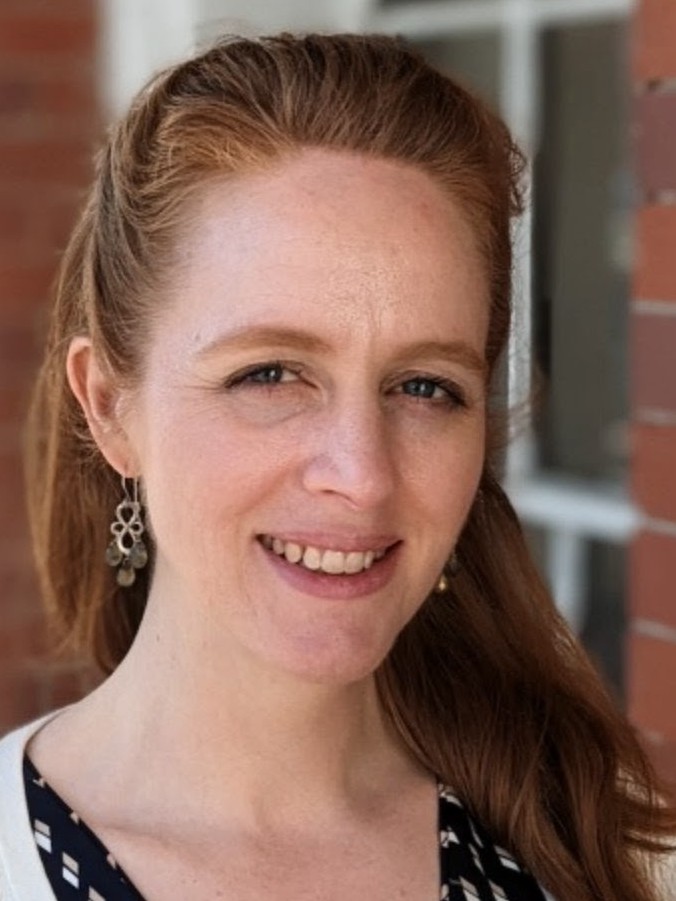
Kate Gregoire is an extremely talented poet and writer who lives and writes in Grafton, Massachusetts. Her poetry covers themes of motherhood, ecospirituality, and incantation. She serves on the board of the Worcester County Poetry Association and organized the Rain Poetry project. She is also an editor of Worcester County’s literary journal, The Three Decker. You can find her work on Instagram @katherinegregoirepoet and at local open mics in central Massachusetts.

PAUL: Kate, before we begin the interview, could you please tell us a little bit about yourself?

KATE: I am a poet and mother. It feels like another lifetime ago when I was teaching German language and literature full-time at university. Now I am in a supportive role of raising my little girl, supporting my husband’s ministry, and volunteering for the Worcester County Poetry Association. I’ve attended some 30+ weddings in this post-covid era with my husband and wrote a collection of poems about this experience called “Plus One“. Another collection is in process, inspired by my initiation into motherhood. What feels most pressing, however, is my work towards a collection of alchemical incantations in poetic form that will contribute to healing the relationship between man and nature.

PAUL: I had no idea that you taught German at University. Have you ever written poetry in German? If so, what do you feel are the differences between composing poetry in German and English? Also do you have a favorite German poet?

KATE: What a lovely question! Yes, I have written poetry in German! Our voice in each language we write is the product of our experiences in that language. Much of my German experience is reading the classic works of that language and engaging in discussions about it with fiercely bright and eager students. When composing, I feel those influences teeming at the surface, supplying me with words, phrases, metaphor. Annette von Droste-Hülshoff, a 19th-century writer perhaps better known for her novellas, has an incredible ability to build atmosphere in her poems. I feel an affinity with the playful Mascha Kalèko, a popular poet of the 1930s, and of course Rilke, whose intense spirituality encourages and comforts me.

PAUL: How were you first exposed to poetry?

KATE: I can’t say, exactly. My first memory of reading poetry was in high school, when I was asked to read Wilfred Owen’s “Dulce et Decorum Est” aloud in class. My father was in the military and reading that poem out loud, I was pulled into the moment “quick boys!”.

PAUL: Can you tell us about some of your favorite poets & their poems and the reasons why you like them?

KATE: Oh, there are a great many. I think of Ted Kooser’s “Dandelion”, a completely unassuming poem about a ubiquitous flower, and his ability to infuse that moment ofseeing with such meaning and encouragement. I’ll never look at dandelions the same. Mary Oliver’s “Wild Geese” is another poem that returns again and again to me, each time imparting a different message. She is another unassuming poet who gives comfort by connecting human experiences like loneliness or feeling lost with the divine natural world around us. I’ve read that she worked to be so precise with her writing, it’s something I strive for in my own writing.

PAUL: How has your writing style changed and progressed throughout the years?

KATE: In the early days of writing, my work was terse and rough, but I began my study of poetry in earnest in 2018 when I checked out Mark Strand and Eavan Boland’s book on poetic form The Making of a Poem. I started working my way through it, practicing the standard forms. Writing with a mind to end rhyme, to repetition, to meter, I find it gives your inner voice extra tools for when that poetic inspiration strikes. I’ve been working towards precision, towards clarity lately, though I’m sensing a desire to return to greater opacity, more intense work with metaphor.Always, though, I write with a mind for rhythm and texture in a poem.

PAUL: What do you feel is your primary motivation to write poetry?

KATE:: I was in a climbing accident in 2018, and that brush with mortality made two things clear to me: I regretted not having started a family and I regretted not taking my poetry seriously. That intuition has served as my primary motivation in these early years of becoming a poet; I’m beginning to understand better now to what purpose as I continue to build a community of poetry around myself.

PAUL: What is your own personal definition of poetry?

KATE: Poetry for me is a still frame, a snapshot of life. It is a collection of words that has the power to pull its reader into the moment it describes and declare a connection.

PAUL: What do you feel are the most vital aspects of poetry (imagery, rhythm, word choice, etc)?

KATE: There is a poem out there for everyone! I need to feel a proper rhythm to the words, I enjoy the texture of alliteration and assonance, I enjoy the incantational quality of repetition, and I love word play!

PAUL: How would you describe the poetry you are currently writing?

KATE: My writing today is very much influenced by my first year of motherhood and my struggle to make sense of this intense experience. Aspirationally, I want to encourage the eco-conscience within my writing and explore the power of words to catalyze change. What if a poem read as a prayer sent out into the world with the power to heal the rift between humans and the natural environment? This project pairs surprisingly well with motherhood, as my daughter takes greater and greater interest in words and naming the natural world around her.

PAUL: Do you recall the first poem you ever wrote? If so, is it possible for you to share it with us now?

KATE: The first poem I ever wrote must have been in early elementary, a few lines musing about what I would become. It had a sweet little ending: “I really wonder!”

PAUL: Have you developed a regular writing routine, and if so, can you describe it to us?

KATE: I’ve had the very real privilege of journeying through Julia Cameron’s The Artist’s Way with two different groups of very close friends in the last three years. I call it a privilege, because the book encourages intense and often painful self-examination that was made easier for me in this supportive group setting. My writing practice has developed through this experience of writing daily pages that then transition into poetic sketches. Sometimes it’s just a little play, rhyming words, stream of consciousness, perspective work, and sometimes I’m surprised by a deluge of words that feel very much like a finished poem. My work in progress is making consistent time to edit and submit my work. I make time to read poetry most days, collections, journals. My husband and I love visiting a good bookstore to see whether a volume will catch our eye. I’ve got a few I’m working through at the moment. Lastly, I meet weekly with two very good friends I met in an online poetry class offered by Driftwood Press in 2021, and we support each other in our ups and downs of writing. We meet monthly with a larger group to workshop our poems.The discussions that come from these meetings are absolutely vital to my poetry practice.

PAUL: What is your actual writing process like, and how do you go about starting and shaping a poem?

KATE: I carry a journal with me all the time (a Leuchtturm 1917 A4 Bullet Journal) to catch what I call “poetry bids”, as in bids for my attention. If I’ve got a few minutes, I’ll sketch the rough draft as soon as inspiration strikes. If not, I’ll make a note and chew on the idea while I’m tidying up or out on a walk. Sometimes there’s an idea that needs a strong metaphor. Those usually take a week of “chewing” before I’m ready to commit the idea to paper. I write in pencil, for the haptic quality of the scratch of graphite on the page, but also to disencumber the latent perfectionist in me worried about making mistakes in pen. I happily cross things out and write away. I find setting a timer for 15 minutes helpful for keeping me focused and continuing to probe the idea for more. I’ll type up a poem that continues to haunt me after that and make edits, saving each draft as I go. I check line breaks, word choice, and make cuts before taking a piece to workshop.

PAUL: What advice would you give to someone who is just starting to write poetry?

KATE: Write every day, not to write a poem, but for the sheer joy of writing and playing with words and form. If you make time every day, or most days, to play at and practice your craft, you’ll be ready to catch that poem when inspiration strikes. Be sure to read as much as you can, it’s hard to write from an empty well; and be sure to make time to let your mind wander.

PAUL: My final question of the evening is there any question that you would like to answer about your life, or poetry, or anything else that I have failed to ask you during this interview?

KATE: Once I finally asked myself who I wanted to write poetry for, the poems came more easily, and I began to share them with my friends.
Invented Poetry Forms – The Monolet

Photo by Paul Szlosek

My dear readers, please forgive me for being AWOL from this blog for over a year and not having posted since March of last year. In an attempt to make it up to you, I am going to share with you today The Monolet, a poetic form that I recently invented inspired by both the Triolet and Biolet.

Similar to the triolet, the monolet is a short poem of eight lines, but it differs since it utilizes a monorhyme (all the lines rhyme with each other). The first line is repeated as both the fourth and eighth & final line, while the second line serves as a refrain in the seventh (so like a biolet, the first two lines are repeated as the final two lines, but in reverse order). In other words, the rhyme scheme of the monolet can be expressed as A1/A2/a/A1/a/a/A2/A1 (with A1 and A2 depicting the repeated lines).

As I have done with all my previous posts on poetry forms, here is a monolet I’ve written to help serve both as an example and an inspiration for yours:

Too Much Praise

Too much praise can either be a stick or a carrot
When it’s given indiscriminately without merit.
With the risk of sounding like a repetitious parrot,
Too much praise can either be a stick or a carrot.
Do not be greedy like a needy, ravenous ferret.
Don’t hog all the attention! Learn to share it!
When it’s given indiscriminately without merit,
Too much praise can either be a stick or a carrot.

So what do you think of the monolet, my dear readers? Like with all the invented poetry forms that I have the pleasure of introducing to you on this blog, I sincerely wish you will try writing one for yourself, and if you do, please don’t hesitate to share. I hope you enjoyed this post, and thank you so much for reading!

At Long Last, a Second Batch of Paul’s Poetry Playground Photo Poetry Prompts…

Dear Readers,

Please forgive me! In November of last year, I posted on this blog what I announced would be the first in a planned series of monthly photo prompts to help inspire you to write new poetry, flash fiction, or whatever you like to write. Now we are in the second week of March 2025, and I suddenly realize that I have yet to post another one. So after an inexcusibly long time, here is a second batch of six photos (all of them come from my color photography blog “Paul’s Wonderful World of Color” @ https://thewonderfulworldofcolor77109243.wordpress.com which I hope you will check out). Hopefully at least one of these photos might inspire you to start writing some brand-new work based upon it. What you decide to do with the finished piece, of course, is totally up to you although we’d love for you to share it with us on your own blogs. If you do decide to post it online or submit it to be published in a literary journal, you have my permission to include the photo as well as long as you agree to give me credit as the photographer:
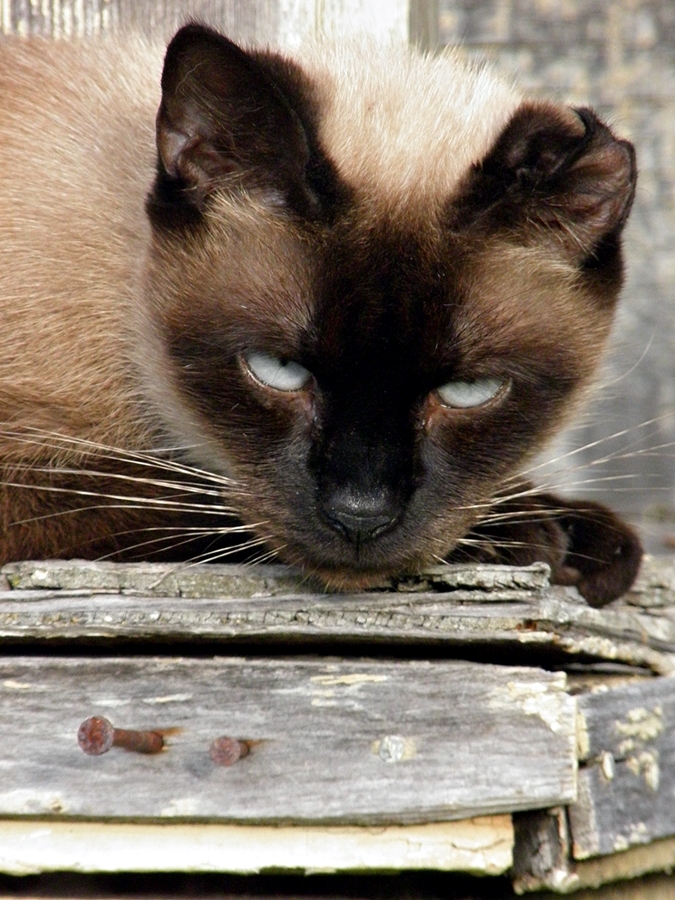

Photo by Paul Szlosek

Good luck, my friends! Hope these photos will help trigger your own poetic and literary muses, and you will be blessed with a bounty of new writing ( I also promise to try my best to get the next batch of pics up on this blog on time). Thank you so much for reading! Please take care, and keep writing, and living the literary life!

10 Great Quotes About Poets, Poetry, and Writing by E.E. Cummings

Photo by Paul Szlosek

“Well, write poetry, for God’s sake, it’s the only thing that matters.”

“Why should I be able to be a capital “I”? I’m just a cynical old poet, no one cares for what I have to say in society, they just enjoy my work.”

“It is with roses and locomotives (not to mention acrobats Spring electricity Coney Island the 4th of July the eyes of mice and Niagra Falls) that “my poems” are competing. They are also competing with each other, with elephants, and with El Greco.”

“A poet is somebody who feels, and who expresses his feelings through words.”

“My advice to all young people who wish to become poets is: do something easy, like learning how to blow up the world — unless you’re not only willing, but glad, to feel and work and fight till you die.”

“Poetry is feeling — not knowing or believing or thinking.”

“At least my theory of technique [for writing poetry], if I have one, is very far from original; nor is it complicated. I can express it in fifteen words, by quoting The Eternal Question And Immortal Answer of burlesk, viz. ‘Would you hit a woman with a child? — No, I’d hit her with a brick.’ Like the burlesk comedian, I am abnormally fond of that precision which creates movement.”

“When I write I try to be as original as possible, in order to distinguish myself from all the other writers who make their fortunes off of simple rhymes.”

“If a poet is anybody, he is somebody to whom things made matter very little – somebody who is obsessed by Making. Like all obsessions, the Making obsession has disadvantages; for instance, my only interest in making money would be to make it. Fortunately, however, I should prefer to make almost anything else including locomotives and roses.”

“Ineluctable preoccupation with The Verb gives a poet one priceless advantage: whereas nonmakers must content themselves with the merely undeniable fact that two times two is four, he rejoices in a purely irresistible truth (to be found, in abbreviated costume, upon the title page of the present volume [Is Five]).”

—E. E. Cummings

Another 10 More Great Quotes About Poets, Poetry, and Writing by Ada Limón

Photo by Paul Szlosek

“Poetry does millions of things, but if there’s one thing it does is that it helps you feel things. Poetry reminds us that we’re full human beings with thoughts and feelings … and that might be enough.” 

“Really great poems can surprise us and move us in unexpected ways. A great poem often has the perfect combination of music, story and emotional content. So it’s matching all three of those things all at once, and they come together in a harmonious way that feels sort of indescribable. You can’t figure out what it is that you love about it, but somehow you’re moved to tears or you’re moved to laugh or you’re suddenly, like, “Oh, I feel more in my body,” or, “I feel more connected to the world.” There’s some sort of indescribable moment or experience that the reader goes through, and it’s usually because those three things are working together, and in ways that are surprising. I feel like the best poems can really change a whole day. And sometimes they can change your whole life.” 

“I used to think I wrote poems in order to help readers recommit to the world. I wanted to believe I was using my intense attention to nature, to beauty, to language in order to offer proof that we should keep surviving. But through the years, I’ve realized the person I am writing for the most is myself. I am the one who needs to be reminded that this life holds all sorts of goodness even when it is often shoved to the edges by the enormity of ugliness or fear. The poems I write, the ones that offer shreds of hope or gratitude, are written because I need that hope or gratitude desperately in that moment—I need it the way plants need light.” 

“All writing to me, the act of writing, feels like a way of connecting.” 

“I wish poems came out fully formed. Sometimes I think they do come out more done than I expect. Usually, that’s because it’s something that’s been moving in my body for a long time before I put it down on the page; either if it’s the language, the music, or the image, so that by the time it comes out, and I’m actually writing, it’s somewhat complete. Those are the days where you have to go play the lottery or something because it’s so rare. But it does happen.” 

Poetry doesn’t have answers, it just has questions — they have endless possibilities. That’s what I love…poetry carries complexity, mystery, and clarity all at once.” 

“There has been a push over the last 10 years to make poetry accessible. It’s not always in the classroom. Sometimes it’s on the subway. Sometimes it’s on social media—Twitter, Instagram. That kind of access has ignited a passion, not only to read poetry, but to write it.” 

“I think as a younger poet, there was always this focus on what was right in front of me, you know, it was always about that next good bright thing, the reading and this and that. And I think now it’s really about what is it to live as long as possible, to survive in this world, that is very hard. And I’m going to experience losses, right, as they come.”  

“If you love poetry and making poems, you’ll find a way to make them no matter what. They’ll be knocking on your chest to get out, and when you’re ready, when you’ve cried enough, and slept enough, you’ll open your mouth and those poems will come flying out.” 

“I work at it [writing poetry], I edit for months, years sometimes, I throw away hundreds of drafts poems that just don’t seem to want to come to life yet, but at the core of me, making poems, writing poems is not hard. Writing poems is the good part, it’s the gift, it’s the part that doesn’t require tenacity. Poems come when I am not gritting my teeth; they come when I make myself available. So if there was one thing I could offer about how to keep going is to follow your joys when you can, follow the bright edges, let yourself be drawn to what you love and then make poems from that place. What we pay attention to is how we show our love. If it feels too hard to write, don’t write for awhile, take time off, take a nap, call a friend, work at something else, weep. Poems will come. Time will pass.”

—Ada Limón

10 Great Quotes Abouts Poets, Poetry, & Writing by Ann Darr

Photo by Paul Szlosek

“The poems I write and read help me to handle the feelings that would otherwise shred me.”

‘Poetry may not have saved my life, but I can’t imagine a life without it.”

“If I don’t write every day, it’s as if my blood stagnates, scum collects on the pond of my mind.”

“I stumbled on Prufock at the age of nine, and the world opened for me.”

“Poetry is what I do, by necessity, by luck, by desire.”

“It [poetry] is a gift I could not have imagined, if I’d been in the creator’s seat, a gift most dreadful, most magnificent.” 

“If poems aren’t the most wonderful way to communicate, I don’t know what is…”

“[Poetry] helps us understand what happens in our lives.”

“There are those poems that one reads and you say “Oh, yes, that is the way it is” and you think too “I wish I said that. Well, it has been said for me.”

“The poet has to be aware, has to be looking all time, feeling all the time, and registering in some way that can be then translated into the language we all use because that is how we communicate with each other.”

—Ann Darr

Introducing a New Monthly Series of Paul’s Poetry Playground Photo Poetry Prompts…

Dear Readers, 

I am pleased to announce that today’s post is the first in a planned series of monthly photo prompts to help inspire you to write new poetry, flash fiction, or whatever you like to write. All the photos will come from my color photography blog “Paul’s Wonderful World of Color” @ https://thewonderfulworldofcolor77109243.wordpress.com which I hope you will check out (If you do, as an extra bonus, you may also find that each blog post’s title such as “A Study in Brown” or “Monkey Behind the Door” may provide additional inspiration for your writing. Also while visiting the site, if there is any way that you can like a post or subscribe to follow my blog, I would truly be grateful to you).

Hopefully at least one of these photos will inspire you to start writing some brand-new work based upon it. What you decide to do with the finished piece, of course, is totally up to you although we’d love for you to share it with us on your own blogs,. If you do decide to post it online or submit it to be published in a literary journal, you have my permission to include the photo as well as long as you agree to give me credit as the photographer.

And now here are your six photographic poetry prompts for this month:

Photo by Paul Szlosek

Good luck, my friends! Hope these photos will help trigger your own poetic and literary muses, and you will be blessed with a bounty of new writing.

Thank you so much for reading! Please take care, and keep writing, and living the literary life!

Invented Poetry Forms – The Blitz Poem

Photo by Paul Szlosek

My dear readers, believe it or not, I have not written a post on an invented poetry form since June 2022, so to make up for that omission, I have decided today we will be discussing the Blitz poem. The blitz poem is a 50-line stream-of-consciousness poetry form invented by Robert Keim consisting of short phrases and images and emphasizing repetition and rapid flow.

If you would like to try your hand at writing one, I would highly recommend first numbering the page from 1 to 50 to help keep track of the different lines. You begin by writing a short phrase for line number one such as “Keep on smiling” (it probably works best if the phrase is a well-known cliche or popular saying).. Then for the second line, you write a short phrase beginning with the same word as the first such as “Keep on keeping on”.The first 48 lines should be short but contain at least two words.

You then write the third and fourth lines starting with the last word of the second line (for example in this case “On a roll”), .Then both the fifth and sixth lines begin with the last word of the fourth, and so and so on, continuing with each subsequent pair of lines starting with the last word of the line above them thus establishing the poem’s pattern of repetition. You keep doing this for the first 48 lines. Then in the 49th line, you repeat the last word in the 48th and finally conclude the poem with the last word of the 47th as the 50th line.

Another one of the rules for the blitz poem is that the title of your poem should be only three words, with a preposition or conjunction joining the first word from the third line with the first word from the 47th. Also, do not use any punctuation in your blitz poem. When reading your blitz out loud, be sure to read very quickly, only pausing to breathe.

As I have done with all my previous posts on poetry forms, here is a blitz poem I’ve written to help serve both as an example and an inspiration for yours:

Bullet of Office

Stray dog
Stray bullet
Bullet-ridden
Bullet-proof
Proof of purchase
Proof of life
Life sentence
Life insurance
Insurance policy
Insurance fraud
Fraud squad
Fraud scheme
Scheme and plot
Scheme and dream
Dream a little dream
Dream big
Big deal
Big shot
Shot of courage
Shot heard around the world
World hunger
World record
Record player
Record store
Store receipt
Store brand
Brand X
Brand new
New year
New kid
Kid gloves
Kid you not
Not me
Not you
You rule
You suck
Suck on this
Suck on that
That girl
That thing that you do
Do the right thing
Do it until the cows come home
Home advantage
Home run
Run away
Run for office
Office politics
Office party
Party
Politics

—Paul Szlosek

So what do you think of the blitz poem, my dear readers? I sincerely wish you will try writing one for yourself, and if you do, I think you will find it fairly easy and very fun to write once you master all the form’s seemingly complicated rules (it is probably even more fun to read out loud). And if you write one, please don’t hesitate to share. I hope you enjoyed this post, and thank you so much for reading!

10 More Great Quotes About Poets, Poetry, and Writing by Ada Limón

Photo by Paul Szlosek

“Poetry isn’t a place of answers and easy solutions. It’s a place where we can admit to an unknowing, own our private despair, and still, sometimes, practice beauty.”

“When I began as a poet, I thought it was all about knowing. I thought it was about truth, and beauty. And every poem I read, felt wise to me. I could read Anne Sexton, Philip Levine, Lucille Clifton and I would find this deep wisdom. So I thought that’s what I should work towards, a knowingness. And then, the old cliché – and it is a cliché because it’s true – that the more you learn, the more you witness, the more you realize you don’t know. And I think I’m very scared now of certainty. Even when someone says, what’s your opinion about this? Often, I’m like, I don’t know. I don’t 100% know. And that’s because the world is changing so fast. And I can have a sense of morality, of course, and right and wrong, and goodness, but beyond that, I hope I can remain porous and open enough to not think that I know all the answers. And I think a lot of harm comes from that false certainty, that is so attached to our egos, when not only are we completely convinced that we’re right, but to be proven wrong would be almost deadly. And I don’t ever want to be in that position.”

“It’s very easy for me to expound on the power of poetry. But I’m not naïve enough to think that it can fix the climate crisis. Or that it can save all of our souls. But I do believe that it does have the power to reconnect us with ourselves, and I think it has the power to reconnect ourselves with the earth. I think it’s also important for us to recognize that in its power to just be—it’s just a poem, one poem at a time, as we say—it can actually move around the world in a way that it’s not asking too much.”

“I think any writer worth their salt is always trying to get better, trying to push out of their own comfort zones. I know that we are told we write the same poems over and over, but I am always trying to make those poems exciting for me as the writer.”

“Part of what makes poetry an art form that’s growing is that the currency of poetry is the single poem. You can send one poem, share one poem on a social media platform and people will immediately interact with those words. It’s a powerful experience and something that’s more difficult to do with long-form writing.”

“I tend not to think about readership. Instead, I think about a reader, the person I am trying to communicate with, but I don’t have the idea that a lot of people are ever going to read anything.”

“I always want to make work that matters, even if it’s just to myself. I didn’t know how to really process what I was going through in my own personal life without just writing about it. Writing is how I make sense of the world, so it would be hard not to write the poems.”

“I’ll sometimes go months without writing, which is not something I used to do. I used to write every day. I still take a lot of notes, but I think I allow myself more time to be receptive to the world, as opposed to always worrying about saying something.”

“I always think poets actually tend to switch over genres better than other kinds of writers. We start out so little. Right? We start with a sound and a syllable. So, that attention to language is there, which I think is the hardest part to teach. The musicality of language. But musicality of language can only take you so far. Turns out there’s other things, too. Like plot.”

“You must love to write poems and read poems because if you’re a poet, you’re going to have to have another job. And that job, whatever it is, is going to be your main job. And it’s going to be the thing that puts food on the table and pays your rent and makes sure you have healthcare occasionally. You know? Hopefully you’ll be writing all along, and doing things and creating. And that is going to bring joy into every part of your life. If it’s just about what you can get published, then I think that’s when it kind of falls apart.”

—Ada Limón

The Latest Edition of the International Imaginarium For Word & Verse (July 29th, 2024)…

Dear Readers,

Believe it ot not, this blog, Paul’s Poetry Playground, is not the only poetry-related project that I have seriously neglected for an inexcusably long time.. Readers may remember The International Imaginarium for Word & Verse, a rather unique online poetry journal which takes the form of a transcript of an imaginary poetry reading which I’ve posted links to past edition here on this blog.. Well, after more than a whole year in the making (I started putting it together last September with an announced publication date this May which I later postponed to June),  here is finally the link to the latest edition featuring the incredibly talented poet Katherine Gregoire, which was eventually posted at the very end of this July on our Imaginarium website for you to hopefully peruse and enjoy at your leisure:.

I want to thank my fellow blogger Diane Puterbaugh, along with all the other amazing poets who participated in our Imaginarium virtual open mic.  Like previous times, I have decided not to repost the entire Imaginarium here on this blog because I feel that it is probably too long a read and thus far too overwhelming for most of my readers (as a result, some really excellent poetry might be skipped, and that would be a real shame). So instead, I will just post this month’s Imaginarium group poem (which is probably one of my favorite segments of the Imaginarium). This month’s Imaginarium Group poem was based on the surrealist game of Prophecies (also known as Conditionals). Participants were asked to write and send us four lines including one each of the following:

1. A short phrase in the present tense starting with the word “When” such as “When the oceans begin to boil,”.

2. A short phrase in the present tense starting with the word “If” such as “If your right elbow itches,” .

3. A short statement in the future tense using either the word “will” or “shall” such as “The President will sprout horns.” or “Hamsters shall rule the world.” .

4. A command written in the imperative such as “Lock the doors and hide beneath your bed”.

People‘s lines from 1 & 2 were then randomly paired with someone else’s lines from 3 & 4 to form brand new lines for our poem. Six folks (including myself) contributed with the results being the following poem:

Weird Prophecies and Strange Advice From the Imaginarium

When you find yourself alone in a dark alley,
reconsider your options.

When it rains Swedish Fish,
new insights will evaporate old science.

When the Aurochs mate in the shade of ginkgo trees,
that nor’easter from last January will circle back
declaring I am a mandala made of wind.

When the sea shells end their ceaseless rhetoric,
heave your answers against the echoing hills.

When water molecules can fracture and fly off into clouds,
you will read me a book about time.

When salmon swim upstream carrying salmonella,
then all that was lost will be lost again.

If the angle of descent is too steep,
wear a red shirt to camouflage the blood.

If photons of light strike with perfect angle,
look at the pages of a beloved book and rejoice!

If the crabs and oysters line up in alphabetical order,
the Florida peninsula will break off and sink to the bottom of the sea.

If children’s books become real,
report any abnormalities to your physician.

If the clouds spill their blood,
you will be disappointed.

If you want to live to see another day,
rethink those suspect equations and maybe SAVE us…

—The July 2024 International Imaginarium Group Poem

I want to thank Ariel Potter, Diane Puterbaugh, Brian Mosher, Howard Kogan, and Karen Durlach for contributing and making the preceding poem possible.