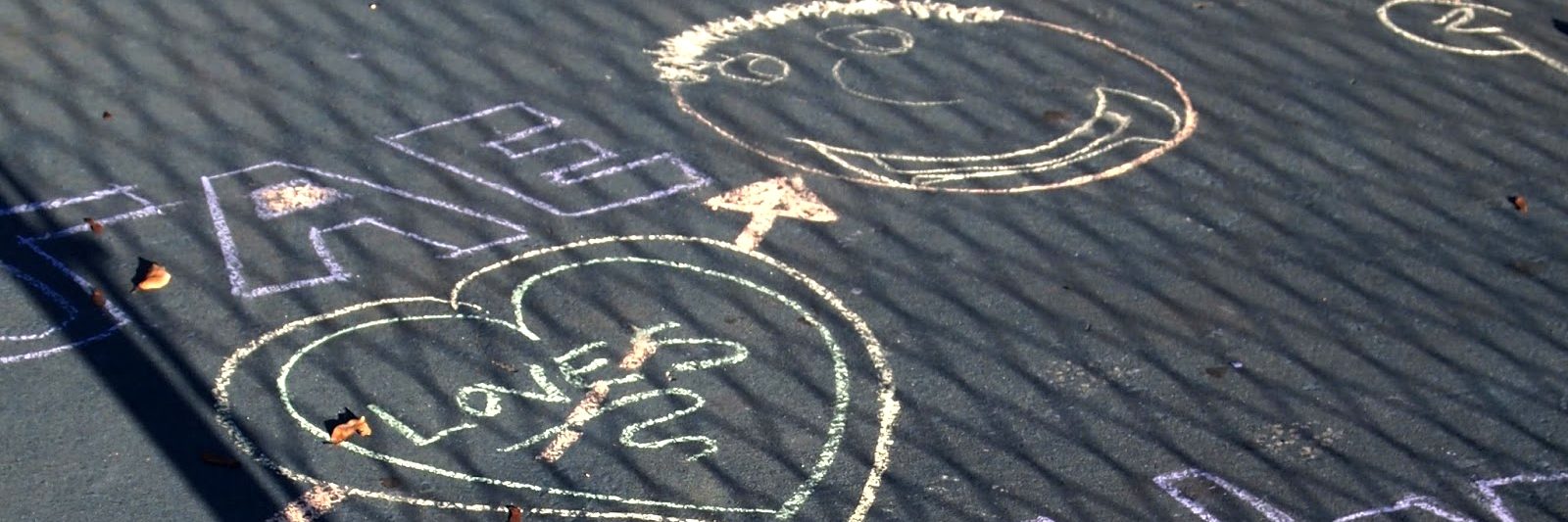
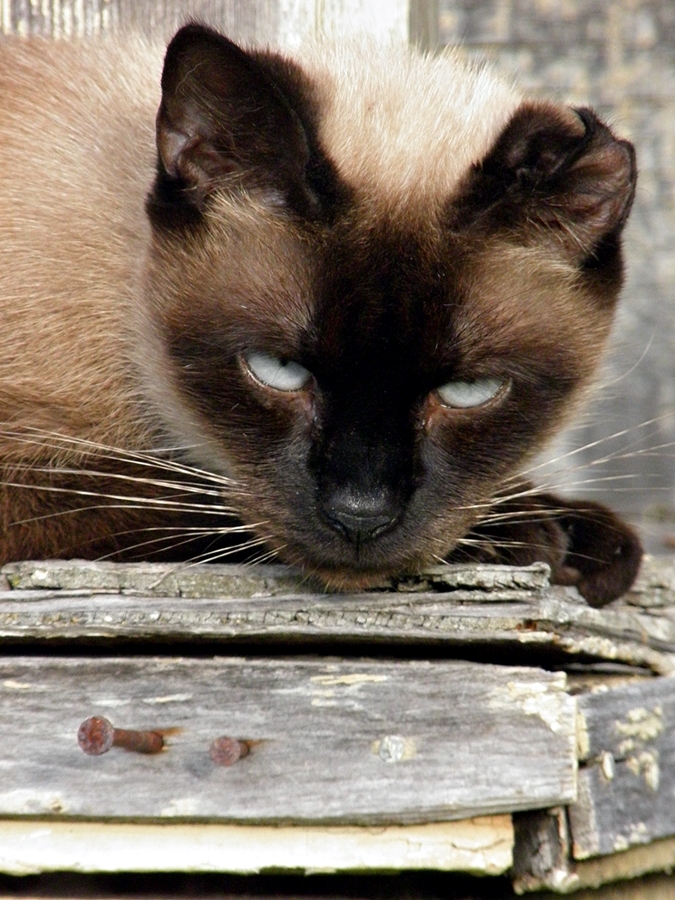
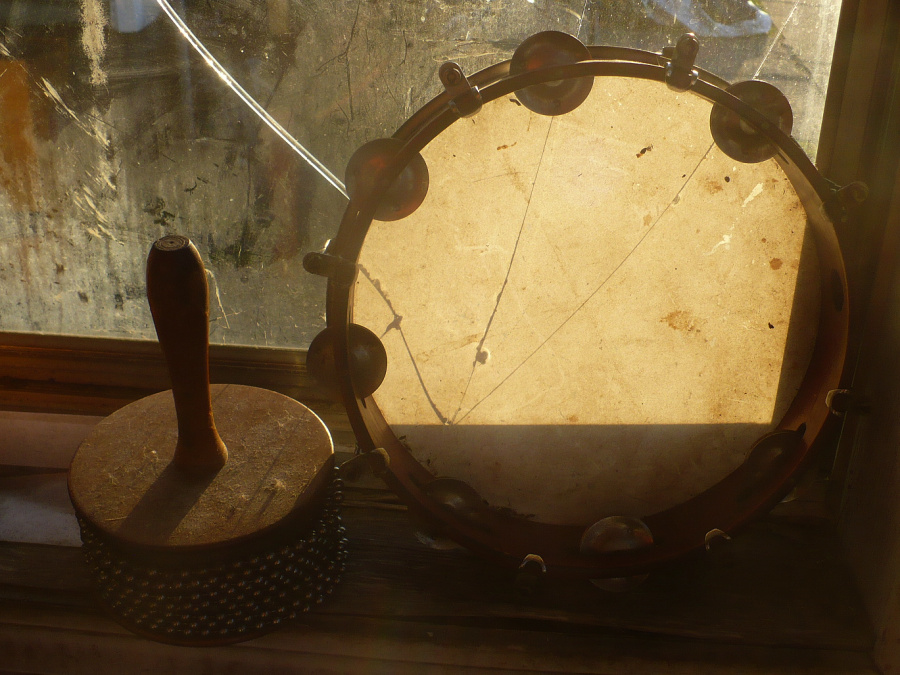
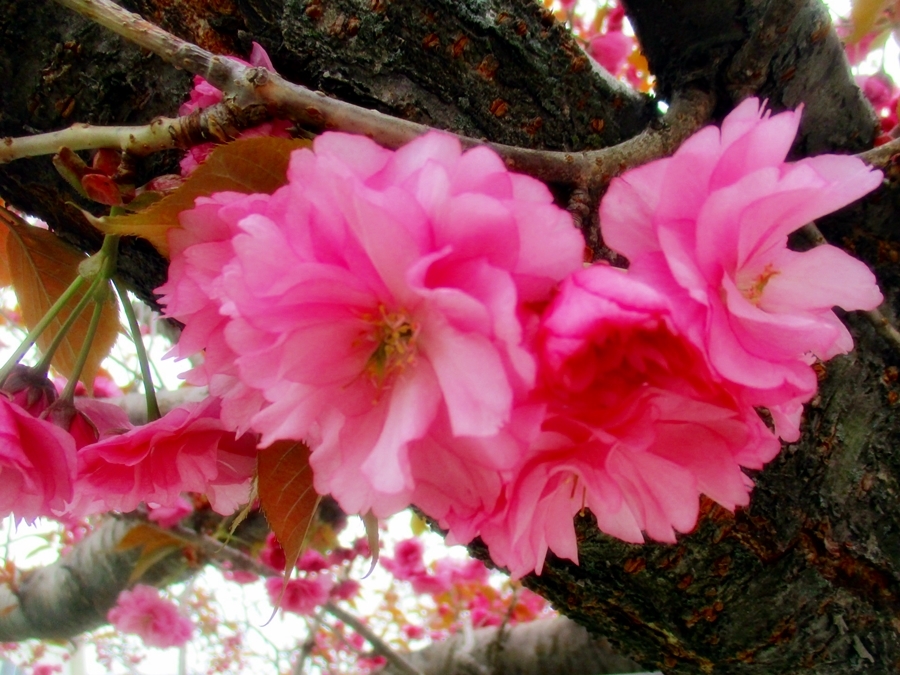
Please forgive me! In November of last year, I posted on this blog what I announced would be the first in a planned series of monthly photo prompts to help inspire you to write new poetry, flash fiction, or whatever you like to write. Now we are in the second week of March 2025, and I suddenly realize that I have yet to post another one. So after an inexcusibly long time, here is a second batch of six photos (all of them come from my color photography blog “Paul’s Wonderful World of Color” @ https://thewonderfulworldofcolor77109243.wordpress.com which I hope you will check out). Hopefully at least one of these photos might inspire you to start writing some brand-new work based upon it. What you decide to do with the finished piece, of course, is totally up to you although we’d love for you to share it with us on your own blogs. If you do decide to post it online or submit it to be published in a literary journal, you have my permission to include the photo as well as long as you agree to give me credit as the photographer:
Photo by Paul Szlosek
Photo by Paul Szlosek
Photo by Paul Szlosek
Photo by Paul Szlosek
Photo by Paul Szlosek
Photo by Paul Szlosek
Good luck, my friends! Hope these photos will help trigger your own poetic and literary muses, and you will be blessed with a bounty of new writing ( I also promise to try my best to get the next batch of pics up on this blog on time). Thank you so much for reading! Please take care, and keep writing, and living the literary life!
“Well, write poetry, for God’s sake, it’s the only thing that matters.”
“Why should I be able to be a capital “I”? I’m just a cynical old poet, no one cares for what I have to say in society, they just enjoy my work.”
“It is with roses and locomotives (not to mention acrobats Spring electricity Coney Island the 4th of July the eyes of mice and Niagra Falls) that “my poems” are competing. They are also competing with each other, with elephants, and with El Greco.”
“A poet is somebody who feels, and who expresses his feelings through words.”
“My advice to all young people who wish to become poets is: do something easy, like learning how to blow up the world — unless you’re not only willing, but glad, to feel and work and fight till you die.”
“Poetry is feeling — not knowing or believing or thinking.”
“At least my theory of technique [for writing poetry], if I have one, is very far from original; nor is it complicated. I can express it in fifteen words, by quoting The Eternal Question And Immortal Answer of burlesk, viz. ‘Would you hit a woman with a child? — No, I’d hit her with a brick.’ Like the burlesk comedian, I am abnormally fond of that precision which creates movement.”
“When I write I try to be as original as possible, in order to distinguish myself from all the other writers who make their fortunes off of simple rhymes.”
“If a poet is anybody, he is somebody to whom things made matter very little – somebody who is obsessed by Making. Like all obsessions, the Making obsession has disadvantages; for instance, my only interest in making money would be to make it. Fortunately, however, I should prefer to make almost anything else including locomotives and roses.”
“Ineluctable preoccupation with The Verb gives a poet one priceless advantage: whereas nonmakers must content themselves with the merely undeniable fact that two times two is four, he rejoices in a purely irresistible truth (to be found, in abbreviated costume, upon the title page of the present volume [Is Five]).”
“Poetry does millions of things, but if there’s one thing it does is that it helps you feel things. Poetry reminds us that we’re full human beings with thoughts and feelings … and that might be enough.”
“Really great poems can surprise us and move us in unexpected ways. A great poem often has the perfect combination of music, story and emotional content. So it’s matching all three of those things all at once, and they come together in a harmonious way that feels sort of indescribable. You can’t figure out what it is that you love about it, but somehow you’re moved to tears or you’re moved to laugh or you’re suddenly, like, “Oh, I feel more in my body,” or, “I feel more connected to the world.” There’s some sort of indescribable moment or experience that the reader goes through, and it’s usually because those three things are working together, and in ways that are surprising. I feel like the best poems can really change a whole day. And sometimes they can change your whole life.”
“I used to think I wrote poems in order to help readers recommit to the world. I wanted to believe I was using my intense attention to nature, to beauty, to language in order to offer proof that we should keep surviving. But through the years, I’ve realized the person I am writing for the most is myself. I am the one who needs to be reminded that this life holds all sorts of goodness even when it is often shoved to the edges by the enormity of ugliness or fear. The poems I write, the ones that offer shreds of hope or gratitude, are written because I need that hope or gratitude desperately in that moment—I need it the way plants need light.”
“All writing to me, the act of writing, feels like a way of connecting.”
“I wish poems came out fully formed. Sometimes I think they do come out more done than I expect. Usually, that’s because it’s something that’s been moving in my body for a long time before I put it down on the page; either if it’s the language, the music, or the image, so that by the time it comes out, and I’m actually writing, it’s somewhat complete. Those are the days where you have to go play the lottery or something because it’s so rare. But it does happen.”
Poetry doesn’t have answers, it just has questions — they have endless possibilities. That’s what I love…poetry carries complexity, mystery, and clarity all at once.”
“There has been a push over the last 10 years to make poetry accessible. It’s not always in the classroom. Sometimes it’s on the subway. Sometimes it’s on social media—Twitter, Instagram. That kind of access has ignited a passion, not only to read poetry, but to write it.”
“I think as a younger poet, there was always this focus on what was right in front of me, you know, it was always about that next good bright thing, the reading and this and that. And I think now it’s really about what is it to live as long as possible, to survive in this world, that is very hard. And I’m going to experience losses, right, as they come.”
“If you love poetry and making poems, you’ll find a way to make them no matter what. They’ll be knocking on your chest to get out, and when you’re ready, when you’ve cried enough, and slept enough, you’ll open your mouth and those poems will come flying out.”
“I work at it [writing poetry], I edit for months, years sometimes, I throw away hundreds of drafts poems that just don’t seem to want to come to life yet, but at the core of me, making poems, writing poems is not hard. Writing poems is the good part, it’s the gift, it’s the part that doesn’t require tenacity. Poems come when I am not gritting my teeth; they come when I make myself available. So if there was one thing I could offer about how to keep going is to follow your joys when you can, follow the bright edges, let yourself be drawn to what you love and then make poems from that place. What we pay attention to is how we show our love. If it feels too hard to write, don’t write for awhile, take time off, take a nap, call a friend, work at something else, weep. Poems will come. Time will pass.”
“The poems I write and read help me to handle the feelings that would otherwise shred me.”
‘Poetry may not have saved my life, but I can’t imagine a life without it.”
“If I don’t write every day, it’s as if my blood stagnates, scum collects on the pond of my mind.”
“I stumbled on Prufock at the age of nine, and the world opened for me.”
“Poetry is what I do, by necessity, by luck, by desire.”
“It [poetry] is a gift I could not have imagined, if I’d been in the creator’s seat, a gift most dreadful, most magnificent.”
“If poems aren’t the most wonderful way to communicate, I don’t know what is…”
“[Poetry] helps us understand what happens in our lives.”
“There are those poems that one reads and you say “Oh, yes, that is the way it is” and you think too “I wish I said that. Well, it has been said for me.”
“The poet has to be aware, has to be looking all time, feeling all the time, and registering in some way that can be then translated into the language we all use because that is how we communicate with each other.”
I am pleased to announce that today’s post is the first in a planned series of monthly photo prompts to help inspire you to write new poetry, flash fiction, or whatever you like to write. All the photos will come from my color photography blog “Paul’s Wonderful World of Color” @ https://thewonderfulworldofcolor77109243.wordpress.com which I hope you will check out (If you do, as an extra bonus, you may also find that each blog post’s title such as “A Study in Brown” or “Monkey Behind the Door” may provide additional inspiration for your writing. Also while visiting the site, if there is any way that you can like a post or subscribe to follow my blog, I would truly be grateful to you).
Hopefully at least one of these photos will inspire you to start writing some brand-new work based upon it. What you decide to do with the finished piece, of course, is totally up to you although we’d love for you to share it with us on your own blogs,. If you do decide to post it online or submit it to be published in a literary journal, you have my permission to include the photo as well as long as you agree to give me credit as the photographer.
And now here are your six photographic poetry prompts for this month:
Photo by Paul Szlosek
Photo by Paul Szlosek
Photo by Paul Szlosek
Photo by Paul Szlosek
Photo by Paul Szlosek
Photo by Paul Szlosek
Good luck, my friends! Hope these photos will help trigger your own poetic and literary muses, and you will be blessed with a bounty of new writing.
Thank you so much for reading! Please take care, and keep writing, and living the literary life!
My dear readers, believe it or not, I have not written a post on an invented poetry form since June 2022, so to make up for that omission, I have decided today we will be discussing the Blitz poem. The blitz poem is a 50-line stream-of-consciousness poetry form invented by Robert Keim consisting of short phrases and images and emphasizing repetition and rapid flow.
If you would like to try your hand at writing one, I would highly recommend first numbering the page from 1 to 50 to help keep track of the different lines. You begin by writing a short phrase for line number one such as “Keep on smiling” (it probably works best if the phrase is a well-known cliche or popular saying).. Then for the second line, you write a short phrase beginning with the same word as the first such as “Keep on keeping on”.The first 48 lines should be short but contain at least two words.
You then write the third and fourth lines starting with the last word of the second line (for example in this case “On a roll”), .Then both the fifth and sixth lines begin with the last word of the fourth, and so and so on, continuing with each subsequent pair of lines starting with the last word of the line above them thus establishing the poem’s pattern of repetition. You keep doing this for the first 48 lines. Then in the 49th line, you repeat the last word in the 48th and finally conclude the poem with the last word of the 47th as the 50th line.
Another one of the rules for the blitz poem is that the title of your poem should be only three words, with a preposition or conjunction joining the first word from the third line with the first word from the 47th. Also, do not use any punctuation in your blitz poem. When reading your blitz out loud, be sure to read very quickly, only pausing to breathe.
As I have done with all my previous posts on poetry forms, here is a blitz poem I’ve written to help serve both as an example and an inspiration for yours:
Bullet of Office
Stray dog Stray bullet Bullet-ridden Bullet-proof Proof of purchase Proof of life Life sentence Life insurance Insurance policy Insurance fraud Fraud squad Fraud scheme Scheme and plot Scheme and dream Dream a little dream Dream big Big deal Big shot Shot of courage Shot heard around the world World hunger World record Record player Record store Store receipt Store brand Brand X Brand new New year New kid Kid gloves Kid you not Not me Not you You rule You suck Suck on this Suck on that That girl That thing that you do Do the right thing Do it until the cows come home Home advantage Home run Run away Run for office Office politics Office party Party Politics
—Paul Szlosek
So what do you think of the blitz poem, my dear readers? I sincerely wish you will try writing one for yourself, and if you do, I think you will find it fairly easy and very fun to write once you master all the form’s seemingly complicated rules (it is probably even more fun to read out loud). And if you write one, please don’t hesitate to share. I hope you enjoyed this post, and thank you so much for reading!
“Poetry isn’t a place of answers and easy solutions. It’s a place where we can admit to an unknowing, own our private despair, and still, sometimes, practice beauty.”
“When I began as a poet, I thought it was all about knowing. I thought it was about truth, and beauty. And every poem I read, felt wise to me. I could read Anne Sexton, Philip Levine, Lucille Clifton and I would find this deep wisdom. So I thought that’s what I should work towards, a knowingness. And then, the old cliché – and it is a cliché because it’s true – that the more you learn, the more you witness, the more you realize you don’t know. And I think I’m very scared now of certainty. Even when someone says, what’s your opinion about this? Often, I’m like, I don’t know. I don’t 100% know. And that’s because the world is changing so fast. And I can have a sense of morality, of course, and right and wrong, and goodness, but beyond that, I hope I can remain porous and open enough to not think that I know all the answers. And I think a lot of harm comes from that false certainty, that is so attached to our egos, when not only are we completely convinced that we’re right, but to be proven wrong would be almost deadly. And I don’t ever want to be in that position.”
“It’s very easy for me to expound on the power of poetry. But I’m not naïve enough to think that it can fix the climate crisis. Or that it can save all of our souls. But I do believe that it does have the power to reconnect us with ourselves, and I think it has the power to reconnect ourselves with the earth. I think it’s also important for us to recognize that in its power to just be—it’s just a poem, one poem at a time, as we say—it can actually move around the world in a way that it’s not asking too much.”
“I think any writer worth their salt is always trying to get better, trying to push out of their own comfort zones. I know that we are told we write the same poems over and over, but I am always trying to make those poems exciting for me as the writer.”
“Part of what makes poetry an art form that’s growing is that the currency of poetry is the single poem. You can send one poem, share one poem on a social media platform and people will immediately interact with those words. It’s a powerful experience and something that’s more difficult to do with long-form writing.”
“I tend not to think about readership. Instead, I think about a reader, the person I am trying to communicate with, but I don’t have the idea that a lot of people are ever going to read anything.”
“I always want to make work that matters, even if it’s just to myself. I didn’t know how to really process what I was going through in my own personal life without just writing about it. Writing is how I make sense of the world, so it would be hard not to write the poems.”
“I’ll sometimes go months without writing, which is not something I used to do. I used to write every day. I still take a lot of notes, but I think I allow myself more time to be receptive to the world, as opposed to always worrying about saying something.”
“I always think poets actually tend to switch over genres better than other kinds of writers. We start out so little. Right? We start with a sound and a syllable. So, that attention to language is there, which I think is the hardest part to teach. The musicality of language. But musicality of language can only take you so far. Turns out there’s other things, too. Like plot.”
“You must love to write poems and read poems because if you’re a poet, you’re going to have to have another job. And that job, whatever it is, is going to be your main job. And it’s going to be the thing that puts food on the table and pays your rent and makes sure you have healthcare occasionally. You know? Hopefully you’ll be writing all along, and doing things and creating. And that is going to bring joy into every part of your life. If it’s just about what you can get published, then I think that’s when it kind of falls apart.”






 Paul's Poetry Playground