
10 Great Quotes About Poets, Poetry, & Writing by Poets That I Either Personally Know, Interviewed, or Corresponded With…
Today’s post is an interview with poet Kate Gregoire that was originally published a little under two years ago in the July 29th, 2024 edition of The International Imaginarium For Word & Verse (I hope you will enjoy reading it)…
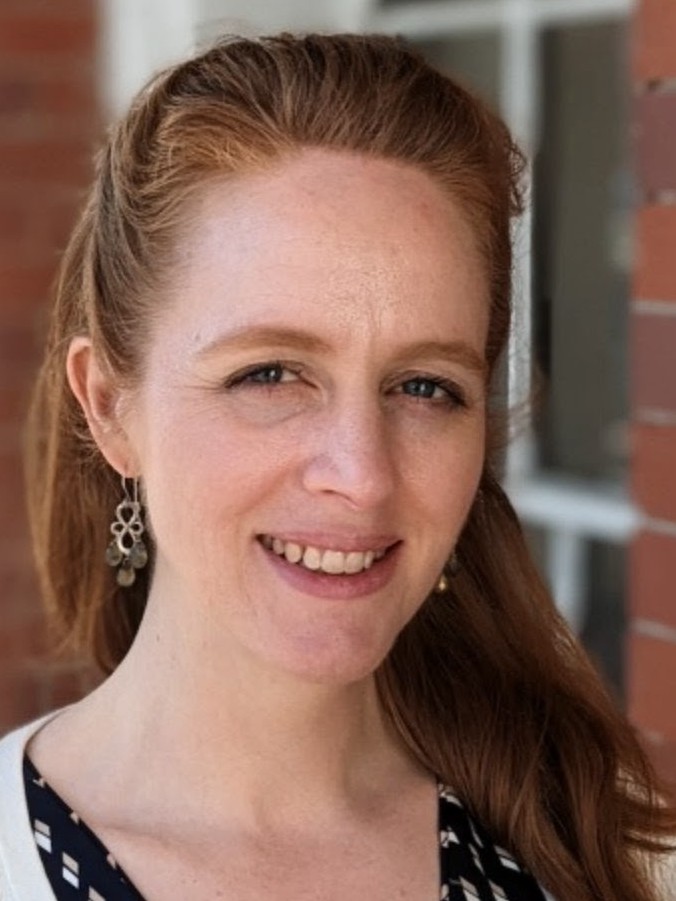
Kate Gregoire is an extremely talented poet and writer who lives and writes in Grafton, Massachusetts. Her poetry covers themes of motherhood, ecospirituality, and incantation. She serves on the board of the Worcester County Poetry Association and organized the Rain Poetry project. She is also an editor of Worcester County’s literary journal, The Three Decker. You can find her work on Instagram @katherinegregoirepoet and at local open mics in central Massachusetts.
PAUL: Kate, before we begin the interview, could you please tell us a little bit about yourself?
KATE: I am a poet and mother. It feels like another lifetime ago when I was teaching German language and literature full-time at university. Now I am in a supportive role of raising my little girl, supporting my husband’s ministry, and volunteering for the Worcester County Poetry Association. I’ve attended some 30+ weddings in this post-covid era with my husband and wrote a collection of poems about this experience called “Plus One“. Another collection is in process, inspired by my initiation into motherhood. What feels most pressing, however, is my work towards a collection of alchemical incantations in poetic form that will contribute to healing the relationship between man and nature.
PAUL: I had no idea that you taught German at University. Have you ever written poetry in German? If so, what do you feel are the differences between composing poetry in German and English? Also do you have a favorite German poet?
KATE: What a lovely question! Yes, I have written poetry in German! Our voice in each language we write is the product of our experiences in that language. Much of my German experience is reading the classic works of that language and engaging in discussions about it with fiercely bright and eager students. When composing, I feel those influences teeming at the surface, supplying me with words, phrases, metaphor. Annette von Droste-Hülshoff, a 19th-century writer perhaps better known for her novellas, has an incredible ability to build atmosphere in her poems. I feel an affinity with the playful Mascha Kalèko, a popular poet of the 1930s, and of course Rilke, whose intense spirituality encourages and comforts me.
PAUL: How were you first exposed to poetry?
KATE: I can’t say, exactly. My first memory of reading poetry was in high school, when I was asked to read Wilfred Owen’s “Dulce et Decorum Est” aloud in class. My father was in the military and reading that poem out loud, I was pulled into the moment “quick boys!”.
PAUL: Can you tell us about some of your favorite poets & their poems and the reasons why you like them?
KATE: Oh, there are a great many. I think of Ted Kooser’s “Dandelion”, a completely unassuming poem about a ubiquitous flower, and his ability to infuse that moment ofseeing with such meaning and encouragement. I’ll never look at dandelions the same. Mary Oliver’s “Wild Geese” is another poem that returns again and again to me, each time imparting a different message. She is another unassuming poet who gives comfort by connecting human experiences like loneliness or feeling lost with the divine natural world around us. I’ve read that she worked to be so precise with her writing, it’s something I strive for in my own writing.
PAUL: How has your writing style changed and progressed throughout the years?
KATE: In the early days of writing, my work was terse and rough, but I began my study of poetry in earnest in 2018 when I checked out Mark Strand and Eavan Boland’s book on poetic form The Making of a Poem. I started working my way through it, practicing the standard forms. Writing with a mind to end rhyme, to repetition, to meter, I find it gives your inner voice extra tools for when that poetic inspiration strikes. I’ve been working towards precision, towards clarity lately, though I’m sensing a desire to return to greater opacity, more intense work with metaphor.Always, though, I write with a mind for rhythm and texture in a poem.
PAUL: What do you feel is your primary motivation to write poetry?
KATE:: I was in a climbing accident in 2018, and that brush with mortality made two things clear to me: I regretted not having started a family and I regretted not taking my poetry seriously. That intuition has served as my primary motivation in these early years of becoming a poet; I’m beginning to understand better now to what purpose as I continue to build a community of poetry around myself.
PAUL: What is your own personal definition of poetry?
KATE: Poetry for me is a still frame, a snapshot of life. It is a collection of words that has the power to pull its reader into the moment it describes and declare a connection.
PAUL: What do you feel are the most vital aspects of poetry (imagery, rhythm, word choice, etc)?
KATE: There is a poem out there for everyone! I need to feel a proper rhythm to the words, I enjoy the texture of alliteration and assonance, I enjoy the incantational quality of repetition, and I love word play!
PAUL: How would you describe the poetry you are currently writing?
KATE: My writing today is very much influenced by my first year of motherhood and my struggle to make sense of this intense experience. Aspirationally, I want to encourage the eco-conscience within my writing and explore the power of words to catalyze change. What if a poem read as a prayer sent out into the world with the power to heal the rift between humans and the natural environment? This project pairs surprisingly well with motherhood, as my daughter takes greater and greater interest in words and naming the natural world around her.
PAUL: Do you recall the first poem you ever wrote? If so, is it possible for you to share it with us now?
KATE: The first poem I ever wrote must have been in early elementary, a few lines musing about what I would become. It had a sweet little ending: “I really wonder!”
PAUL: Have you developed a regular writing routine, and if so, can you describe it to us?
KATE: I’ve had the very real privilege of journeying through Julia Cameron’s The Artist’s Way with two different groups of very close friends in the last three years. I call it a privilege, because the book encourages intense and often painful self-examination that was made easier for me in this supportive group setting. My writing practice has developed through this experience of writing daily pages that then transition into poetic sketches. Sometimes it’s just a little play, rhyming words, stream of consciousness, perspective work, and sometimes I’m surprised by a deluge of words that feel very much like a finished poem. My work in progress is making consistent time to edit and submit my work. I make time to read poetry most days, collections, journals. My husband and I love visiting a good bookstore to see whether a volume will catch our eye. I’ve got a few I’m working through at the moment. Lastly, I meet weekly with two very good friends I met in an online poetry class offered by Driftwood Press in 2021, and we support each other in our ups and downs of writing. We meet monthly with a larger group to workshop our poems.The discussions that come from these meetings are absolutely vital to my poetry practice.
PAUL: What is your actual writing process like, and how do you go about starting and shaping a poem?
KATE: I carry a journal with me all the time (a Leuchtturm 1917 A4 Bullet Journal) to catch what I call “poetry bids”, as in bids for my attention. If I’ve got a few minutes, I’ll sketch the rough draft as soon as inspiration strikes. If not, I’ll make a note and chew on the idea while I’m tidying up or out on a walk. Sometimes there’s an idea that needs a strong metaphor. Those usually take a week of “chewing” before I’m ready to commit the idea to paper. I write in pencil, for the haptic quality of the scratch of graphite on the page, but also to disencumber the latent perfectionist in me worried about making mistakes in pen. I happily cross things out and write away. I find setting a timer for 15 minutes helpful for keeping me focused and continuing to probe the idea for more. I’ll type up a poem that continues to haunt me after that and make edits, saving each draft as I go. I check line breaks, word choice, and make cuts before taking a piece to workshop.
PAUL: What advice would you give to someone who is just starting to write poetry?
KATE: Write every day, not to write a poem, but for the sheer joy of writing and playing with words and form. If you make time every day, or most days, to play at and practice your craft, you’ll be ready to catch that poem when inspiration strikes. Be sure to read as much as you can, it’s hard to write from an empty well; and be sure to make time to let your mind wander.
PAUL: My final question of the evening is there any question that you would like to answer about your life, or poetry, or anything else that I have failed to ask you during this interview?
KATE: Once I finally asked myself who I wanted to write poetry for, the poems came more easily, and I began to share them with my friends.



My dear readers, believe it or not, I have not written a post on an invented poetry form since June 2022, so to make up for that omission, I have decided today we will be discussing the Blitz poem. The blitz poem is a 50-line stream-of-consciousness poetry form invented by Robert Keim consisting of short phrases and images and emphasizing repetition and rapid flow.
If you would like to try your hand at writing one, I would highly recommend first numbering the page from 1 to 50 to help keep track of the different lines. You begin by writing a short phrase for line number one such as “Keep on smiling” (it probably works best if the phrase is a well-known cliche or popular saying).. Then for the second line, you write a short phrase beginning with the same word as the first such as “Keep on keeping on”.The first 48 lines should be short but contain at least two words.
You then write the third and fourth lines starting with the last word of the second line (for example in this case “On a roll”), .Then both the fifth and sixth lines begin with the last word of the fourth, and so and so on, continuing with each subsequent pair of lines starting with the last word of the line above them thus establishing the poem’s pattern of repetition. You keep doing this for the first 48 lines. Then in the 49th line, you repeat the last word in the 48th and finally conclude the poem with the last word of the 47th as the 50th line.
Another one of the rules for the blitz poem is that the title of your poem should be only three words, with a preposition or conjunction joining the first word from the third line with the first word from the 47th. Also, do not use any punctuation in your blitz poem. When reading your blitz out loud, be sure to read very quickly, only pausing to breathe.
As I have done with all my previous posts on poetry forms, here is a blitz poem I’ve written to help serve both as an example and an inspiration for yours:
So what do you think of the blitz poem, my dear readers? I sincerely wish you will try writing one for yourself, and if you do, I think you will find it fairly easy and very fun to write once you master all the form’s seemingly complicated rules (it is probably even more fun to read out loud). And if you write one, please don’t hesitate to share. I hope you enjoyed this post, and thank you so much for reading!

