Perhaps one of the easiest ways to create a new poetic form is simply to combine or mash up two pre-existing ones. For example, one could write an acrostic sestina, or take certain aspects of the limerick and the clerihew (which already share many similarities), and come up with the limericlerihew. Back when I was doing presentations on poetry at local elementary schools, I conceived of the haiku riddle, figuring most kids adore riddles, and it might be a good way to introduce them to the haiku format of three lines consisting of 17 syllables which we are all familiar with. Technically, most haiku riddles wouldn’t actually qualify as haikus, since the seasonal or nature element is not required to write one. But like the haiku, it is written in 3 lines or phrases with 5 syllables in the first, 7 in the second, and 5 once again in the last. Because the poem is also meant to serve as a riddle, its subject matter (which can be all most anything), is purposely enigmatic and intentionally concealed, leaving the reader to decipher what it is all about from clues and puns woven through out the lines.
Here are 5 haiku riddles that I wrote for you to contemplate. Like haikus, haiku riddles don’t usually have titles, so instead (for identification purposes) I have numbered them:
1.
So square, daddy-o,
but, man, if you get turned on,
it can be so cool!
2.
End of the line,
yet start of eternity?
Answer this with ease.
3.
It’s the single thing
that sounds just like victory,
but what can it be?
4.
A royal figure
you’ll find (at present) at end
of certain actions.
5.
Five columns bowing
becomes one boulder flying
again and again.
So what do you think of the form? And were you able to solve all my haiku riddles? I will reveal their solutions in my next post, but until then, feel free to leave what you believe are the answers or even your very own haiku riddles to stump me in a comment. Thanks so much for reading!



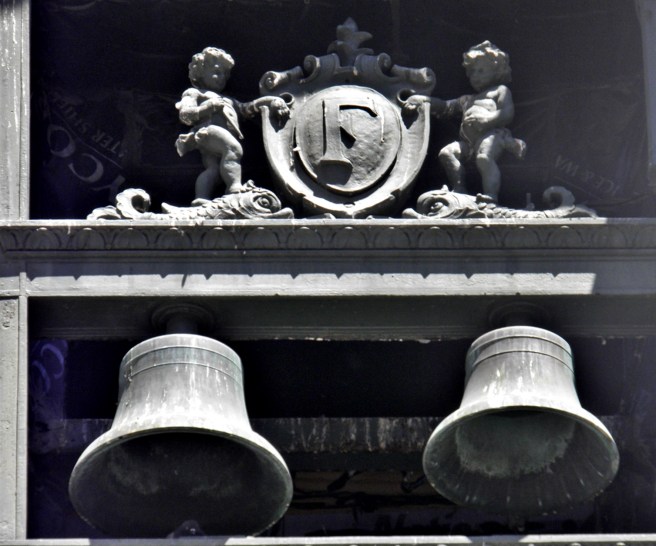 As I explained in an earlier post, a lipogram is simply writing in which the author excludes one or more specific letters of the alphabet. Although lipograms can be totally original works (examples include the novels “Gadsby” by Ernest Vincent Wright and “Lost and Found” by Andy West which both omit the letter e), I am particularly fascinated by the variation where pre-existing texts are rewritten in the form. Last time, I shared my lipogram of the Robert Frost poem ” Fire and Ice” without any i’s entitled “Flame and Frozen Water” . This time I have attempted to revise the first section of the Edgar Allen Poe classic poem” The Bells” by avoiding the most frequently used letter in the English language – e (I am still working on converting the other three). First here is the original:
