An “International Imaginarium For Word & Verse” Interview With Poet Kate Gregoire

Today’s post is an interview with poet Kate Gregoire that was originally published a little under two years ago in the July 29th, 2024 edition of The International Imaginarium For Word & Verse (I hope you will enjoy reading it)…

An”International Imaginarium For Word & Verse” Interview With Poet Kate Gregoire

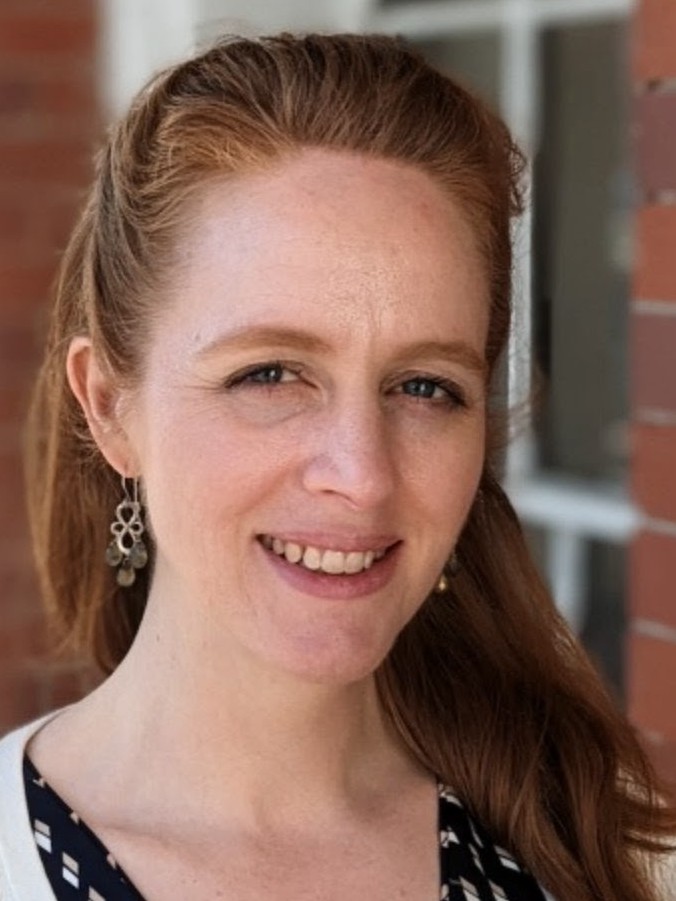
Kate Gregoire is an extremely talented poet and writer who lives and writes in Grafton, Massachusetts. Her poetry covers themes of motherhood, ecospirituality, and incantation. She serves on the board of the Worcester County Poetry Association and organized the Rain Poetry project. She is also an editor of Worcester County’s literary journal, The Three Decker. You can find her work on Instagram @katherinegregoirepoet and at local open mics in central Massachusetts.

PAUL: Kate, before we begin the interview, could you please tell us a little bit about yourself?

KATE: I am a poet and mother. It feels like another lifetime ago when I was teaching German language and literature full-time at university. Now I am in a supportive role of raising my little girl, supporting my husband’s ministry, and volunteering for the Worcester County Poetry Association. I’ve attended some 30+ weddings in this post-covid era with my husband and wrote a collection of poems about this experience called “Plus One“. Another collection is in process, inspired by my initiation into motherhood. What feels most pressing, however, is my work towards a collection of alchemical incantations in poetic form that will contribute to healing the relationship between man and nature.

PAUL: I had no idea that you taught German at University. Have you ever written poetry in German? If so, what do you feel are the differences between composing poetry in German and English? Also do you have a favorite German poet?

KATE: What a lovely question! Yes, I have written poetry in German! Our voice in each language we write is the product of our experiences in that language. Much of my German experience is reading the classic works of that language and engaging in discussions about it with fiercely bright and eager students. When composing, I feel those influences teeming at the surface, supplying me with words, phrases, metaphor. Annette von Droste-Hülshoff, a 19th-century writer perhaps better known for her novellas, has an incredible ability to build atmosphere in her poems. I feel an affinity with the playful Mascha Kalèko, a popular poet of the 1930s, and of course Rilke, whose intense spirituality encourages and comforts me.

PAUL: How were you first exposed to poetry?

KATE: I can’t say, exactly. My first memory of reading poetry was in high school, when I was asked to read Wilfred Owen’s “Dulce et Decorum Est” aloud in class. My father was in the military and reading that poem out loud, I was pulled into the moment “quick boys!”.

PAUL: Can you tell us about some of your favorite poets & their poems and the reasons why you like them?

KATE: Oh, there are a great many. I think of Ted Kooser’s “Dandelion”, a completely unassuming poem about a ubiquitous flower, and his ability to infuse that moment ofseeing with such meaning and encouragement. I’ll never look at dandelions the same. Mary Oliver’s “Wild Geese” is another poem that returns again and again to me, each time imparting a different message. She is another unassuming poet who gives comfort by connecting human experiences like loneliness or feeling lost with the divine natural world around us. I’ve read that she worked to be so precise with her writing, it’s something I strive for in my own writing.

PAUL: How has your writing style changed and progressed throughout the years?

KATE: In the early days of writing, my work was terse and rough, but I began my study of poetry in earnest in 2018 when I checked out Mark Strand and Eavan Boland’s book on poetic form The Making of a Poem. I started working my way through it, practicing the standard forms. Writing with a mind to end rhyme, to repetition, to meter, I find it gives your inner voice extra tools for when that poetic inspiration strikes. I’ve been working towards precision, towards clarity lately, though I’m sensing a desire to return to greater opacity, more intense work with metaphor.Always, though, I write with a mind for rhythm and texture in a poem.

PAUL: What do you feel is your primary motivation to write poetry?

KATE:: I was in a climbing accident in 2018, and that brush with mortality made two things clear to me: I regretted not having started a family and I regretted not taking my poetry seriously. That intuition has served as my primary motivation in these early years of becoming a poet; I’m beginning to understand better now to what purpose as I continue to build a community of poetry around myself.

PAUL: What is your own personal definition of poetry?

KATE: Poetry for me is a still frame, a snapshot of life. It is a collection of words that has the power to pull its reader into the moment it describes and declare a connection.

PAUL: What do you feel are the most vital aspects of poetry (imagery, rhythm, word choice, etc)?

KATE: There is a poem out there for everyone! I need to feel a proper rhythm to the words, I enjoy the texture of alliteration and assonance, I enjoy the incantational quality of repetition, and I love word play!

PAUL: How would you describe the poetry you are currently writing?

KATE: My writing today is very much influenced by my first year of motherhood and my struggle to make sense of this intense experience. Aspirationally, I want to encourage the eco-conscience within my writing and explore the power of words to catalyze change. What if a poem read as a prayer sent out into the world with the power to heal the rift between humans and the natural environment? This project pairs surprisingly well with motherhood, as my daughter takes greater and greater interest in words and naming the natural world around her.

PAUL: Do you recall the first poem you ever wrote? If so, is it possible for you to share it with us now?

KATE: The first poem I ever wrote must have been in early elementary, a few lines musing about what I would become. It had a sweet little ending: “I really wonder!”

PAUL: Have you developed a regular writing routine, and if so, can you describe it to us?

KATE: I’ve had the very real privilege of journeying through Julia Cameron’s The Artist’s Way with two different groups of very close friends in the last three years. I call it a privilege, because the book encourages intense and often painful self-examination that was made easier for me in this supportive group setting. My writing practice has developed through this experience of writing daily pages that then transition into poetic sketches. Sometimes it’s just a little play, rhyming words, stream of consciousness, perspective work, and sometimes I’m surprised by a deluge of words that feel very much like a finished poem. My work in progress is making consistent time to edit and submit my work. I make time to read poetry most days, collections, journals. My husband and I love visiting a good bookstore to see whether a volume will catch our eye. I’ve got a few I’m working through at the moment. Lastly, I meet weekly with two very good friends I met in an online poetry class offered by Driftwood Press in 2021, and we support each other in our ups and downs of writing. We meet monthly with a larger group to workshop our poems.The discussions that come from these meetings are absolutely vital to my poetry practice.

PAUL: What is your actual writing process like, and how do you go about starting and shaping a poem?

KATE: I carry a journal with me all the time (a Leuchtturm 1917 A4 Bullet Journal) to catch what I call “poetry bids”, as in bids for my attention. If I’ve got a few minutes, I’ll sketch the rough draft as soon as inspiration strikes. If not, I’ll make a note and chew on the idea while I’m tidying up or out on a walk. Sometimes there’s an idea that needs a strong metaphor. Those usually take a week of “chewing” before I’m ready to commit the idea to paper. I write in pencil, for the haptic quality of the scratch of graphite on the page, but also to disencumber the latent perfectionist in me worried about making mistakes in pen. I happily cross things out and write away. I find setting a timer for 15 minutes helpful for keeping me focused and continuing to probe the idea for more. I’ll type up a poem that continues to haunt me after that and make edits, saving each draft as I go. I check line breaks, word choice, and make cuts before taking a piece to workshop.

PAUL: What advice would you give to someone who is just starting to write poetry?

KATE: Write every day, not to write a poem, but for the sheer joy of writing and playing with words and form. If you make time every day, or most days, to play at and practice your craft, you’ll be ready to catch that poem when inspiration strikes. Be sure to read as much as you can, it’s hard to write from an empty well; and be sure to make time to let your mind wander.

PAUL: My final question of the evening is there any question that you would like to answer about your life, or poetry, or anything else that I have failed to ask you during this interview?

KATE: Once I finally asked myself who I wanted to write poetry for, the poems came more easily, and I began to share them with my friends.

A Virtual Poetorium Interview With Therese Gleason…

Therese Gleason

Today’s post is the fourth in a series of interviews with poets reposted on this blog that originally appeared in the Virtual Poetorium. This interview with poet Therese Gleason was first published a little over two years ago in the May 26, 2022 edition of the Virtual Poetorium (I hope you will enjoy reading it)…

Therese Gleason is author of two chapbooks: Libation (2006), selected by Kwame Dawes as co-winner of the South Carolina Poetry Initiative chapbook competition, and Matrilineal (Finishing Line, 2021). She was a finalist in the 2022 Wolfson Press chapbook competition, and received an honorable mention for the 2020 Frank O’Hara Prize from The Worcester Review. Her work has appeared/is forthcoming in 32 Poems, Indiana Review, RattleNew Ohio ReviewPainted Bride Quarterly, America, and elsewhere. Originally from Louisville, KY, Therese currently works as literacy teacher at an elementary school in Worcester, MA, where she lives with her spouse and three children. She reads for The Worcester Review and has an MFA in Poetry from Pacific University. Find her online at theresegleason.com. Copies of Therese’s most recent chapbook Matrilineal may be purchased online through her publisher Finishing Line Press by clicking here.

RON: My first question is so who is Therese Gleason anyway?

THERESE; Mom of three, poet, educator, quasi-southerner with a midwestern twist, wife, double-twin (I’m a twin and the mother of twins), friend, unofficial family historian, astrology buff, non-native Spanish speaker, former marathon runner, erstwhile vegetarian, sweet tooth, inveterate napper, ceiling gazer, not necessarily in that order.

RON: Where have you come from, (meaning what city and state)?

THERESE: I was born in Springfield, Illinois, moved to St. Louis, Missouri when I was a toddler, and then spent most of my formative years in Kentucky, growing up in Louisville and then attending the University of Kentucky in Lexington for my undergraduate degree in Spanish and my masters in English. I also spent a summer living in Cape Coast, Ghana, and lived two years in Madrid, Spain, two years in Washington, D.C., and over a decade in Columbia, South Carolina. We moved to Worcester from South Carolina five years ago this summer for my husband to take a position directing the International Development, Community, and Environment department at Clark University, and I’m proud to call central Massachusetts home. I heart Worcester!

RON: Who influenced your abilities in writing?

THERESE: I am fortunate to come from a family of readers and lovers of literature and art. I grew up being read to from as far back as I can remember, including my father reading me and my two sisters picture books and then The Little House on the Prairie series when we were in preschool. My mother is a voracious reader and I have always marveled at her ability to completely lose herself in a book – probably a survival mechanism for a mother of five. She took us to the library practically weekly and we read rather than watch much T.V., which she limited stringently.

My grandfather, too, was a huge influence, never failing to ask me (and his other two-dozen plus grandchildren and great-grandchildren), what I was reading. He introduced me to Emily Dickinson and Elizabeth Barrett Browning, whose poems he could quote by heart. A medic in World War II at age nineteen, he went on to father seven children and have a long career as a cardiologist, after which, in his retirement, in between learning French and golfing daily, he wrote three memoirs and was at work on his fourth at the time of his death. Not long before he died, he passed the torch to me when I congratulated him on his third self-published book, saying “you’re next.”

RON: Who is your most loved poet (or poets) and why?

THERESE: This is so hard to answer…but it’s probably Stanley Kunitz, for his humanity, imagination, intelligence, and the beauty of his language and insights. I could go on for pages about all the others I also adore…so I’ll spare everyone and stick with just one.

RON: Do you have children and do you write anything for them? Or about them?

THERESE: I have three spirited children who amaze me and make me laugh every day: my oldest daughter is thirteen and my twins, a boy, and a girl, just turned ten. They sometimes find their way into my writing, but I don’t tend to write things specifically for them.

RON: How much time do you spend writing? Like, do you write every day?

THERESE: I write almost every day, but that has not always been true. When my children were younger, I had long dry spells of not reading or writing poetry. I find it’s an ongoing process to carve out the time and space I need to write while being flexible based on my other roles and responsibilities, namely parenting and teaching literacy/reading intervention to students with dyslexia and other learning differences.

RON: Paul, do you have any questions you’d like to ask Therese?

PAUL: Yes, thank you, Ron. I do have a few… Therese, can you tell us what it is like to pursue your Master of Fine Arts in Writing, and do you think that is something every poet should do?

THERESE: I couldn’t speak to what other poets should do, but I am infinitely grateful that I took the plunge and have been able to pursue my MFA at Pacific University. I pondered doing this for years, and finally decided on a low-residency format, to allow me to keep working and taking care of my family while learning from a roster of poets so outstanding that I literally pinch myself that I get to study with them: Kwame Dawes, Mahtem Shiferraw, Marvin Bell, Dorianne Laux, Joseph Millar, Ellen Bass, and Shara McCallum, to name a few. In fact, I sought out Pacific University knowing Kwame Dawes was on the faculty, having been fortunate to work with him before. My main goals in undertaking the MFA were to cultivate a daily/near daily and regular reading and writing practice that I can sustain and maintain in the midst of ‘real life’ and my other family and work responsibilities; to improve my craft, and to find a community that supports and inspires me.

So far, one year into the program, I can say my investment is already paying off in spades. I am so glad I gave myself this gift and fortunate to have this opportunity. The way the program works is that over two years, we attend five intensive, in-person residencies with daily workshops, craft talks, and readings of 10 days each, which happen to be in beautiful Forest Grove and Seaside Oregon. During each of the four semesters, we are matched with a faculty mentor and advisor, with whom five packets of work are exchanged throughout the semester; these include about 4-6 poems each, and three reading commentaries on poetry collections. Each semester, our faculty advisors help us create a reading list of 20 books; third semester includes a critical essay and the fourth semester includes a creative thesis. The program at Pacific has an inimitable combination of rigor and warmth and is genuinely friendly and supportive while also challenging each writer to be their best.

PAUL: Do you ever do research while writing a poem, and if so, are there any particular subjects that you learned a lot more about now because of your poetry?

THERESE: I have benefited from the extensive genealogical research that my great aunt did on my maternal line: I have used the citations in her two meticulously researched books as a springboard for continued digging via ancestry.com and other online and archival sources. This has informed a cycle of poems (some of which were featured here), and that I am continuing to work on. Something I learned through this research is that one branch of my family has deep roots in New England going back to the earliest days of the colonies, with involvement in such formative events as the Salem witch trials and the American Revolution.

PAUL: Can you tell us a bit about your process of writing a poem (especially how you usually begin)?

THERESE: Well, usually I begin writing by hand in a composition notebook, one of those speckled black and white ones with a mechanical pencil, sometimes from a prompt and sometimes when the spirit moves me. Then I move to the computer and type the poem, which allows me to manipulate the lines and language more easily. I tend to make many versions and changes, sometimes printing poems out and marking them up, sometimes emailing them to myself and reading them over and over at different times of day and in different places. I also read my poems out loud to try to refine the lineation and sonic elements. I’m lucky to have a couple of wonderful writing groups in which we read and share comments on each other’s work every week/biweekly. Having community to help refine the work and be in conversation with other poets is something I sought for a long time, and I am grateful to have this in my life now.

PAUL: How did your chapbook Libation come about? For instance, is this a collection of poetry you previously wrote, or did you write poems specifically for this chapbook?

THERESE: I didn’t set out to write a chapbook; Libation (Stepping Stones Press, 2006) came about from my daily journaling and poetry writing during the summer of 2000, when I spent May to August in Cape Coast, Ghana, with my now-husband Ed Carr, who was working on archaeological and ethnographic research in two small villages called Ponkrum and Dominase, just inland from Cape Coast. I carried my notebook everywhere and crafted poems out of my observations and experiences. I returned to Kentucky and workshopped some of the poems in my classes led by James Baker Hall, with a phenomenal group of peers. Then for two years the poems sat while I taught English in Madrid. When we moved to Columbia for my husband to take a position at the University of South Carolina, I was incredibly lucky to encounter the South Carolina Poetry Initiative at the university, headed by Kwame Dawes.

This is kind of like a fairy tale, but he graciously offered to read my manuscript and provided detailed, generous feedback. I also participated in the SC Poetry Initiative’s First Book Project, a small (free, open to the public) group of poets with manuscripts they were working to arrange into collections. We took turns reading each other’s manuscripts and providing feedback on the order and coherence of the pieces as a whole as well as making other editorial suggestions. It was led by Ed Madden, an incredible poet and teacher, and several of us ended up getting published afterward. I entered my chapbook in the inaugural South Carolina Poetry Initiative Chapbook Competition, and it was a co-winner, selected by Kwame Dawes and published by the Poetry Initiative at the University of South Carolina. It was a dream come true and a combination of luck and timing that I happened to be in the right place at the right time to access such a marvelous poetry community. I didn’t quite realize at the time how unusual and charmed my experience was, but I do now, and will always be grateful.

A Virtual Poetorium Interview With Poet Robert Eugene Perry

Robert Eugene Perry

Since both the Virtual Poetorium interviews with James R. Scrimgeour and Jonathan Andersen, which I previously reblogged here on this blog, seemed to be fairly popular with readers, I am following them up today with a more recent interview I did with the poet & novelist Robert Eugene Perry that originally appeared just a few months ago in the February 22, 2022 edition of the Virtual Poetorium (I hope you will enjoy reading it)

Robert Eugene Perry is a native of Massachusetts. Both a talented novelist and poet, his first novel Where the Journey Takes You, a spiritual allegory combining poetry and prose, was published in 2007. This was followed by three collections of poetry The Sacred Dance: Poetry to Nourish the Spirit in 2008, If Only I Were a Mystic, This Would All Come So Easy in 2011, and Surrendering to the Path released by Human Error Publishing in 2020. His latest book Earthsongs, also published by Human Error Publishing in March 2022 (a month after this interview) is a collection of 50 of his poems as well as 50 companion black and white sketches by his artist friend Ferol Anne Smith (All his books can be purchased online via links found on his website: https://roberteugeneperry.myportfolio.com) Perry hosted a poetry group for disabled individuals at the former New England Dream Center in Worcester MA, and has emceed the monthly Open Mic at Booklovers’ Gourmet in Webster MA since May 2017. Three poems were included in NatureCulture/ Human Error Publishing 2021 anthology Honoring Nature. Two of Perry’s poems were published in Poetica Magazine’s 2020 Mizmor anthology. He has had several poems published in Worcester Magazine, and his short story “In The Company of Trees” was published by WordPeace journal in 2021. A metaphysical poet, he draws inspiration from nature endeavoring to reveal connections between our higher selves and the natural world. He is a devoted husband and father of two grown boys.

A Virtual Poetorium Interview With Poet Robert Eugene Perry

PAUL: Good evening, Bob! My first question for you tonight is who or what first inspired you to start writing poetry?

BOB: I was 12, seventh grade English class writing assignment. We had just finished reading some famous poems by Frost, Dickinson, and William Carlos Williams. I especially remember “This Is Just To Say”, I had never heard anything like it.

The first poem I wrote was called “Night”. It went something like: “Night is calling/ the bats are hunting/ the owls are hooting/ something is moving/ is it man or beast?/ I’ll never know/ it’s going away.” My teacher loved it. Everyone else gave me a hard time because it didn’t rhyme.

PAUL: Who are some of your favorite poets and can you tell us why you like them?

BOB: So I will start with my two favorite poets, both of which I was fortunate enough to do Dead Poets segments at the live Poetorium in Southbridge: Mary Oliver and T.S. Eliot.

On the surface, their poetry may seem to be disparate. Upon closer examination, they both write about faith, connection, and our place in the universe. I discovered Eliot in High School, where I took on The Waste Land out of hubris (the most difficult choice given) and waited until the last minute to start it. My professor gave me a D, which was actually more than it deserved. Through the years I have read & reread most of his other works, and found a depth, unlike any other poetry, especially in Four Quartets.

I came late to the Mary Oliver party, only discovering her in the last decade. Her connection to Creation and ability to use language to describe it is beyond compare. These are the only two poets that I have multiple volumes and return to again and again.

I am very fond of poetry anthologies for two reasons: discovering poets who resonate with me, and also hearing many voices not only broadens my perception of the universe, but it also keeps me from trying to emulate anyone else’s style. I am grateful to have poems included in two anthologies over the past couple years: Poetica magazine’s 2020 Mizmor Anthology: Spirituality in Nature and the NatureCulture/ Human Error Publishing 2021 anthology Honoring Nature.

I also receive two daily emails and one monthly to keep up on current poetry: poets.org, Writer’s Almanac, and Gratefulness.org. Poems that move me I will share to Facebook, and so encourage others to discover modern poets.

PAUL: How has your writing style changed and progressed throughout the years?

BOB: As I mentioned earlier, the first poem I wrote did not rhyme. I spent the next ten years or so working on rhyme scheme, meter, and cadence until I reached what I felt was the apex in Cold Seasons of Self. The next decade was honing narrative, finding the cadence in blank verse, finding the correct words to express what was going on inside me. I would define these two decades as my intellectual quest for expression and connection.

My poetry mirrored my faith journey, which moved from Agnostic to Pentecostal (at age 21) to Non-Denominational to Catholic to Episcopalian to Who Gives A Damn About A Label (my current home).

My first two chapbooks were more religious in nature, as that was the way I expressed myself at the time. I have used the term metaphysical poet for the last few years as it most adequately describes the place where I am coming from: trying to see how the divine manifests in creation, and express that through whatever means possible – generally using allusions, symbols, and metaphors from nature.

PAUL: How would you personally define “Poetry” and for you what do you feel are its most important aspects (imagery, rhythm, word choice, etc.)?

BOB: To define a thing is to try and put it in a box. Some things should be left wild & free to develop in whatever way they grow. I know that you are an aficionado of poetry forms, so I hope that does not rub you the wrong way!

For me, it is always about the message first. No matter how well crafted, or true to poetic form, if I cannot understand what the poet is saying (on some level) then it will leave me cold. The message does not have to be obvious, but it has to be there.

The next in importance is cadence, it has to have some type of flow to move it along. Imagery is wonderful for getting immersed into the poem itself. A rightly placed word is like finding a gem along the path.

PAUL: How would you describe the poetry you are currently writing?

BOB: I just sent a new manuscript off to Human Error Publishing, called Earthsongs. It is a collection of 50 poems and 50 black and white sketches with my artist friend Ferol Anne Smith. This was an extraordinary venture, because it caused both of us to view our art through the eyes of one another.

The majority of the poems are nature-themed, so certain images naturally presented themselves. She used many of my photos from my weekly walks in the woods as springboards, but some were intuitively grasped from the message of the poem.

It was absolutely a labor of love, we would confer about the sketches and we found that we were in sync in almost every instance. I am in awe of her gift, and it moved me as a poet to see how the message came across and translated into the image.

PAUL: Do you recall the first poem you ever had published? Could you tell us where it appeared, and if possible, share it with us now?

BOB: The first poem that won an award was published in an International internet forum called the Poets of Mars. The poem is called Quest, and was the January 2019 winner…

Quest

Restlessness aside, this day is all I own
to try and piece the mystery
of all that’s right in front of me
the passion and calamity
each single heart has known.

Preposterous indeed, to attempt to understand
the music of the spheres
and if god interferes
when the verdict of the years
lies beyond my mortal span.

Indescribable, this joy, that masquerades as pain
the veil of this uncertainty
longing for eternity
deep and wide as any sea
the risk could all be vain.

Ineffable, this grace, which launched a foolish quest
to seek out a connection
between each path’s direction
towards the divine reflection
and find my soul at rest.

Robert Eugene Perry (originally published on the Poets of Mars internet forum)

PAUL: Have you developed a regular writing routine, and if so, can you describe it to us?

BOB: I sit by the French River every day after work, listening to the river flow. I do that in all four seasons, each season has its own beauty and voice. In fine weather I will walk in the woods after work or on the weekends.

Some days a poem will come, some days it will not. I always have pen & paper. I never worry. If I am in the mood to write, I will write even if it does not seem particularly good. Those words are sometimes the inspiration for another poem down the line.

PAUL: What is your actual writing process like, and how do you go about starting and shaping a poem?

BOB: Almost always the title of a poem will suggest itself to me with a basic idea of what I want to write. Sometimes these come out of meditation, walking in the forest, sitting at the beach, or a situation in my daily life.

I write the title down, and if there is a start to the poem I will include that. Most times it is just the title, and writing it down makes a concrete intention to create something. When I was younger, the most important thing was to express that which was deep inside. Now when I write, connecting with others is paramount.

The poem itself takes its shape and form as it is being created. I never start out saying I am going to use this form or that style. The poem has a life & voice of its own, and when it is released into the Universe it will affect people differently according to where they are in their own journey.

For the final edit (and also along the way) nothing is more important than reading the poem out loud. I will catch errors, inconsistencies and rhythm/meter problems easier that way. It is also great practice for reading out at open mics & such.

PAUL: How important do you feel revision is in writing poetry, and how do you know when a poem is finished?

BOB: I know some poets who never revise, and others who edit to the point of distraction. I had one friend who spend so much time on a particular poem she said she thought she “edited all the goodness out of it”!

I think once the poem finds its voice, it is important to edit the structure and cadence so as to reveal the intonation of the poem in the written form. When a person reads it, they should be able to hear the way I would read it out loud in their head.

PAUL: Could you tell us about any poetry or writing projects you are currently working on?

BOB: I mentioned Earthsongs has been sent to the publisher, I anticipate the book being available sometime in March 2022. I have scheduled a book launch party at Booklovers’ Gourmet in Webster MA for April 2nd. We will have two sessions 1-2 and 3-4 PM so promote a more intimate atmosphere and to provide smaller crowds. It will be multimedia, with Ferol showing her sketches on a large screen while I read.

The next book of poems I am working on are more confessional in nature, a little more edgy. I think it is important to look for different ways of expressing myself and making that connection with others.

PAUL: What advice would you give to someone who is just beginning to write poetry?

BOB: Read everything you can. Anthologies are wonderful, because you are exposed to so many different voices. If you are just starting out, write every day. Keep a journal, oftentimes your thoughts will turn into poems. Also, when keeping a journal you are less likely to throw away poems that you think are no good.

I used to throw away tons of poems before I came to my current way of doing things. Find your own way of doing things. Crossing things out is a wonderful way of helping the poem to evolve, you can see your progress that way. If you crumple it up and throw it out it is gone forever.

PAUL: My final question of the evening is there any question that you would like to answer about your life, or poetry, or anything else that I have failed to ask you during this interview? If so, please answer it for us…

BOB: Nothing is ever wasted. Every single life experience, no matter how painful or humiliating can be used to help another along the path. Poetry is art, and all art is meant to be expressed and shared with another. We absolutely need each other.