Paul Szlosek was born in Southbridge, Massachusetts, but currently resides in the nearby metropolis of Worcester. He was co-founder and host of the long-running Poet’s Parlor poetry reading in Southbridge and Sturbridge, as well as a past recipient of the Jacob Knight Award for Poetry. His poems have appeared in various local publications including the Worcester Review, Worcester Magazine, Sahara, Concrete Wolf, and Diner. He’s probably best known in the Worcester poetry community for his fanatical obsession with obscure poetry forms, and has invented his own including the ziggurat, the streetbeatina, and (most recently) the hodgenelle.
I am so pleased to announce that my interview with Chrystal Rice Cooper about the creation of my poem “A History of Hardtack (in One Sentence)” has been featured on her blog as part of her wonderful ongoing series called “BACKSTORY OF THE POEM” (being an uninformed idiot, I just discovered it has already been published for almost a month in the wee hours of this morning). Having interviewed poets myself as part of the Virtual Poetorium, I have to say it was such an honor and a delight to be finally on the other end of the process. You can check out the entire interview along with plenty of relevant photos on her blog here:
In order to entice you to click on the above link, I’m posting the poem here which was the subject of the interview: “A History of Hardtack (in One Sentence)” that first appeared in Silkworm 12: Survival in 2019 (I’m hoping after reading it, you will be intrigued enough to want to learn more about it’s unusual origin)…
A History of Hardtack (in One Sentence)
Centuries ago, twice, thrice, or quadruple baked rock-like slabs of flour, water, and sometimes salt known as hardtack, brewis, pilot bread, sea biscuits, ship’s crackers, (or disparagingly) sheet iron, molar breakers and worm castles filled the holds of most seafaring vessels (along with daily rations of beer or rum), sustaining royal sailors and merchant mariners, pirates and privateers, whalers and fishermen, sea dogs and old salts, the hardiest of men, who endured perilous ocean voyages lasting multiple fortnights crossing the Atlantic and Pacific through squalls and dead calm, while I now stand rubber-legged on the bow of a ferry, clutching a wax paper sleeve of their frail descendants, unsalted saltines, which I nibble as I sip from a can of flat Coke in an attempt to quell a tsunami of queasiness in my stomach, praying to both Neptune and Nabisco that I be allowed to survive this hour-long excursion across the bay from Boston Harbor to George’s Island.
—Paul Szlosek (Originally Published in Silkworm 12: Survival)
In honor of Poetry Month, here is another invented poetry form of my own creation (in my own biased opinion, along with the Streetbeatina and the Hodgenelle, probably one of my best), the Ziggurat…
The Ziggurat is a 14-line poem of 4 stanzas. Like the hay(na)ku, it is isoverbal, meaning its lines’ lengths are measured by the number of words instead of syllables or meter (thus my original name for it was the “Isoverbal Sonnet”). The first stanza is two lines of two words a piece, the second is 3 lines of 3 words apiece, the third is 4 lines of 4 words apiece, and the fourth and final is 5 lines of 5 words apiece. Each stanza uses a different monorhyme, thus the rhyme scheme can be expressed asaa bbb cccc dddd.Also another rule is the title must always consist of just one word.
The form derives it name from its shape when centered on a page, which somewhat resembles a ziggurat, the terraced step pyramid found in ancient Mesopotamia. I am no longer a fan of that style of presentation for a poem, but here is one of my ziggurats in that format so you can get the idea.
Recital
King Kong’s singing songs
of unrequited love like a dove perched high above
the congested city traffic. His audience – half hick tourists, half urbanites, photographic opportunists who laugh, click
snapshots. Their catcalls, derision increased until crestfallen Kong’s crooning ceased. Today, all across the Northeast, headlines proclaim “APE BARITONE – DECEASED! BAD REVIEWS KILLED THE BEAST!”
The very first and so far the only ziggurat to appear in print is the following which was originally published last year in Star*Line, the Journal of the Science Fiction Poetry Association (the editor even included a note explaining that the poem was a ziggurat, a form of my own invention):
Thaumaturgy
To reverse any curse,
you simply bless the resulting mess that occurs, unless
things get really drastic. Suppose Time becomes elastic and alternative pasts stick together like cheap plastic
toys fused by intense heat. Unique events begin to repeat themselves. Parallel chronologies collide, compete. Ain’t any way to defeat Chaos. My expert advice? Retreat!
Due to the apparent comical nature of its monorhyme, I originally thought that the ziggurat was only suited for light verse and humorous subjects. But after reading “Forget-Me-Not” by John Hodgen (one of my favorite poets), and seeing how masterly he used the monorhyme for great effect in his heart-breaking poem about the death of his brother from cancer, I have had a change of heart. Here are two I wrote about “Death” and “Depression”, probably two of the most serious matters I can think of (please let me know if you feel these two poems work or if the ziggurat should just be reserved for Ogden Nash-style frivolity):
Funereal
No surprise- everybody dies,
even me, you, the President too. We can’t sue,
stop Death by force. Like a thoroughbred horse, Life runs its course. The finish (a source .
of sorrow for our friends) is certain, although one pretends it’s not, that it depends on changeable circumstances, unpredictable trends. A good story always ends.
Depressive
Not only The lonely
Suffer the blues. Even joyous news Can often confuse
Us make us cry. Don’t ask me why. Psychological mysteries that lie Unexplained aren’t solved by
Scientific process or rational thought. Melancholy is a battle fought Within the soul, a shot Of emotion, cold then hot. Sometimes we’re happy – sometimes not.
This last one was written many years ago as part of “Poets in the Gallery” project at the Worcester Art Museum during an exhibit on Abstract Art & Expressionism:
Anti-Abstraction
Let’s subtract the Abstract
from all Fine Art and redefine Color and Line
as simply tools meant to help artists represent Reality, not to invent some pretentious, psychologically bent
vision of Heaven or Hell. Arguments for Abstraction don’t jell. What? You’re trying to tell me Pollack (splattering paint pell-mell) was superior to Norman Rockwell?
So what is your opinion of this form, my friends? Do you agree with me that the ziggurat is one of the best that I have created or did I truly miss the mark this time? I sincerely hope that you enjoyed reading about it along with my humble examples today, and that perhaps you will even try the ziggurat yourself. If you do, I can practically guarantee you will have a great deal of fun, and be pleasantly pleased with your results.
I am very pleased to announce that this month, my co-host Ron Whittle and I will be producing our ninth edition of the Virtual Poetorium (the tenth, if you count our special holiday Ho-hoetorium last December) with the one and only Eugenie Steinman (author of Persimmon: Poems and Recipesand popular host of the call-in radio program Radio Jail) as our featured poet. Like we did last month, I’d like to once again open up this April’s Virtual Poetorium for anyone who would like to participate and invite all my fellow bloggers and faithful readers (or just anyone just happening to read this) to be a part of our unique online poetry gathering in print.
To be part of our virtual open mic, please send us one of your own original poems or stories (under 2000 words please) either in a Word document file or pasted in the body of an email along with your name, any opening remarks you care to make, and where your poem has appeared if it was previously published to poetorium@mail.com by Friday, April 23rd. Also if you like, you can send us a photo of yourself to be posted above your poem, but that is totally optional.
Once again, we also need contributions to this month’s Poetorium Group poem, but to keep it fresh, we are changing it up a bit. To participate this month, please send us three separate lines with each starting with the phrase “A Poem Is… “. The end word of each line also must rhyme with the words ” tea” or “fee”. The reason we are requesting three separate lines is in case we receive duplicate or very similar lines and we need to make substitutions, but be assured at least one of your lines (if not all three) will be compiled and included in this month’s Virtual Poem. As always, all contributions will remain anonymous (unless otherwise requested). Like in the open mic, the deadline for submissions is the night of Friday, April 23rd.
We will also be continuing our monthly writing challenge in which we invite you to write in a different flash fiction or poetic form each month. This month’s challenge is to write some New-Style Twitterature, which are short stories written in 280 characters or less (this includes letters, numbers, and punctuation marks, but not spaces) – the same limit length of the most recent version of a tweet (as an alternative, you can also write Old-Style Twitterature which are just 140 characters or less which was the length of a tweet before Twitter changed the rules). Please send us your best efforts by Friday, April 23rd to be included in this month’s Virtual Poetorium.
If you have any questions about submitting to the virtual open mic, the group Poetorium poem, the writing challenge, or anything else about the Virtual Poetorium itself, please leave them in the comments of this post, and I will try to answer them right away.
Thank you so very much for reading, my friends! I really appreciate everyone’s continued support of this blog, and hope to hear from you soon with your contributions to this month’s edition of the Virtual Poetorium!
My dear readers, I apologize for being so lax about posting lately, but to make it up to you, and hopefully provide inspiration for you to write more poems this April, I will be introducing to you today what I believe is a brand new invented poetic form: The Homonymization.
A homonymization is an experimental poetry form of my own invention, in which the entire poem is written using homophones – words sounding the same but having a different meaning and spelling. Because of this, the poem, at first glance, will appear to be totally nonsensical, but will make sense when either spoken aloud or sounded out in the reader’s head. Along with standard and familiar ones (such as “sail and sale” and “be and bee”), the homophones used can also be proper nouns or names (such as “Waring” substituting for wearing), foreign words (“oui” for “we”), and letters (“q” for “queue”). Also one word can represent two (“iamb” for “I am”) or two words one (“bee leave” for “believe”).
As an example, here is a homonymization I wrote, along with its “translation” printed in italics below:
Hour Sensored Whirled
Wee awl Liv inn eh sensored whirled, R tolled watt two bee leave inn, watt two dew.
Wee dew knot no watts rite oar fare Oar reel. Eye no your knot Abel two
Sea mi, oar here watt eye c’est, Sew eye Hyde inn plane site
Waring cheep read shoos, Weight four mourning lite
Four sum won, sum buddy Two notis mi, sew eye no
Iamb reel.
Our Censored World
We all live in a censored world, Are told what to believe in, what to do.
We do not know what’s right or fair Or real. I know you’re not able to
See me, or hear what I say. So I hide in plain sight
Wearing cheap red shoes, Wait for morning light
For someone, somebody To notice me, so I know
I am real.
So what do you think of the homonynization, folks? Is it a poetry form you’d like to try, or is it just too weird for your tastes? If you do decide to take up the challenge (I think you will be pleasantly surprised by the results), I’d love to see your homonymization, so please don’t be afraid to share.
Thanks so much for reading, and please enjoy the remainder of Poetry Month!
Here is the One-Year Anniversary Edition of the Virtual Poetorium from last night reposted from the Poetorium website @ poetorium.home.blog. I want to thank my fellow bloggers Brad Osborne for being our featured poet, and Ken Ronkowitz& Diane Puterbaugh for graciously accepting my invitation to participate which I previously posted on this blog. I know it’s quite a long read, but I hope you will enjoy it…
The Virtual Poetorium March 30, 2021
Ron Whittle
RON: Okay, people, please find your seats now, and we’ll get the Poetorium started. Well, the biggest news for us is we have lost our venue due to COVID19. We will have to find a new home when things open back up again. If anyone has any ideas, could please you let either Paul or myself know?
I’m going to start with an opening poem as I usually do. This poem is called “I Am Half the Sea and Half the Storms Gale”.
I Am Half the Sea and Half the Storm’s Gale
I am a brother to the Moon a tidal child forever wondering the call of the rising surf And being by the sea is like an ongoing baptism where your soul is washed clean and can roam with the earth’s ever rising tides We may be limited by the borders of our skin but there are no borders barriers, or limits put on our minds And I have seen the sea in ways our eyes can not perceive where words could neither define nor explain and even though my heart may wander my soul will always be one with the sea
— Ron Whittle (Hampton Beach, New Hampshire, USA 2020)
Before I turn this over to Paul, I hope that all of our followers have managed to stay clear of the COVID19 bug. If not, I hope you now are over it and safe and sound.
Paul, I know you got some things up your sleeve. Do you want to take over for now?
PAUL: Thanks, Ron, I do. Now, normally I would be presenting the “Mystery Poet” segment at this time, but I think we will be dispensing with that portion of the show tonight, perhaps even permanently. What do you think, folks? Is the “Mystery Poet” something that you enjoy, or is it time to give it the old heave-ho? Maybe you would like us to bring back the “Dead Poet Tribute” or do you have another idea for something else for us to do? Please let us know your opinion because we want to make the Poetorium the best poetry show possible, and we need your feedback to do that.
With that being said, I think we really do have a pretty great show for you tonight with a fantastic line-up of poets in our open mic (including someone who traveled all the way from the great State of Tennessee to make their Poetorium debut) and an amazing feature by the fabulous poet and blogger Brad Osborne (some of you may remember Brad from his appearance at our special Virtual Ho-ho-etorium last December). Ron and I will be bringing Brad up to the stage so we can sit down and interview him in just a little bit, but I have a few observations and announcements to make before we do.
First of all, I am proud to announce that tonight marks the one year anniversary of the Virtual Poetorium. Believe it or not, we first launched this virtual version way back in March of last year when the pandemic first began, and we were no longer able to continue the live Poetorium shows. Unbelievably, the number of Virtual Poetoriums have now surpassed the amount of live sessions we have done. Hopefully, we will get back to meeting in person in the very near future, but until then, Ron and I are committed to keep churning out this very unique online poetry show in print. Thank you everyone for your continued participation and support!
Also Ron and I received some great news about Anne Marie Lucci, the Poetorium’s very own official caterer and baker of blond brownies that we are dying to share with you all. Anne Marie, could you please stand up…we don’t want to embarrass her, but we are so proud and happy to have heard that her poem “The April Fool in Us All” is being published in the baseball-themed commemorative edition of the Worcester County Poetry Associations irregular anthology series The Issue which will be entitled “Take Me Out To The Ball Game” and distributed to every attendee of the opening day game of the Polar Park Worcester Red Sox! So let’s all give her a big hand and be sure to congratulate her when you next talk to her.
And now, I will stop blabbing and get on with the show! As I mentioned earlier this evening, we are so pleased to have the one and only Brad Osborne as our featured poet at the Virtual Poetorium tonight, Before we call him up to the virtual stage to be interviewed, I’d like to tell you a little more about Brad:
Brad Osborne
Brad Osborne, a highly decorated Marine combat veteran and poet living in Pennsylvania, is a contributing editor and member of The American Poets Society.His poetry has been published in “The Gettysburg Historical Review”, “NY Naval Quarterly”, “Tempest Poetic Society Journal”, and the anthology “Expressions” by The American Poets Society. His works have been featured online by Spillwords Press NYC, The Navy Times, Reader’s Digest, Healthy Living, Meditations, and many others. He was awarded Anna Rabinowitz Prize by the Poet Society of America for 2015, the Silver Medal for Poetry by the Pennsylvania Poetry Review for 2009 and was a finalist for the Buckner Award in Poetry for 2017. Having traveled the world in youth, Brad now resides in the rural beauty of central Pennsylvania, a boon to his two great passions, poetry, and motorcycling. Both of which seem to add all the flair a happy life requires. He is currently editing his first book of poetry “Reticent Ink”, which he hopes to publish soon.
Please welcome to our virtual stage, Brad Osborne!
RON: Brad, We do this so that we can get to better know all of our guest speakers. It was something that both Paul and I agreed on from the very beginning. Most poetry events never let us get to know the Poet, the man or woman. So we decided it was high time that someone should do this. So with that in mind, here is my first question… Who is Brad Osborne?
BRAD: First, let me thank you both for the honor of attending. I am excited to be among such talented artists. There is not much to tell. I lead simple life where my day job working data maintenance for a national medical provider supports my hobbies and a comfortable lifestyle. I am single and the kids are all grown, so I have a great deal of “me” time. Though my writing consumes a great part of that.
RON: What was it that got you started writing?
BRAD: I have always been enthralled by the written language. My mother was an English teacher who also proofread for Doubleday when I was young, and I grew up in a house that looked like a library. I was completely captivated by the power of the written word. I would say my own writing started as a way of understanding my own thoughts and feelings, as in their articulation I found great insight about who I was, and more importantly, who I wanted to be.
RON: Who are your favorite poets and why?
BRAD: I love Whitman for his blending of the transcendental with overt realism. Maya Angelou for pushing verse into the next century. I also favor Langston Hughes for his ability to evoke a passionate response. But my favorite of all is Dylan Thomas, whom I consider a master of the rhythmic ballad.
RON: If you had one thing to tell aspiring poets to do, what would that be?
BRAD: Read every piece of poetry you find.
RON: What would you call the type of poetry that you write?
BRAD: I would consider most of my works to be classical in style. Often form driven with a great penchant for lyricism. But I have also written in the historical narrative for a few published pieces.
RON: Outside of poetry and blogging, what other interests do you have?
BRAD: I am an avid motorcyclist and a voracious reader. One hobby for when it is sunny out and one for one it is not. Add to that the time I spend writing, and all the “me” time I talked about vanishes quickly. I also find the time to spend with friends and family who are my greatest joy in life.
RON: Would you please tell us about your family life and where you live?
BRAD: Well, I have already talked about the excitement that is my somewhat monastic life, so let me talk about where I live. I reside in the tiny town of Shiremanstown, a suburb of the capitol Harrisburg in central Pennsylvania. I love it here, as it is only a ten-minute drive to all the amenities a big city can offer, such as theatre, galleries, museums, music, dining, etc. Or ten minutes the other direction and you are in the middle of quiet Amish farmland amongst the beauty of nature. That is what I call having a balanced life.
RON: Do you ever write any humorous poetry. If so, would you share it with us?
BRAD: I am planning to present a couple of humorous poems tonight. The “Life in Contradiction” is quite lengthy, but I am also including “Poetry” which is shorter and a light-hearted look at our art.
RON: Paul do you have any questions you’d like to ask Brad?
PAUL: Yes, thank you, Ron. I do… Brad, I realize Ron has already asked you about your favorite poets, but which ones do you feel, if any, has most influenced your own writing?
BRAD: I think Dylan Thomas is a favorite because it was within his poems, at some very early point in reading, that I realized the power of well-written poetry. It was likely the first time I was moved to tears by mere written words. That certainly provoked in me a desire to touch others in a similar way.
PAUL: As you already know, Brad (but the audience probably does not), we first met on the internet through our perspective blogs. Yours, Commonsensibly Speaking, is such an absolute pleasure to read, filled with such astonishing poetry and thoughtful insights. What inspired you to first start blogging?
BRAD: I think like most artists, I started as way to gauge the strength of my writing. Both editorially, which my early blog posts included, and poetically once my blog moved to be strictly poetic works. I was looking for feedback and criticism to improve my skills. But the sense of community and support made it much more. I was introduced to aspiring poets from all over the world and found such wonderful poetry out there that I may have otherwise never seen. I have had the privilege to collaborate with established poets and mentor young writers finding their voice. I have been refreshed to find that my struggles at writing are not uncommon and never permanent. And it has afforded me the connections to be so greatly honored by being here today.
PAUL: Do you have any expert advice for novices who might like to try own their hand at blogging?
BRAD: I sure do, as I have been at this for some time.
It does not cost anything. My entire blog is free.
Do not be afraid to change direction. My site grew into being exclusively poetry, but even I am not sure what it may grow into next. I have started series and killed series. It is and always will be a work in progress.
As with any web site, most platforms provide a ton of metrics on views, visitors, likes and assorted minutia. Pay them little attention. Take the long view. Only after you have been writing for a number of months can you even begin to start to see trending.
Read other blogs, like their pages, leave comments, ask questions, and otherwise engage with others on the platform. It builds your support community, exposes you to other inspirational writing and increases your exposure.
Last, but most important, be consistent. If you are only going to post infrequently, readers will not make coming to your blog a habit. I have other bloggers, like Paul, that I follow and read every day. Personally, I have had a blog post every day for nearly a year and a half. My readers know they can always find me and that the post will be about poetry. You don’t have to be that committed, but you should be consistent.
PAUL: One thing we both seem to have in common is a deep, almost passionate interest in poetic forms, which you share with your readers on your blog in your weekly feature “Whittled Words”. What do you feel are the advantages of working in a specific form?
BRAD: Paul, we do share that inordinate passion for the beauty that is form poetry. Over the course of my “Whittled Word” series, I have visited and written in nearly sixty different forms of poetry thus far. Within each form we find the building blocks of all great poetry, creatively placed to impose tempo, timbre, and tone. From the hendecasyllabic lilt of the Strambotto to the sweet refrains of the Ode. From the Shakespearean siloloqy to the brevity of Hiaku. Everything each of us writes is some creative restructuring of the forms which have proceeded us. I also find the work and challenge of writing to these classic forms is what sharpens my ability to create, regardless of what I am writing.
PAUL: Are there any poetry forms that you personally prefer to write, and if so, which ones?
BRAD: I would never be able to choose one over another. They all have beautiful frameworks for well-chosen words. But I am a sucker for a good refrain.
PAUL: Another regular series you have on your blog is “Tuesday Tidbits” in which you share your own original quotes about poetry, writing, and life. I just love these, there are so chock-full with incredible wisdom and insight expressed in such clever ways? Could you please share with us your process on how you go about writing them?
BRAD: Thank you for mentioning the series, Paul. Readers have certainly enjoyed it each week. I find writing the quotations to be some of the most fun and creative writing I get to do. There is not much of a process. I take the common struggles we all have as writers and deliver them in the same conversational tone as I would if speaking to a friend. I find it a beautiful blend of editorializing and free verse. And as with any writing, that commonality allows the reader to see themselves in the words and thus a connection. I do enjoy finding witty ways to tell them what they already know.
PAUL: If you don’t mind, Brad, I’d like to conclude this interview with one of your fabulous quotations on poetry or writing. Do you have a favorite one that you could recite for us now?
BRAD: “It is incalculable to determine the number of word combinations in any one language. It is in this infinity where creativity takes hold, and the writer tries to add up all their words and make them equal something.”
Thank you, Ron and Paul, and my humble thanks to everyone here. It has been my great privilege.
RON: You are very welcome, Brad! So unless someone in the audience has a question… no?…well then, I guess that concludes the interview portion of our program. Brad, thank you so much for a really fantastic and fascinating interview! Now, folks, please give our guest speaker Brad Osborne a huge round of applause as he takes to the podium to present his poetry…
BRAD:
Aboard an Autumn Ship
Though the days grow short With harvest solstice passed The changing air still courts A warmth that seems to last
Greenery remains aloft As yet to take the plunge And dapples mountain far as soft As painter’s well-worn sponge
Snap now fingers of morning air The frost will be here soon Fear I loss of sun so fair Save for the beautiful moon
Oh, the joy of summer days Remembered to the last I knew that you could not stay But have forsaken me too fast
This omen of impending cold Colored tapestry of new fall Like seasons growing ever old You hear the reaper’s call
Bounty, bosom, and harvest shared Fields readied for their sleep From winter’s touch may I be spared The friend in you I keep
But as all seasons come and go I know you’ll leave me too Like call of morning rooster’s crow What else are you to do
In days ‘tween summer’s heat And winter’s deathly grip Warm winds fill sailor’s sheet Aboard an autumn ship
—Brad Osborne
In the Hush
The dawn whispers good morning Peeking above the mountain covers Holding the dreams of silent lovers A childish orb playing timid for show
Reluctantly it rises, the world yawning And as it crests the peaks of height Pushing back all trace of night There I, warmed by the loving glow
It will rise to command the skies Yet, now in the small of days A single ray, sets to blaze The meadow, wildflower rainbow
The reds, the blues, the vibrant hues Glisten for this morning kiss A moment of heavenly bliss Nature in all her beauty bestowed
So, pass each day now, as you must For etched is well my memory By such a rare gift given me In the hush, before sun grows
—Brad Osborne
Life in Contradiction
They say, “Look before you leap”, A moment to consider cost. But don’t dare fall asleep, For “He who hesitates is lost”.
“If at first you don’t succeed, Try, try again”, damn it all. It may be a much kinder friend indeed, Saying, “Don’t beat your head against a wall”.
“Absence makes the heart grow fonder”, No sweeter words will you ever find. But you will be left to ponder, Why is “out of sight, out of mind”.
“Two heads are better than one”, Or, at least, some say that’s true. But any father would encourage son,“ Paddle your own canoe”.
And, if it true, that “haste makes waste”, And we should take the time we can. Then why are we constantly faced, With the fact, “time waits for no man”.
We’re still learning how the human mind ticks, And “you’re never too old to learn”. But, “you can’t teach an old dog new tricks”, When just remembering is a concern.
Yes, “a word to the wise is sufficient”, A meaning so profound and deep. But it may be considered deficient, For we all agree that “talk is cheap”.
“Spare the rod, spoil the child”, If it is obedience that you seek. But, in the same text is filed, “Turn the other cheek”.
You should “hitch your wagon to a star”, Adventure into the something new. But if you choose to travel that far, “Don’t bite off more that you can chew”.
“Don’t judge a book by its cover”, Try not to, if you can. But, if you’re looking for a lover, Then the “clothes make the man”.
“The squeaky wheel gets the grease”, As if some attention is beholden. But it is when the noise does cease, That we remember, “silence is golden”.
“Birds of a feather flock together”, But don’t let that well detract. For the tethered wisdom of another, Would say, “Opposites attract”.
“Winners never quit”, Keep going until you’re dead. But, if you’ve had enough of it, At least, “quit while you’re ahead”.
“Actions speak louder than words”, On that we can find some accord. But there are other words I have heard, “The pen is mightier than the sword”.
“Many hands make light work”, Woe to the deadly sin of sloth. But, is that where the real evil lurks, If “too many cooks spoil the broth”.
“Better safe than sorry”, Good prudence is explained. But life is like a safari, “Nothing ventured, nothing gained”.
And, “it’s not the size of the boat, But the motion of the ocean”. Though the idea doesn’t seem to float, If “the bigger, the better” is a notion.
Acceptance found in the tenet, “Whatever will be, will be”. But, “life is what you make of it”, Unacceptance given by decree.
“Cross your bridges when you come to them”. Your fears and anxieties will be disarmed. Lack of preparation may leave you wanting then, For being “forewarned is forearmed”.
“What’s good for the goose is good for the gander”, That’s what the farmer had told Roy’s son, Yet I can say to you with great candor,“ One man’s meat is another man’s poison”.
They say, “The more, the merrier”, Till the party gets too loud. And sometimes it is a barrier, Because “two’s company and three’s a crowd”.
“Seek and ye shall find”, And as simple is all that. It somehow brings to mind, That “curiosity killed the cat”.I
f you want to avoid any social rifts, “Never look a gift horse in the mouth”. But, “beware of Greeks bearing gifts”, Rolling up to the gate in the south.“
The best things in life are free”, Or, at least, that was someone’s hunch. They live a different life than me, “There’s no such thing as a free lunch”.
“A penny saved is a penny earned”, Ben Franklin spoke so bullish. Another lesson that can be learned, “Penny wise, pound foolish”.
We are told, “Stop and smell the roses”, Don’t let life pass as a loss. But as their scent fills our noses,“ A rolling stone gathers no moss”.
They say, “Patience is a virtue”, Words bordering the sublime. Yet, just as true, the other view, “You are never given more time”.
What beautiful notion, “The sky is the limit”, There is nothing to fear here at all. But remember with each hill you summit, “The higher you climb, the farther you fall”.
So, we have made a few mistakes, You could say, “No one is perfect”. Then I guess practice is all it takes, Because “practice makes perfect”.
“The early bird gets the worm”, No truer words are there than these. But I can assuredly confirm, “The second mouse gets the cheese”.
—Brad Osborne
Poetry
It’s not as easy as it looks To put words down in poetry They do not tell you in the books How to rhyme words with ‘poetry’
It is harder than it appears To find the exact word each time The struggle through the long years To find the words that sound alike
To count each meter of writing Trimming ideas in brevity For the reader uninviting If one line has more than another in longevity
The war to find the exact word The one word that fits perfectly Like a lonesome singular herd Kurd nerd purred spurred blurred whirred bird It must fit nest beautifully
So, don’t forget all the hard work That has gone into writing form In poetry does beauty lurk A beauty beyond given norm
If you think stanza falls from sky If you think there is ease in verse I beg you to give it a try I promise it can’t be much worse
—Brad Osborne
Quantum Entanglement
Real connectivity Quantum relativity Mechanics of the stars Tell us who we are
With a bang undone Particles as one Distance they are sent Bound entanglement
Logic holds no clue Science gives no due The unison is held A universal weld
There is dust in you Birthed when time was new That endless calls, you see To the dust in me
Synched by vibration Regardless their station Two forever paired Lives to constant share
It’s how I find your heart When we are far apart That tiny celestial trace Untouched by time and space
—Brad Osborne
The Mist
Is it cloud that falls so gently When mountain top is kissed Or does it rise from the valley This cold and haunting mist
All pale shapes and grey shadows now Sight rendered all but blind Like whiskey drunk too fast somehow A fogging of the mind
Unknown fears in every crease The fears of never knowing My will cannot command you cease And keep my fears from growing
Being trapped in ghostly blanket Suffered your icy chill Yea sun would come I’d thank it And temper failing will
If but scant rays could break rampart And glimmer added hue A warmth to spirit and to heart Gained strength to see this through
Should graced light fail and hope abide My journey will not stop All my fears must be put aside If goal the mountain top
So, taunt me now you evil mist You cruel, sadistic haze Battle you, my will exist Earning my brighter days
Set upon me your eerie wrath You may have chosen me But I the chooser of my path Will choose my destiny
—Brad Osborne
The Whispered
Memories hang heavy Like Spanish moss draped Over the gnarled boughs Weathered by the voice of years Fed by long forgotten tears And traced in the wounds We are all the whispered here
Visions rise like smoke A pungent scent seen Stung in blood-shot eyes Burnt in the sepia lost Paying the highest cost And placed within the tombs We are all the whispered here
Darkness beats the anvil With a farrier’s skill Drummed to war Bodies of the broken Names left unspoken Now echoes in the gloom We are all the whispered here
—Brad Osborne
PAUL: Wow! Thank you, Brad! That was just incredible! Folks, let’s show our appreciation for such an amazing feature by giving a big (virtual) hand for Brad Osborne!
Normally, we would be now taking a short intermission in a few minutes, but tonight we are going to skip that, and keep plowing straight ahead.
So now once again, we come to one of my favorite segments of the show, the Poetorium group poem. For this month’s poem, which is entitled “Chronology”, contributors were asked to send us one to six lines with their first line starting with the phrase “In the Year ______”, filling in the blank with any year of their choosing such as “In the Year 374 B.C.” or “In the Year 2525”. The subject of the lines could be about an historical event (either factual or fantastical), a personal incident (real or imagined), or actually anything else they wished. All the contributions received were then compiled in chronological order according to the year to create the following poem (which I think turned out fairly decent):
Chronology (The March 2021 Poetorium Group Poem)
In the year 1477, William Caxton published Chaucer’s “Parliament of Fowls”, thought to be the very first poem in the English language Printed on a printing press, as well as the introduction of The concept that Valentines Day was meant for love & lovers. Both haters of poetry and romance feel it set a bad precedent.
In the year 1793, Louis the XVI discovered (in spite of whatever Elvis Might have said) sometimes it ain’t so good to be King.
In the year 1880, I killed two bad guys in one day.
In the year 1903, By a Carolina sea, Man winged free, Shedding gravity.
In the year 1948, I lived in the California desert. Once watched my mother kill a scorpion As it ran out from under a box. A big stick she used. I marveled at her bravery.
In the year 1962, Rachel Carson’s “Silent Spring” Was published. My mother looked Up at the maple tree and said, “The robin sings for rain.”
In the year 1969, We watched “Where the Action Is,” Because it wasn’t at our house.
In the year 1984, When I read Orwell’s eponymous novel, Thought Police, Newspeak and Doublethink Were merely dystopian concepts…My God, Who would have thought?
In the year 2020, For the first time in history, The bank was happy when a masked Man stepped up to the teller.
In the year 2021, Judging by the events of this and the past year, Can we be certain we’ll all still be around In the year 2022?
Thank you, Bob, Brad, Diane, Dwayne, Howard, Joan, Karen and everyone else who contributed!
Ron will be starting the virtual open mic in just a bit, but first, I’ll be presenting the submissions we received for this month’s Poetorium Writing Challenge, the segment of the Virtual Poetorium in which each month we challenge you to write in a different flash fiction or poetic form. This month’s challenge was to write a Hay(na)ku, sometimes referred to as “Philippino Haiku”. In case, you are not familiar with the form, it somewhat resembles the haiku in the fact that they both consist of three short lines. But unlike the traditional Japanese form, the hay(na)ku is isoverbal, meaning its lines’ lengths are measured by the number of words instead of syllables. There is one word in the first line, two in the second, and three in the third. Also like haiku, a hay(na)ku doesn’t necessarily have to have a title, but there is no rule against it having one either. Not surprisingly, we received quite a few of both varieties: untitled and titled.
We will start with the untitled ones. Ken Ronkowitz, a Poetorium first-timer (welcome to the Poetorium, Ken!), sent us the following four –
moon not full to Earth eyes
—Ken Ronkowitz
daffodils yellow buds Don’t rush us!
—Ken Ronkowitz
argument her fault but my problem
—Ken Ronkowitz
crocus first green then purple hats
—Ken Ronkowitz
Long-time Poetorium regular Karen Warinsky wrote this one –
Coffee dark, hot — riles me up.
—Karen Warinsky
Here is another untitled hay(na)ku, this time by Joan Erickson –
Man rides bicycle sips a soda
—Joan Erickson
Okay, now here are the hay(na)kus with title. I’ll start with my own humble efforts –
Barnyard Memories of My Youth
Pullets bathing in basins of earth.
—Paul Szlosek
Oops… My Bad!
Planned Mistakes are Accidents on purpose.
—Paul Szlosek
Brad Osborne, tonight’s fabulous featured poet met the challenge with these three –
Ticking
Time Ticking tacit Careful counting creeps
—Brad Osborne
Self
Self Is the Hollows between events
—Brad Osborne
Campfire
Oak Hewn sacrifice Forest stone altar
—Brad Osborne
Robert Eugene Perry also contributed three –
Hidden Meaning
What was that you said again?
—Robert Eugene Perry
Floundering
Fishing for compliments with baited breath.
—Robert Eugene Perry
Tempus Fugit
Stop wasting time it cannot wait.
—Robert Eugene Perry
Last, but not least, here is a lone hay(na)ku by Jonathan Blake –
Before the Cold Vermont Rains
Cows rise from the tall grass
—Jonathan Blake
Thank you, Ken, Karen, Brad, Bob, Joan, and Jonathan. You all stepped up and met this month’s writing challenge head-on, and knocked it out of the park!
And now here is the moment at last that everyone has been eagerly waiting for. Please welcome our Master of Ceremonies, Ron Whittle, back to the Poetorium stage so he can finally begin our open mic…
RON: Alright, alright, I’m going to kick off the open mic with a poem of mine…
The Wood as It Turned Out Was Fruitless
The old floors of this old house tell a tale of its years of existence and it speaks to me with every step or tiptoed movement I make It whispers to me in every creak and groan and it owes its story to every nail that has released its hold to the elements of time, shrinkage, abuse, and from every foot that has walked across it It holds within it a memory of every mark, scar, or stain with no explanation of who, what, or when We can only guess and we are left to believe it had a hard life Those interested in antiquity would call it patina I would be more inclined to call it wore out It is what it is and grew old with me and the thing with old floors are they can be sanded and refinished they look pretty but still creak and groan but with people when it’s time they just bury us pretty much to mostly because we are wore out
—Ron Whittle
Okay, first up on the open mic is Joe Fusco…
Joe Fusco Jr.
JOE:
The Easter Squirrel
Once upon a time, not so long ago, the Bunny was drinking very heavily the night before Easter. He drank so much that he passed out at the wheel, crashed his Volkswagen Rabbit into a guard-rail, and broke his left-hind leg.
Now, the Bunny woke up early next morning with a terrible hangover and feeling very guilty. He knew he had to hide the Easter eggs for all the good and sober boys and girls, but he couldn’t hop from house to house. He was about to drown his guilt in a single-malt scotch when someone knocked on the door of his condo.
It was his neighbor the Squirrel.
“What’s up, Bugs,” the Squirrel shouted. “I heard you had a terrible accident!”
Now, the Bunny knew his neighbor the Squirrel was a real go-getter but somewhat on the forgetful side. He suddenly had a lightbulb of an idea.
“All the good and sober boys and girls are about to wake up and start to look for their Easter eggs, Mr. Squirrel. I’m afraid they’re going to be very disappointed.”
“I’ll help you hide the eggs,” the Squirrel shouted.
So, that morning, the Easter Squirrel scurried from house to house hiding walnuts for all the good and sober boys and girls. He hid walnuts because he had put all the Easter eggs in a safe place then forgot where that safe place was.
When the parents of the children saw the Easter walnuts, they were outraged. They raced to the nearest Walmart to buy more jellybeans and chocolate rabbits. In their haste, one of them turned the Easter Squirrel into roadkill.
“Here’s to our good friend, the Squirrel,” the Bunny shouted as he raised a glass of single-malt scotch at the funeral. “May he not rest in peace!”
—Joe Fusco Jr.
RON: Now please welcome Karen Warinsky…
KAREN:
End of the World
Don’t try to scare me that its the end of the World. My world has already ended multiple times, and started up again, old sights and sounds changed into new ones, and familiar folks disappeared and replaced by others, souls I didn’t know and wasn’t even looking for. Jobs have come and gone, fun has come and gone and come again, so you can’t scare me with this hand wringing, this bell clanging, this alarmed message that it will all end! It has ended, over and over again, and I have learned to hang on to what’s meaningful as I hurl through this carnival ride taking it all in, eating my white cheddar cheese popcorn, drinking my Miller, sometimes a Guinness, sometimes a Blue Moon.
—Karen Warinsky (from Gold in Autumn, Human Error Publishing, 2020)
RON: Our next poet will be Diane Puterbaugh.
PAUL: Diane, since this is your first appearance at the Poetorium, could you please tell us a little bit about yourself before you present your poem…
DIANE: I live in Jackson, Tennessee with my husband, cat, and a 4 month old Boxer puppy, so it is a miracle I get anything done, but nonetheless I have had poems in Visitant Lit, Poetry Super Highway and Peeking Cat Literary…
Summer Hair
That crack in the sidewalk near the front door is part of some economist’s graph of statistics on the GDP
The robin’s nest on the meter box was abandoned, the location too exposed
If you get locked out, there’s a spare key suffocating in a plastic bag under the deck
Her bathroom drawer inters lip balm, hand cream and a silver barrette still clasping a summer hair
—Diane Puterbaugh (originally published on Poetry Super Highway, December 2018)
RON: Thank you, Diane! Now, everyone, please welcome Mishelle Goodwin to the Poetorium podium…
MISHELLE:
In the Year of 1982
It’s been a long time since I’ve been happy. Torn by Love and Vengeances. That now the Flemings are back. Today is March 2021 the 19th the day I could begin again. Now I could do everything right it seems like only yesterday and I still don’t think it’s fun. I don’t love those nutty people she say’s, always trying to impress us. They steal, cause problems all over Gods green earth. While they are killing that same old girl they used to know. To me? So, don’t worry I always run late. She couldn’t find the called Tony PUZO 999. Even though this “Journey” to me was hard and long. Henry’s brother was arrested and some one knew why he pulled over she saw them and she was Psychic ked for a fight. She finally called 911 and now she is going to call the police this is gone far enough. I new they were all there. It was because he was driving along the high way and slimed on the breaks. The chain broke and then it’s axel dropped making the logs fall off the log truck; It was a big semi-truck that Henry drives. He never put any insurance on it. One car turned over it was carrying logs. This was only the start of these situations. “Someone is trying kill me. Fate I said, Hah. She was not paying attention because she did not even like her bratty bat mobile. Well I fix that! Well, Mixing Business with pleasure again. How did you put it. Well guess I’ll have a Medium ice coffee, extra cream, two sugars, chocolate, raspberry with coconut, Chocolate MOCHA. and as the logs were rolling off the truck “Well isn’t this nice” A little Ironic don’t you think a little too, Ironic Yah, I really do think. I have a idea Fangs. It was not my car. If I had a car It would not be mine and people would get killed on the expressway and your friends maybe but She doesn’t do it that way. She left. Nobody was there so after checking to see if they were O.K. They left it there. That did not work right Mr. E who she didn’t trust me it is a little difficult with how often, such and such of this. Get this were married. We did not change a thing. He won about $2,000.00 or more playing the lottery and got you out of jail and died the next day. We were both there. So was he. Get this. What is a thief notorious for. What happens to “HERO”. Well they both get one just so you both could be safe because neither on worked right.in case they don’t. What filthy thing is mud in you eye. It happens all the time. The big cheese is a fart. Fate, if it hand’s off to a crime over where I lived had ever been some one else coffee. I’d say they’d still be there. Kool, but look I’m not grimly but if I know you that I bet he got back out again. I’m Memmi to him. He doesn’t know the truth how I got it right or he would have gotten killed that way. He passed away is what really happened. Enough about death. But they did start it with him again. Just because my mother was always busy. Well if my father traveled a lot. He wanted to help some how it aggravates him I have no education and well it’s the truth when that was said. He got into a fight because my son of Jesus and her standards about servants. Well you get it. With why. All I said on the phone was a THIEF. And they go and start with as stupid as some of those people are. The funny thing was that no one ever stayed home but mom. It’s the law. She stayed home with house keepers and maids. Sara and Mary went to sell there paintings. All the boys and Paula all headed for the beach. Towards the end of the day the kids were there and the wife. Mom went to get the old republic complain why he was there. Or maybe he wasn’t. That Fucken Bastard was Vantuchie and that’s where I was that night. I’m no one that you have ever heard of. In case your wondering. He had tongue tied and twisted a sermon and that’s not all he wanted it that way. Could he reposition him not if he can help it. The driver no I’ll try. She likes rock-n-roll and AC-DC. She was there at his funeral she a high priest ❄. Asked me to watch her back. “She never could shake them” Well I won’t believe that. She never reviled the driver. His mother went never to no big white house, with a big back yard, white picked fence. They were to dangerous once. I don’t know who got shot or how. Even if it sits an a big hill and that big hill isn’t big enough to climb. Just because she just got up and left. Never to return. Henry new better than to start trouble. He was trouble enough and he broke my heart. I snuck up on him and shot him. He never stays out of my way. Henry said, “The king and I and jokingly enough they do not steal theft or not. I said in a letter. I always thought he’d like working like an employee because your always after money and every once and a while he’d have a minute or to visiting the place. My I thought you had a visitor. The girl who lived in the apartment. Said, the same thing. Possibly to get him to go to the station. When they played together they were Fluffy, Felix, and Sam. It helps. Sleeping. The police didn’t want to disturb him. Gone from here. He ran over her and right into him moving his money into it because I needed his help That one day turned into 50,000,000.00. They stole your money and credit card. A_______MESS! Henry Flemings did hear Mr.’s voice. telling him about E.S.P.L.O.R.I.B.E.M.U.N.U.M. From infinity and beyond. Now that’s cleaning up a mess. Striking danger where it is a must. Because that why we drink it here.
Late Last Summer was the first time.
We meet at a cottage Near that house that’s a vacation But trouble for me.
I’d been there before It would be twice. There and what is it?
Why, can’t I stay away from there. Was it Marshall’s No, told Differently.
Not there doing cleaning When she starts It goes there all time.
They were blowing. My mind and I did not like it!
I’ll like rock-n-roll better at least I’ll know how to hit. Blow his mind. They do all the time. “No !” I want.
Now, that worked
Let’s see the summer of 1964. She was terminally pretty. He well was taken. Couldn’t blame me.
Not with what I can Blame on me. He’s a little hard of unhearing. One more night.
I’m telling my mother! He hell yah! With the way you did that. Somebody had to stop me! The police I supposed.
Trouble With my mother She don’t give Swag’s
To be O.K. I was busy spying for a fight. Well’ See she was terminally pretty. . Well, she was the best damn woman that they’d ever dreamed who’s motor she always kept clean
Just to taste a sweet life and that is what it takes. Well I’m not blind. Got what it takes.
Henry got home and his mom was gone. Running late. HIM a little bit of a new year and I did not want to get caught. Paula I said that if you got what it takes keep trying to find Paula. She found Henry’s note.She decided to go to the beach. He followed her. She paid no mind She went to Alder an and well until at least he got back.
—Mishelle Goodwin
RON: Next up, all the way from California, is Eugenie Steinman…
Eugenie Steinman
GENIE: Thank you for again asking me to participate in the Poetorium .
I wrote this poem in a meditation. Realizing my mind as separate from me, I was able to acknowledge it and comment about it , hoping to share, inspire others to do the same. This was first published in my book Persimmon: Poems and Recipes in 1996.
To Mind
You did it you did it Will it never end? You the aggressor I must defend. I can’t have spontaneous fun Amuse you are the constantly attacking one. Even when I’m on my guard I always lose the bout. You and those relationships that give you so much clout. But someday when I’m not thinking Will be the joyous one And I won’t even stop to notice that the war is won.
—Eugenie Steinman (originally published in Persimmon: Poems and Recipes)
RON: Next up is Dwayne Szlosek…
Dwayne Szlosek
DWAYNE: Thank you, and I hope you’re all doing well!
Nine Gun Billy 2
This is Billy Gunn. It’s May 16th, 1880. Some of you may remember that nine men killed my mother and sister, and burned the Gunn Ranch down to the ground. That happened on May 1st.
Now I am in a town called Brownwood in eastern Texas. I hear there is a man there, who is at the Saloon. He is one of the nine who killed my family. His name was Lucky, I am about to be the one, is going to change his name to Unlucky. I enter the saloon at midday, I look around the bar. There are three men and the barkeep. I walk up to the bartender with my heart racing. I will have a beer and a shot of whiskey. I say the bartender “I am looking for Lucky.” The owner looks straight at me and nods, like he was to say he is behind me.
The man’s name is Lucky. A tall man, his hair is dirty and greasy. Long beard and mustache. A shirt, red in color. A brown gun belt with blue jeans and with a pair of brown scuff up and dirty cowboy boots. A black hat, tattered and worn.
I have no gun to kill Lucky with, I never ever shot a gun before. I have to get creative about killing him. I see a broken broom handle, leaning against a post, right next to Lucky. I also see him talking to his friend at his table, his back to the broken handle. I am not sure if that man who is talking to Lucky is one of the men who killed my mother and sister or not, but i will see if he is As soon as i kill Lucky with the broom handle.
I finish my beer an shot of whiskey. I thank the keeper, and pay him. I walk towards Lucky, as if I was leaving. I get up behind him, and quickly grab the broken broom handle, shoving it through Lucky’s neck. He gets up quickly from the chair, blood everywhere. I grab his gun from his holster and shoot Lucky in the back, he falls over to the floor dead. His friend reaches for his gun. I raise the gun I have, and shoot, killing him. I found out later it was one of the ones that murdered my family. So I killed two of them out of the nine, leaving me seven of them to deal with. Now I have two gun belts and guns now. I want to finish this.
Nine Gun Billy
P.S. The other man’s name was Bison…
—Dwayne Szlosek (Copyright 3\16\2021)
I hope you all liked NINE GUN BILLY. There is more to come…
RON: Now let’s all welcome Howard Kogan…
HOWARD:
For Gustave Flaubert
“As if the soul’s fullness didn’t sometimes overflow into the emptiness of metaphors, for no one, ever, can give the exact measure of his needs, his ideas or his sorrows; human speech is like a cracked cauldron on which we bang out tunes that make bears dance, when we want to move the stars to pity.” —Gustave Flaubert (Madame Bovary Part 2, Chapter 9, 1856)
We read your words and we are moved to recognition, to gratitude, and pity too by words that fail you by what they cannot do. Yet the very same words have come to us from another time, another world, and enthrall us with the spells they cast, the world they conjure, for our world was built by your words, the music of your cracked caldron.
Look at the heavens Gustave, can you see the bears dancing across the night sky ladling their pity upon us?
—Howard J Kogan
RON: Okay, next up is Robert Eugene Perry…
Robert Eugene Perry Reading Mary Oliver at the Poetorium at Starlite Before the Pandemic Began...
BOB: Hello Poetorium! It is exciting to be back after a two month haitus!
The following three short poems were the result of a prompt from Lis McLoughlin regarding local land trusts. The first poem was written next to the French River at Riverside Park, N Grosvenordale, CT which is right down the road from me. Perryville Dam and Pierpont Meadow are both in my hometown of Dudley, MA.
(in) a language all its own,the river speaks in susurrus, syllables sometimes sibilant, soft slaps of waves over stones, sweeping sensuously across branches, swirling into eddies around corners, speaking in soothing textures, showing off its splendor – singing surreptitiously for those with ears to hear.
—Robert Eugene Perry (originally published in Honoring Nature, Human Error Publishing)
Piermont Meadow
bare feet on the grassy path spring births unparalleled joy conduit between worlds grass gives way to rough needles
tall pines arch a portal to silence, introspection whispers weaving through the forest evergreen slicing my dull senses awake
a stream bends through marsh grass and cattails sliding under the path to the waiting pond
the trail forks, to the right a wooded path will reach the water to the left will loop past the sunning beaver’s dam
cycles, seasons, changes –
the gestation of spring, dance of summer rhythms, circles of fall, all lie down and sleep in winter.
—Robert Eugene Perry (originally published in Honoring Nature, Human Error Publishing)
Conjuntion (Perryville Dam)
This is the sweet spot where time slows.
The marsh explodes with sound red wings caw full throated joy calling to make life –
a wood drake observes from the channel patiently awaiting his chance to impress.
Slowly moving water heading for cataracts just downriver
patchwork of greens and browns new growth sprouts from decay
the river flowing over the dam background music for the bog bright red buds on trees highlighted by overcast skies.
Standing on the bones of my ancestors I am here, now.
—Robert Eugene Perry (originally published in Honoring Nature, Human Error Publishing)
RON: Our next poet is Jonathan Blake…
JONATHAN:
Poem for the Butterfly Flattened by the Windshield of My Black Tacoma: Metaphor for the Pandemic of 2020
Like a strange kiss.
Two starved lips pressed to glass.
—Jonathan Blake
RON: And our final poet in the open mic tonight is Joan Erickson…
JOAN: This is an early poem from many trips to Guatemala to visit my father when he retired there…
Love One Another
The woman in the marketplace in Guatemala City puts the apron in a bag and as she does she moves her body to the rhythm of the music coming from her small radio. She points to the radio, “You like?” she asks.
“I like,” I say and begin to move my body. We both add arm movements – swinging and swaying – she on one side of the counter and me on the other.
My husband who is waiting looks the other way. She hands me my apron and I hand her forty-five quetzales.
“Gracias,” she says and as I walk away she yells, “I love you.”
“I love you, too,” I answer.
—Joan Erickson (February 2000)
RON: Okay, people, before I close out the show, I’d like to bring back to the podium, my co-host and fellow co-conspirator Paul Szlosek…
Paul SzlosekFrom a Very Long Time Ago (You Can Clearly See the Scar on His Cheek From Being Kicked in the Face by a Neighborhood Horse)…
PAUL: Thanks, Ron! As everybody here probably knows by now, I am a big fan of obscure poetry forms. Tonight I would like to share one with you that you probably never heard of before. It’s called a Quartina, and a variation of its more famous cousin the Sestina, using a set of four end words instead of six. This poem was originally published on the online poetry journal Grand Little Things early last year…
Hated by Horses(A Quartina)
Oh, you were the lucky ones, chased and bit by neighborhood dogs. You do not know what it’s like to be hated by horses.
It’s a social stigma that dogs me still, never to be liked by teenaged girls who rode & adored horses (for me, always the most desirable ones),
who shunned me because I wasn’t liked by horses, all kind of horses: Thoroughbreds, Clydesdales, even miniature ones the size of your average pet dog.
I’ve been chomped & thrown & kicked by horses all through my life since the age of one. They despise me as if I was the foreman of a dog food factory, attacking me viciously like
angels (avenging ones) or feral dogs. No fury like the hatred of teenaged girls or horses.
—Paul Szlosek (originally published on Grand Little Things)
Before I turn the virtual microphone back over to Ron to close out the show, Ron and I have a big surprise for everyone. Now, don’t blame me because it was our fearless leader Ron’s idea, but I have taken at least one line from every poem presented tonight, including all seven of Brad’s poems from his feature but not the group poem or the hay(na)kus (I believe there were about twenty poems altogether), to create a Cento, otherwise known as a “Patchwork Poem”. This form which steals lines (ummmm… I mean borrows) from other writers to create a brand new poem goes way back to Roman Times. I guess you can consider it a group poem that you didn’t realize you were contributing to. It probably doesn’t make much sense, but we hope you enjoy it…
First Virtual Poetorium Anniversary Cento
Names left unspoken Now echoes in the gloom. We are all the whispered here. Don’t try to scare me That its the end of the World
When we are far apart. It’s been a long time since I’ve been happy. I can’t have spontaneous fun. I will have a beer and a shot of whiskey, Two starved lips pressed to glass.
All the good and sober boys and girls Add arm movements – swinging and swaying. Can you see the bears dancing (Dance of summer rhythms), Speaking in soothing textures,
Still clasping a summer hair? Standing on the bones of my ancestors, I am here, now, with no explanation, Forever wondering how to rhyme words. With ‘poetry’, it is harder than it appears,
Like whiskey drunk too fast somehow. You do not know what it’s like Holding the dreams of silent lovers. I know you’ll leave me too – Try not to, if you can…
And now, here’s Ronnnnnnnie…
RON: Thanks, Paul. As much as I always hate to do it, it’s time to close out the show. Here is my closing poem…
The Man Who Left Winter’s Mountains for Springtime Shores Would Never Be Same Again (Dedicated to My Friend, Richard Fox, Poet)
The spring morning air was purified by a chirping choir that is coming home to nest from the winter holiday in the southland Life is, perpetual motion the snow melts grass grows and flowers bloom just as the birds return And we worship the warmth of a restless star in the throws of a change in seasons The soft winds announce their return with sweet whispers of spring in the air which feeds the fantasies of the impatient winter mindset of humans and animals alike Somewhere nearby dandelions are blooming readying puffs of promise for another day in the future and those of us that can will dance barefoot in the green of the grass in local parks and neighboring lawns of plenty And I can’t help but wonder Can walks and wading on the beach be far off with sand between toes and the aroma of suntan lotion plied to bodies hanging in the air
—Ron Whittle (2021)
Ladies and Gentlemen, it has been my pleasure to hear all of your poetry tonight. Until next time, be safe and Godspeed!
Wow! It seems like it’s been an eternity since the last official Virtual Poetorium three months ago (only two if you count our special holiday Ho-Ho-etorium in December which I posted here on this blog), but I am happy to say that my co-host Ron and I are both back from hiatus, and will be producing a brand new one-year anniversary edition this month (we first started this virtual version of our local open mic poetry last March due to Covid). We are pleased to announce that this month’s featured poet will be someone that most of you readers are probably very familiar with: the fabulous poet, writer, and blogger Brad Osborne. Just like I did with the Ho-Ho-etorium, I’d like to open up this month’s Virtual Poetorium for anyone who would like to participate and invite all my fellow bloggers and faithful readers (or just anyone just happening to read this) to help us celebrate our anniversary and be a part of our online poetry gathering in print.
To participate in our virtual open mic, please send us one of your own original poems or stories (under 2000 words please) either in a Word document file or pasted in the body of an email along with your name, any opening remarks you care to make, and where your poem has appeared if it was previously published to poetorium@mail.com by Friday, March 26th (also if you like, you can send us a photo of yourself to be posted above your poem, but that is totally optional).
Once again, we also need contributions to the Poetorium Group poem which this month will be tentatively titled “Chronology”. To participate, please send us one to six lines with your first line starting with the phrase “In the Year ____“, filling in the blank with any year of your choosing such as “In the Year 374 B.C.” or “In the Year 2525”. The subject of your lines can be about a historical event (either factual or fantastical), a personal incident (real or imagined), or actually anything else you wish. Also for stylistic reasons, please use the past tense if you are writing about a year prior to 2021, the present tense for the current year, and the future tense for any year afterward. All contributions (which will remain anonymous unless otherwise requested) will be compiled in chronological order according to the year to create our group poem which will be included in this month’s Virtual Poetorium. Once again, the deadline for submissions is the night of Friday, March 26th.
This month’s Poetorium writing form challenge will be to write a Hay(na)ku, sometimes referred to as “Philippino Haiku”, which I wrote about on this blog way back in February of 2019. In case, you are not familiar with the form, it somewhat resembles the haiku in the fact that they both consist of three short lines. But unlike the traditional Japanese form, the hay(na)ku is isoverbal, meaning its lines’ lengths are measured by the number of words instead of syllables. There is one word in the first line, two in the second, and three in the third. Also like haiku, a hay(na)ku doesn’t necessarily have to have a title, but there is no rule against it having one either.
Using the above poems as models, please try writing some yourself and send us your best efforts by Friday, March 26th to be included in this month’s Virtual Poetorium.
If you have any questions about submitting to the virtual open mic, the group Poetorium poem, the writing challenge, or anything else about the Virtual Poetorium itself, please leave them in the comments of this post, and I will try to answer them right away.
Thank you so very much for reading! I really appreciate everyone’s continued support of this blog, and hope to hear from you soon with your contributions to our special one-year anniversary edition of the Virtual Poetorium!
“Poetry is like owning a tuxedo, you get it out for weddings and funerals.”
“Sometimes, a writer’s own words, like kindling, seem small and short-lived. But they may be enough to start a fire in another, and that is all any of us can really hope for.”
“The first question I would ask any poet is, what their favorite poem by another poet is. If they don’t have one, I may well question their desire to be a poet.”
“No one can tell you what to write, what not to write, how to write, when to write, or where to write. And they will certainly never understand anything about why you write. You are given full license to express yourself however, whenever, wherever, about whatever, and why ever you want. I encourage you to push every boundary you find while doing so.”
“The beginning of a poem is like fishing for me. I don’t know exactly what I am after, I just know some worms are getting wet. Hopefully, I’ll get a bite.”
“Writing poetry is like cooking was before electricity. Everything is slow roasted over a fire that must be constantly tended. You can’t microwave a masterpiece.”
“Learning to write is done the same way we learned to run. First crawl, then walk, then run. Crawl out of bed, walk to the desk, and run with an idea.”
“The best poetry elicits moments of anticipation within the reader. Like the feeling in the pit of your stomach when the rollercoaster reaches the top of the hill. Moments when we are scared and excited at the same time, and we become fully engaged in the world around us.”
“Poetry is a crash course in editing. It is where we learn to take the ten words of a thought and turn it into two, in the need to meet phonetic or syllabic meter. It is more about reduction than production. And there is a beauty in that.”
“Not everything we write is a masterpiece. We even suspect that some works will never be good enough for public consumption. But like children, we find it impossible to let them go. It is like ending a bad relationship. We hold onto something that is of no benefit in our lives in order to avoid feeling like the time we spent was wasted.”
“Almost none of the poetries I admire stick to their labels, native or adopted ones. Rather, they are vagrant in their identifications. Tramp poets, there you go, a new label for those with unstable allegiances.”
“There is an idealism associated with poetry I would not dispel but question. It doesn’t change anything except within. It shifts your insides around.”
“Poetry is not going to reach the numbers of people by which we commonly consider a large audience. It just isn’t a stadium-filler. It could still galvanize people during a crisis, but let’s just say there are two points at which poetry is indispensable to people – at the point of love and the point of death. I’ll second that emotion.”
“I think a book-length poem stands about as good a chance as a collection of individual poems in reaching its field of ears. This does not mean I have not found some of them too daunting to read all the way through, but it would seem there ought to be some ambition on the writer’s part to create a work that would be “a read” all the way through. If not, all the pleasure belongs to the maker, and that in itself is something, an achievement.”
“Writing is a risk and a trust. The best of it lies yonder.”
“Nobody reads poetry, we are told at every inopportune moment. I read poetry. I am somebody. I am the people, too. It can be allowed that an industrious quantity of contemporary American poetry is consciously written for a hermetic constituency; the bulk is written for the bourgeoisie, leaving a lean cut for labor. Only the hermetically aimed has a snowball’s chance in hell of reaching its intended ears. One proceeds from this realization. A staggering figure of vibrant, intelligent people can and do live without poetry, especially without the poetry of their time. This figure includes the unemployed, the rank and file, the union brass, banker, scientist, lawyer, doctor, architect, pilot, and priest. It also includes most academics, most of the faculty of the humanities, most allegedly literary editors and most allegedly literary critics. They do so–go forward in their lives, toward their great reward, in an engulfing absence of poetry–without being perceived or perceiving themselves as hobbled or deficient in any significant way. It is nearly true, though I am often reminded of a Transtromer broadside I saw in a crummy office building in San Francisco:
“If I wanted to understand a culture, my own for instance, and if I thought such an understanding were the basis for a lifelong inquiry, I would turn to poetry first. For it is my confirmed bias that the poets remain the most ‘stunned by existence,’ the most determined to redeem the world in words…”
“Poetry is tribal not material. As such it lights the fire and keeps watch over the flame. Believe me, this is where you get warm again. And naked. This is where you can remember the good times along with the worst; where you are not allowed to forget the worst, else you cannot be healed.”
“Poets are mostly voters and taxpayers, but the alienation of the poet is a common theme. Among poets there are also probably higher than average rates of clutch burnout, job turnover, rooting about, sleep apnea, noncompliance, nervous leg syndrome, depression, litigation, black clothing, and so forth, but this is where we live, or as Leonard Cohen put it, poetry is the opiate of the poets.”
I want to thank my fellow bloggers Brad Osborne and Corinne Bellocq for graciously accepting my invitation to participate in the following which I hope you will accept as my belated holiday gift to you all…
Paul Szlosek
PAUL: Good evening, everyone! Hope you all had a delightful Christmas!
Welcome to the very first edition of the Virtual Ho-Ho-etorium! I want to thank all you kind folks who took time away from your hectic holiday schedules to be here tonight. I am sorry to report that I will be assuming hosting duties by my lonesome since my regular Poetorium co-host and cohort Ron Whittle is not able to be with us since both he and his wife have been suffering medical maladies that require surgery. Please keep them both in your hearts and prayers as they go through this very difficult time. Ron, however, being a true trooper did send me a brand new poem that I will be sharing with you all later tonight. Tonight will be a bit different than our usual show since there is no featured poet, interview, mystery poet segment, or writing challenges, but instead we will have two virtual open mics – a regular one before the break and another one afterwards reserved for Christmas and New Year-themed work, and of course, the good old group poem. We will also be suspending the usual one work limit per person for each open mic. Our good friend and last month’s featured poet Howard J. Kogan sent us a note that he would be sitting out tonight’s presentation (hoping to be back with us in January) but graciously suggested the perfect poem for me to kick off our first open mic on this chilly December evening. The following is an excerpt from the wintertime classic by the legendary New England Poet John Greenleaf Whittier – “Snowbound”:
Snow-Bound: A Winter Idyl (An Excerpt)
The sun that brief December day Rose cheerless over hills of grey, And darkly circled, gave at noon, A sadder light than waning moon. Slow tracing down the thickening sky Its mute and ominous prophecy, A portent seeming less than threat, It sank from sight before it set. A chill, no coat, however stout, Of homespun stuff could quite shut out…
Meanwhile we did our nightly chores,— Brought in the wood from out of doors, Littered the stalls, and from the mows Raked down the herd’s— grass for the cows…..
Unwarmed by any sunset light The grey day darkened into night, A night made hoary with the swarm and whirl dance of the blinding storm, As zig-zag, wavering to and fro, Crossed and recrossed the wingèd snow: And ere the early bedtime came The white drift piled the window frame, and through the glass the clothes-line posts looked in like tall and sheeted ghosts….
And when the second morning shone, We looked upon a world unknown, On nothing we could call our own. Around the glistening wonder bent The blue walls of firmament, No cloud above, no earth below,— A universe of sky and snow!….
—John Greenleaf Whittier
Now please welcome our very first poet in our first open mic, Joan Erickson, who I understand will be continuing the theme of our opening piece with two wonderful snow poems of her very own…
JOAN:
I Shovel a Path
I shovel a path for oil-man to fill tank, use wide shovel – deep snow – two or three feet.
Maybe the man could walk on top – I try it – sink – so know he’ll sink as he drags the hose.
I start shoveling. Dig – lift – throw to one side – dig – lift – throw to one side. Stop and rest – lean on shovel.
Gaze at snow covering yard – field – stone walls. Blue shadows slant across white surface.
I listen – listen some more – silence – pure as the snow – and peaceful – so peaceful.
I dig – lift – throw – too deep to shovel to the ground – remove layers – maybe two layers.
Can see the oil tank lid – keep digging – stop and rest – study the sky – deep blue with wisps of clouds moving slowly.
I dig – lift – throw – move toward target. I know the man will be happy.
Start back – shoveling as I go over my own footprints. Maybe tomorrow I will come out and do some more.
But, if the wind is blowing – if the temperature drops, if the sun hides, I will be in the house playing with these words.
—Joan Erickson (02/23/15)
Red, White, and Blue Day
I hear the snowblower as it does its job clearing away snow and ice from our first big storm.
Sun shines on the snow on cars parked in view from my windows. Their rear red lights glow in the morning sun.
My neighbor’s car is bright blue. My dark blue jeep is parked at the end of this building and waits with others to be shoveled off.
When I go to the windows I can look out at the bright blue sky.
When I finish this poem I will stand up and say good morning to this red, white, and blue day.
—Joan Erickson (11/26/20)
PAUL: Next up is the one and only Joe Fusco Jr.:
JOE:
Dimensions
When my brother-in-law visits our home, He immediately starts to fix things. Sometimes, I have a list prepared, Sometimes, he looks around, sighs, and improvises. A bracket for the front- porch door, A nylon line for the weed- wacker, The water in my daughter’s Timex watch, No matter the size, shape, or degree of difficulty, John will eventually fix it. He looks at broken things as opportunities to improve the world. I look at broken things as a colossal pain-in-the-ass and my brother-in-law a god-like proctologist. “You’re so one dimensional,” my sister-in-law exclaims “All you like to do is write funny poetry.” “That’s not true. I’m three dimensional,” I reply. “I like to write funny poetry, eat, and screw.” “Make that two dimensional,” my wife interjects then walks away, Not revealing which dimension is in need of John’s attention.
—Joe Fusco Jr.
PAUL: We will now hear from a longtime Poetorium regular, Robert Eugene Perry:
BOB:
Everything Belongs
I am a tree, grown up twisted and gnarled from bending backwards towards the light, having spent too much time in shadow.
I am a stream, flowing hither and yon, picking up stuff meandering through strange lands, sometimes singing often murmuring seeking an ocean.
I am a cloud, pursuing the heights blown about and set off course filled with moisture and vapors stretched out and dissipated at times reflecting the colors of the sun.
I am the Universe, born of stardust a miracle of contradictions energy and matter, moving and static constantly changing and adapting neither created nor destroyed, only Being.
—Robert Eugene Perry
PAUL: We missed seeing her last month, but she is back with us tonight. Please welcome to the Ho-Ho-etorium podium, Christine Burlingame:
Christine Burlingame’s Sweet Dog Rocko Warming Himself by the Fire…
CHRISTINE:
Words At War
Words don’t Simply slip out Or bewildered me Like they Had once Before. Certainly Words wont Dance for me Or attempt to Impress me Because they Just can’t Anymore. And it’s Impossible to Not feel The heaviness Impossible To ignore. The fight In my mind To speak That wordless Cognitive dialogue At war.
—Christine Burlingame
‘Enough’
If you pretend hard enough to trust in the moment long enough you might learn to let go just enough. To once again be happy enough. And yes, it probably won’t be enough. But in some way it will be better than because it will finally be enough.
—Christine Burlingame
PAUL: Alongside the familiar faces of many of our Poetorium regulars in the audience tonight, there may be a couple new ones that you might not recognize. As some of you may or may not know, I have a poetry blog on WordPress, and I decided to extend the invitation to join us tonight to my fellow bloggers and writers there. I am happy to report I received two acceptances, so please welcome, the brilliant blogger and poet Brad Osborne (whose blog Commonsensibly Speaking is one of my personal favorites) trekking all the way from Shiremanstown, Pennsylvania to be with us this evening:
Brad Osborne
BRAD: Can’t think of any opening remarks other than I am grateful and happy to be here amongst the group…
Maiden Voyage
Fifty-two tons, one of the unsinkable ones The proud flag ship of the White Star Line With Captain Smith true and a seasoned crew Left Queenstown for the New York skyline
But the captain didn’t know that the fires below Were more than the common occurrence The hull became frail in the miles they sailed In the end, that would make all the difference
The lookouts worked hard, the only light stars On a night that was cold and forbidding But they did not see the iceberg set free Hidden beneath still seas unforgiving
Then it was too late to avoid their fate As ghostly ice gouged the hull wide and deep The stokers knew first, as steel bulkheads burst They were headed to an eternal sleep
The tragic fail, lifeboats hung at the rail Hoped salvation that could not be lowered And as water rushed in, raising panic and din The North Sea came for what was owed her
What sealed their fate, how light scintillates As scared signalman flashes passing ship Distant twinkling light on such a starry night Not seen as beyond horizon they slipped
The sea it is said, never gives up her dead Tragic souls are gathered like plunder But in the demise, saved spirits do rise As the behemoth slowly slips under
There below the waves, the ones left unsaved As what they said could never happen did An icy deep shrine, forgotten to time Where all the mariner’s failures stay hid
—Brad Osborne
PAUL: Thank you, Brad! I guess that concludes our first open mic tonight. I will close with a couple of poems, but before I do, I’d also would like to mention that Corinne Bellocq who pens the delightful blog Paquerite (a wonderful concoction of words and recipes) also wished to participate but feared the translation from French into English of her work would completely betray her writing (as a quote from Paterson, one of my favorite films about poets, so beautifully expresses “Poetry in translations is like taking a shower with a raincoat on.”) However, she has graciously whipped up a bowl of her heavenly “Rainbow Soup” as her contribution to tonight’s Poet’s Potluck Feast. Mmmmm… I can’t wait for you to try it..
I thought it would be fitting to end with another poem about winter, but I must warn you the following is one of my more downbeat pieces. Like much of my poetry, it is written in an obscure poetic form, in this case, an octameter. If you are not familiar with the form, it was originally invented by Shelley A. Cephas, and is a 16 line poem consisting of two stanzas of eight lines each. Because of the name, one might expect the form to be written in octameter (lines of eight metrical feet), but instead, each line consists of 5 syllables apiece. The rhyme scheme is rather complex – xxabxbxb cxacxcbb (x representing non-rhyming lines). This poem originally appeared online under a slightly different title in the Wolff Poetry Literary Magazine…
Season of Disorder
Like a schoolyard fad, Summer always fades, leaving you to mourn the loss of its light.
Please try to ignore now premature night, dying greenery, fields shrouded in white.
Your thoughts, dense as lead, weigh your spirits down. Your body’s so worn, it won’t rise from bed. Old snow forms black scabs.
All songbirds have fled. Spring, nowhere in sight, is late (just for spite).
— Paul Szlosek (originally published in the Wolff Poetry Literary Magazine)
Yikes! That was so darn depressing! On second thought, that would be such a miserable way to close out the first half of what has been so far a pleasant poetry show filled with good cheer. Besides it doesn’t seem right not to end a Poetorium open mic without a poem by Ron Whittle. So instead, here is Ron’s poem which I promised I would share with you earlier…
The Moon Interviewing the Sun for the Sunday Edition of the Newspaper
“So tell me what do you remember about the Big Bang?”
“Well, to be truthful I don’t remember much, but I do remember it being cold and dark and I lit a match to see what was going on and whooosh… everything blew up in flames and it’s been that way ever since. Kinda like lighting the barbecue grill, ya know what I mean. Which reminds me, when is the next time a cow is going to jump over you? We haven’t had any steaks or ribs up here in a long time. Ya know, I lost my beard and eye brows the last time I struck a match. I won’t do that again. You know it was kinda like whooosh… and this whole side of the universe smells like burnt hair. You know I get a kick out of your people- they talk about solar flares like they’re something special. Hell, its just excess gas. Here, pull my finger, I’ll show you…”
Unfortunately this is where the interview end and the Moon was shot into a new orbit.
—Ron Whittle
Well, folks, that is the end of our first open mic of the evening. We’ll be taking a longer than usual intermission before we come back and I present tonight’s group Christmas poem as well as the Secret Surrealist Santa Lists I asked people to submit. Then we’ll start the second virtual open mic, this one with a holiday theme. Now, I, being very fond of past holiday poetry gatherings (like the wonderful Jingle Mingle that our local Worcester area poet Anne Marie Lucci hosted each year at her Streetbeat poetry venue which the Ho-Ho-etorium is meant as a tribute to) and since some of my favorite memories of these gatherings involved food (who in the Worcester poetry community could forget Anne Marie’s blonde brownies at the Jingle Mingle or my mom’s chocolate chip cookies at the Poet’s Parlor?), I decided to replace the usual virtual vendor’s table with a virtual poet’s banquet table and asked people to contribute some imaginary food for a virtual poet’s potluck. So please sample all the delicacies you kind people have brought in and we will be back in a short while…
Intermission Begins
The Ho-Ho-etorium Imaginary Poet’s Potluck Banquet Table
Photo by Paul Szlosek
Dollar Store Skordalia brought by Paul Szlosek
Instead of what appears to be the mandatory bowl of hummus and pita bread served on the refreshment table of every gathering of poets from the beginning of time, here is a delicious substitute: skordalia, a Greek garlic dip or spread traditionally made by combining crushed garlic with a thick base such as day-old bread or pureed potatoes, lots of olive oil and citrus–either a wine vinegar or fresh lemon juice that usually takes hours to prepare, but this version is almost as good and can be whipped up in mere minutes with every single ingredient purchased at your local Dollar Tree, Dollar General, or Family Dollar...
Ingredients: one cup of mashed potatoes (prepared according to the directions on a package of either Buttery Homestyle or Betty Crocker Instant Mashed Potatoes) garlic powder lemon juice from concentrate olive & vegetable oil blend dash of salt cold water
Directions: Place mashed potatoes in serving bowl, then stir in lemon juice, oil, salt, and garlic powder a little at a time to desired taste, then slowly add the cold water until the dip is the consistency of hummus. Drizzle with a little oil, dust with paprika and dried parsley or cilantro flakes (for an optional dash of holiday red and green), and serve with scoopable-shaped corn chips.
Velouté D’Arc-En-Ciel(Rainbow Cream Soup)* brought by Corinne Bellocq
*For a photograph of this scrumptious dish and the original recipe in French, please click here.
Swedish Christmas Glogg and Swedish Cookies (Made in the Shape of Snowmen) Brought by Joan Erickson
“Making glogg was a tradition in my husband, Bob’s, family. The alcohol and spices were heated in a pan and when ready was lit with a match – then putting the cover on. Strong stuff -could only have a sip and feel it burn as it went down.”
We painted faces of icing and sprinkled colored sugar on our misshaped cookies. A disfigured attempt at cookie decorating and feeling better. A reflection of our insides out. We hadn’t a future in confectionery careers But as inexperienced decorators we smiled and laughed nonetheless. Such failures were never meant to be gifted— They were the punchline to our winter afternoon well spent.
—Christine Burlingame
Intermission Ends
PAUL: Oh my goodness, I am stuffed and a bit woozy from all that champagne and glogg! Everybody, please find a seat and I’ll kick off the second half of the evening with the Christmas group poem.
As you might recall, I requested that people send in one to six lines starting with the phrase “Christmas is… ” to be be compiled into tonight’s group poem. I also gave everyone the option of having your name listed as an contributor or to remain anonymous. Only Joan Erickson, Robert Eugene Perry, Dwayne Szlosek, and Brad Osborne gave me permission to use their names, so the identities all the other authors of the following poem will stay secret, fittingly for this time of year, like a Secret Santa:
Christmas Is…
Christmas is the eyes of a child.
Christmas is the twinkle of lights in children’s eyes.
Christmas is the fresh scent of pine.
Christmas is giving and learning to receive suspending doubt, willing to believe letting go of resentments making room for Presence allows the Mystery within to conceive.
Christmas is fresh snowflakes on eyelashes.
Christmas is a sugar rush mixed with caffeine.
Christmas is laying wide-eyed in bed with a thumping hear of anticipation.
Christmas is a visit from Santa. Time to roll out the red carpet, time to hang up the stockings, time to get ready for fun. Time for miracles under the sun
Christmas is forgetting what you don’t have and being thankful for what you do.
Christmas is a caring smile.
Christmas is missing family.
Christmas is winter snow, and when the wind blows. It feels so cold it is time to start a fire. And to hear it’s crackle with it’s orange glow. And with it’s glow. The cold comes with a cup of hot chocolate. Waiting for old saint nick, to warm his bones by the fire. And kiddy’s i am not delivering christmas presents this year. HO, HO, HO..
Christmas is lighting the night.
Christmas is remembering kindness.
Christmas is being our best…
And with that last line, I need to concur that all the contributors really are the best! Thank you so much!
And now what Christmas gathering would be complete without the tradition of gift-giving? So to add the traditional present-giving element to our imaginary holiday gathering, I proposed a variation on the old surrealist game The Time Travelers’ Potlatch. In case you are not familiar with it (by the way, a potlatch is a gift-giving competition practiced in certain cultures), the game is played by having each person describe the gift that they would present to various historical, mythical, or fictional figures of their choice on the occasion of meeting them. Our variation was to be the Secret Surrealist Santa List in which we could all list up to six historical, mythical, or fictional figures and the Xmas presents we would give them if we were their surreal Secret Santas. Now only two people submitted lists beside myself, but I was tickled pink by them and I sure you will be too:
Chrissy Burlingame’s Secret Surrealist Santa List
For Sylvia Plath, a white candle in a bell jar. For Revenge, Jello, a dish best served cold. For Edgar Allen Poe, his truck’s title. For Every Mole, tiny magnifying glasses.
Brad Osborne’s Secret Surrealist Santa List
For Wile E. Coyote, a membership to Amazon Prime. For Pontius Pilot, a new set of hand towels. For Pheidippides, a Nike endorsement. For Van Gogh, one Airpod Pro. For Santa’s reindeer, Dasher, just one year of not having to look at Rudolph’s ass all night!
Paul Szlosek’s Secret Surrealist Santa List
For Alexander Hamilton, a kevlar vest and frockcoat. For Lois Lane, lead-lined lingerie. For Sherlock Holmes, an Occam’s safety razor and shaving brush set. For Danny Pudi, good coffee and warm socks. For Robert Johnson, a textbook on contract law. For Mankind, a digital doomsday clock with snooze alarm.
Thank you, Brad and Chrissy, for your generosity and incredible imaginations! Well done, my friends!
Okay, we can now start the second open mic. Please remember, folks, your poem or story needs to have either a Christmas, New Year, or general holiday theme…
I actually had some great Christmas poems to open with including one about my one Christmas spent in South Carolina and a patchwork poem consisting of solely lines from Christmas carols, but of course I can’t find them! So I am going to have to cheat and convert an existing poem to a Christmas one. Like all my poems I will be sharing with you tonight, it is written in an obscure poetry form, this one being a biolet, but this time I won’t bother with the boring rules of writing one (and just let you puzzle it out for yourself from my example):
A Frozen Yuletide Memory
On a chilly afternoon in late December, I stood at the kitchen window and watched it snow, And although that was over fifty years ago, For some unknown reason I can still remember I stood at the kitchen window and watched it snow On a chilly afternoon in late December.
—Paul Szlosek
Now please welcome back to the podium, Joe Fusco Jr….
JOE:
Our Neighbor
Our neighbor dresses in camouflage, Straps himself in the chestnut tree that borders our backyards, Waits for deer to prance by.
We live in Worcester, the Big City, Concrete and asphalt, Squirrels, an occasional raccoon if you’re not careful with the garbage, Ornery wasps but the only deer are plastic and pull a bearded fat guy around, Also plastic, two houses down most of December.
Our neighbor smokes grass while he waits in the chestnut tree. He used to teach welding at the vocational school. He used to play electric guitar for a Dead-like band.
Sometimes, his nine-year-old, also in camouflage, keeps him company. If you look through the window of their family room, You’ll see plastic antlers hanging from the fireplace.
Our neighbor waits like Godot in the chestnut tree. The city has lowered our property assessment three times. We instruct the kids to only use the front door, Remember he has a night-scope and a bong, Never ever prance.
—Joe Fusco Jr.
PAUL: Since the Ho-Ho-etorium is a celebration of Christmas and Christmas truly is family, please welcome to the virtual stage a dear friend of the Poetorium and my actual cousin, Dwayne Szlosek…
Dwayne Szlosek
DWAYNE: Good evening, everyone! Here are my Christmas Poems…
I Think I Might, I Think I May…
I think I might, I think I may. I think, i think, i’ll stay, To spend Christmas day with you. I think i might, i think i may. I think, i think, I’ll stay with you. Thank you. I will stay all day, on Christmas day. I think I might, I think i may. I think, i think, i will drink eggnog, an open christmas presents on this day. I think i might, i think i may. I think, i think, i will stay for dinner, an eat this wonderful meal with you. An join you for that glass of wine, Caroline. I think i might, i think i may. I think, i think, i will stay, the whole night with you. The day after. A month after. The year after. An the rest of my life after, with you. And forever more….
—Dwayne Szlosek (12\14\2019)
Christmas With Everyone..
Christmas time of the year is for all of us To share our joy with every girl and boy. Christmas time is so near, It’s time to share our thoughts and prayers With you and everyone here. Let them know I am thinking of them, And all your well being. I know you are thinking about me as well. Because we are family in some way, Why we are part of a family Or we are friends or even best friends. The joy of christmas will bring all of us Together, on the Lord’s birthday. To give thanks to him for our lives And to the people we meet, That will bring us joy. I thank you all. And a merry Christmas, And a happy new beginning for the New Year…
—Dwayne Szlosek (12\7\2020)
Thank you! Hope you all had a great Christmas and will have a fantastic New Year!
PAUL: Now returning to the podium, is Joan Erickson with her Christmas poem…
JOAN:
Christmas Present
My oldest Granddaughter, Jennifer, gave me a cat for Christmas – a wooden cat – almost the size of a real cat. It now sits on my harvest table.
It has orange and gray tiger stripes and has white on its nose and paws and on the end of its tail. It is a wooden puzzle made of large pieces – easy to take apart and put together.
I have named this cat ‘Puzzles.’ She is very good – doesn’t scratch the furniture and doesn’t need a litter box and if I get bored during tomorrow’s big snow storm, I can take her apart and put her back together again and not one scratch will I get.
I love my new cat. Thank you, Jennifer.
—Joan Erickson (01/03/2018)
PAUL: And now once again, Robert Eugene Perry…
BOB:
Reflecting on Christmas
Before recovery Christmas was painful.
The coming of the giver of Life only highlighted my own self-centeredness.
I hid my face in a barrel of Whiskey hoping I would drown,
till one day He came down, gently lifted my head and said: I can raise you from the dead.
Do you wish to be made well?
Those words broke the sodden spell – shattered
the gates of hell and I whispered yes.
—Robert Eugene Perry
And now we will have Brad Osborne with his Christmas poem…
BRAD:
‘Twas the Night Before Covid Christmas…
‘Twas the night before Christmas, 2020 the year, The days were blurring with pandemic fear; The face masks were hung by the chimney with care, In hopes that gifted vaccine soon would be there;
The children were nestled all snug in their beds, Thoughts of missing friends danced in their heads; And mamma in her sweats and I in my briefs, Had just settled down for some needed relief,
The year had been one like none could expect, And holidays came with family to protect; So, Nana and Pop wouldn’t be here this year, But a video call would let them feel near;
Santa drove the smiling van instead of a sleigh, And lucky we are to have gifts Christmas day; The best gift from one generation to another, When missing you meant we loved each other,
Dawn will still hold the wonder of little eyes, As eager children bid a much too early rise; And I offer but one wish as I turn out the light Happy Christmas to all, and to all a good-night!
––Brad Osborne
PAUL: Last but not least on on our Holiday open mic, for the very first time tonight, someone in the last few months who has been a wonderful and loyal supporter of the Poetorium -Mishelle Goodwin..
MISHELLE; Thank you! Hope you all had a very Merry Christmas!
Here is a poem I just jotted down from the top of my head. It’s called “MY CHRISTMAS”. Hope you enjoy it!
My Christmas
At Christmas time we laugh we sing and jolly where we where that night
We celebrate Christmas with a Christmas meal. We open our gifts play with new and old toys.
Empty our stalking’s that are hung by our chimney with care. Keeping warm by the fire
The Christmas tree is up With gifts galore and sing Christmas carols all night long I hung up my coat
Upon the hooks In the hallway Black Leather Coat tassels and buttons That shine and glow
Every year my Christmas Gifts Are opened and clothes all hung In my closet with care. While all my toys are stored away.
Because love has no boundaries That this year and every year We are kind to who we meet And I lost some along the way.
—Mishelle Goodwin
PAUL: WOW! Thank you everyone! You were just all amazing. Your kindness, support, and poetry has been the best Christmas present I could ever wish for!
I am going to close out the show with a poem of mine that contains a callback to the first poem I read tonight (see if you can catch it). By the way, the poem is an hodgenelle, a poetry form I created inspired by one of my poetry idols, John Hodgen:
I’m Not Santa
It doesn’t mean I’m Santa just because I wear a white beard, It seems I can’t even walk down the street without being jeered With Ho Ho Ho’s by nasty little brats, their faces smeared With jam. Adults even worse, drunk, voices slurred, all-teared Up, whining I never brought them a certain doll or multi-geared Erector set. What would they do if I turned to them and sneered “It doesn’t mean I’m Santa just because I wear a white beard,
And don’t try to climb upon my lap – that would just be weird!”? My facial hair is real, I’m no mall Santa with fake whiskers adhered To my cheeks with spirit gum. It might be easier if I sheared The whole thing off, but I won’t. I have persevered, Endured stupid jokes about reindeer and elves, silently steered Past taunting teens. St. Nick’s a figure, not to be mocked, but feared. It doesn’t mean I’m Santa just because I wear a white beard,
Yet all my tormentors, one day, might find themselves speared With sprigs of holly through their hearts, or basted and seared Over an open flame like a Christmas goose, or simply disappeared Down a chimney. So now that we have this matter all cleared, Please don’t Santa me anymore! I’d much rather be King Leared, (Or from all you poets) Walt Whitmanned or John Greenleaf Whittiered. It doesn’t mean I’m Santa just because I wear a white beard.
––Paul (“I’m Not Santa“) Szlosek
Wow, I’m getting really groggy (It must be all the glogg)! It’s been a rough year for all for us, but you, my dearest friends, made it bearable for me with all your kindness, support, and poetry! So thank you, thank you, thank you from the bottom of my heart. Hopefully Ron and I will see you all in January ( if I don’t end up hibernating like a polar bear – pardon the poor pun, but I did say “bearable”). Please keep Ron and his wife in your prayers and hearts, stay safe and healthy, and have the most fantastic, stupendous, and amazing New Year humanly possible!
“Some celestial event. No… no words. No words to describe it. Poetry! They should’ve sent a poet. So beautiful. So beautiful… I had no idea.”
—Contact (1997)
“Like anything worth writing, it came inexplicably and without method.”
—Stranger Than Fiction (2006)
“Truth is like poetry. And most people f**king hate poetry.”
—The Big Short (2015)
“If it’s bad, I’ll hate it because I hate bad writing. If it’s good I’ll be envious and I’ll hate it all the more. You don’t want the opinion of another writer.”
—Midnight in Paris (2011)
“In a poet’s pocket, you often find the product of an active imagination.”
—Cyrano Bergerac (1950)
“Why is it that the words that we write for ourselves are always so much better than the words we write for others?”
—Finding Forrester (2000)
“Poems are my solace for the eternity which surrounds us all.”
—A Quiet Passion (2016)
“There are no trashy writers, only trashy readers.”
—Reuben, Reuben (2016)
“Poetry doesn’t belong to those who write it; it belongs to those who need it.”
—Il Postino (1994)
“Everything gets revised 4,000 times. There’s no writing. There’s only rewriting.”
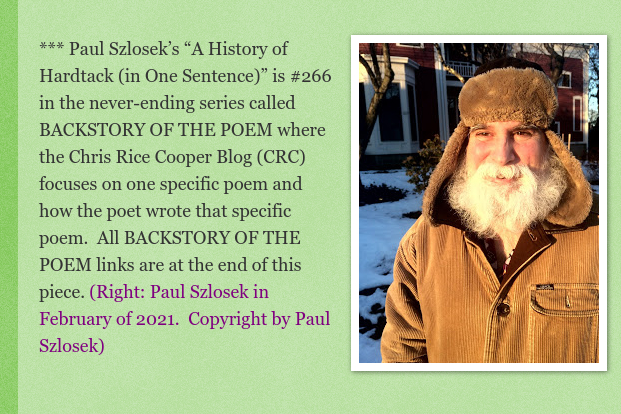













 Paul's Poetry Playground