Paul Szlosek was born in Southbridge, Massachusetts, but currently resides in the nearby metropolis of Worcester. He was co-founder and host of the long-running Poet’s Parlor poetry reading in Southbridge and Sturbridge, as well as a past recipient of the Jacob Knight Award for Poetry. His poems have appeared in various local publications including the Worcester Review, Worcester Magazine, Sahara, Concrete Wolf, and Diner. He’s probably best known in the Worcester poetry community for his fanatical obsession with obscure poetry forms, and has invented his own including the ziggurat, the streetbeatina, and (most recently) the hodgenelle.
In today’s post, we will be exploring the Skinny, a short fixed poetic form created by Truth Thomas, a singer/songwriter and poet, during the Tony Medina Poetry Workshop held at Howard University in 2005. The skinny is an eleven-line poem in which all the words of the first line are repeated in the eleventh and final line. The words may be used either in the original order or rearranged. Also, like in a sestina, the words in the last line do not have to be the exact match of the ones in the first but can be variations of the root word (for example, with the word “confuse” you could substitute “confusion”, “confused”, or “confusing”). All the other lines of the skinny consist of just one word, with the second, sixth, and tenth lines being the same word. The main goal of the skinny is to try to convey a precise idea or vivid image with the least amount of words possible. Although the subject matter can be about anything and the tone may vary from humorous to serious, most skinnys that have been written so far deal with prevalent issues facing society today. I have found writing them can be quite fun, and even addictive as you can witness by the following numerous examples I ended up writing for you to use as models for your own:
Mysterious Sabbath
Last Sunday morning, My Life Irrevocably Changed. My Newest Ambition? Forget My Last Sunday morning.
Strange DreamscapeWith Felines
In these reoccurring convoluted dreams, Cats Chase Rottweilers Imitating Cats Pursued By Other Cats In these convoluted reoccurring dreams.
Conundrum
There are unfathomable things Only Found In Places Only Wisemen Know, Knowing Only Unfathomable things are there…
PoeticTruthseeker
Do I believe there’s some truth in all poetry? No, Some Poems Have No Honesty. Oh Really? No. I do believe there’s some truth in all poetry…
Am I Really a Snowflake?
Like a tender peach, my delicate ego bruises Easily, An Unkind Word Easily Devastating My Confidence, Easily Bruising my tender ego like a delicate peach.
Still Feeling Bad After All These Years
His guilty conscience still Dogs Him, Kicking Stray Dogs As A Child Dogs His still guilty conscience.
Perhaps Poetry Is Meant To Be Misunderstood…
A failure to communicate Is Almost Predestined. That Is Certain (Every Poem Is A failure to communicate).
An Ancient Greek PhilosopherQuestions His Religion…
Who truly deserves the favor of the gods? Certain Folks Who Espouse Certain Beliefs, So Smugly Certain Who truly deserves the favor of the gods?
So dear readers, what do you think of the skinny? I hope you will find them as fun and fascinating as I do and will try writing some of your own. If you do, please consider submitting them to The Skinny Poetry Journal, an online poetry journal exclusively dedicated to this unique and wonderful poetry form (you will also find much better examples there than my own meager attempts.)
I want to thank my fellow bloggers Diane Puterbaugh and John Ormsby for graciously accepting my invitation to participate in the Virtual Scaretorium which I am reposting from the Poetorium website below. It is a rather long readfilled with some wacky, weird, and even spooky poetry and surprises (be sure to check out the time machine during intermission) but I think you will enjoy it…
Paul Szlosek Wearing a Homemade Halloween Mask He Fashioned From Papier-Mâché
PAUL: (Spoken in a very bad imitation of Boris Karloff) Good evening, every body!
Welcome to our very special Halloween-themed edition of the Virtual Poetorium which we are calling tonight the Scaretorium. As I scan the audience I spy the usual suspects, but there is one unfamiliar face who I surmise must be our special visitor all the way from scary old England, but I’ll talk more about that later. Unlike our regular editions, tonight there will be no featured poet, but instead, we’ll have an extra-long open mic to be divided into two sections, and since we have eight people on the sign-up sheet, there will be four poets in each. We are also lifting our usual one piece per person limit, so everyone can read up to three poems or stories. But before I call the first poet to the stage to read, I will kick off the show with one of my favorite poems by America’s 19th century master of the macabre, Edgar Allan Poe:
The Conqueror Worm
Lo! ’t is a gala night Within the lonesome latter years! An angel throng, bewinged, bedight In veils, and drowned in tears, Sit in a theatre, to see A play of hopes and fears, While the orchestra breathes fitfully The music of the spheres.
Mimes, in the form of God on high, Mutter and mumble low, And hither and thither fly— Mere puppets they, who come and go At bidding of vast formless things That shift the scenery to and fro, Flapping from out their Condor wings Invisible Wo!
That motley drama—oh, be sure It shall not be forgot! With its Phantom chased for evermore By a crowd that seize it not, Through a circle that ever returneth in To the self-same spot, And much of Madness, and more of Sin, And Horror the soul of the plot.
But see, amid the mimic rout, A crawling shape intrude! A blood-red thing that writhes from out The scenic solitude! It writhes!—it writhes!—with mortal pangs The mimes become its food, And seraphs sob at vermin fangs In human gore imbued.
Out—out are the lights—out all! And, over each quivering form, The curtain, a funeral pall, Comes down with the rush of a storm, While the angels, all pallid and wan, Uprising, unveiling, affirm That the play is the tragedy, “Man,” And its hero, the Conqueror Worm.
—Edgar Allan Poe
And now please welcome to the podium, a long-time regular of the Virtual Poetorium, and our featured poet from last Halloween, Meg Smith…
A Selfie by Meg Smith From Her Photo Series Called “The Bride Wore Dead.”
MEG: Inspired by two crows I saw perched on a balcony in Cobh, Ireland, this first poem really speaks to the grief of the pandemic, through the Irish observance of Samhain. Being first-generation, I’m speaking of the authentic cultural context — rather than the pop culture notion that Samhain, Beltaine, and other Celtic holidays are whatever the observer imagines…
Lovely Crows
I praise you, overlooking Cobh from a wrought-iron balcony; the bones of trees at Hampton Court; pumpkins in their rows of snarls in the dry grasses of Simeone Farm, I love you in your laughter, and gossip, and flashes of night in a year’s worth of Octobers. Call back the lost. The year is filled with wailing. Call back the lost, through the falling veil.
—Meg Smith
I participated in the “Ghosts of Pawtucketville Night” tour offered by the Lowell Celebrates Kerouac! festival. Jack Kerouac’s Lowell of his upbringing is filled with ghosts, and the haunted presence of those lost before their time. This includes a neighbor of the Kerouac family, who now has a square named in his honor…
Houde Square
At last, a sign, to mark the crossing in the blue street lamps — shouts in nighttime basketball games, but only one poet will catch every shade, every spirit walking, shouting in the twilight of the floodplain.
–Meg Smith
My final poem of the night was inspired by Valda Hansen, who was an actress who appeared in Night of the Ghouls, a film by Edward D. Wood, Jr., most famous for Plan 9 from Outer Space. In the film, she masquerades as a ghost as part of a con artists’ scam. But she is actually quite ethereal and poetic, a muse of horror camp…
Prom Ghost
In memory of Valda Hansen
Enough to frighten the kids making out in the sedan by the edge of the marsh — but more, still to love your dance without breathing, through your shadow house — not of this world, but casting threads through its night
–Meg Smith
PAUL: Thank you, Meg! Next up is our Virtual Poetorium’s featured poet from last November, Howard Kogan…
Howard J Kogan
HOWARD: Halloween is not a topic I have written about, so here is an October poem instead:..
Augury
On an uncommonly warm October morning mist-shrouded mountains dream of the Song Dynasty crows stand in mid-air conjuring Canada geese, who appear and disappear along ridgelines apricot-colored leaves drift from quaking aspens
Last night an immense moon rose through the trees like a spaceship glazing the world silver by morning it was gold.
—Howard J Kogan
PAUL: Thanks, Howard! We actually have three previous Poetorium featured poets with us tonight (the third, Diane Puterbaugh, will be reading in the second section), but now I’d like to read a wonderfully charming Halloween poem written by a fourth, Carl Sandburg, who you may recall we brought back from a hundred years in the past using a time machine I borrowed from my cousin Dwayne so he could feature for us this last June (more about that time machine later)…
Theme in Yellow
I spot the hills With yellow balls in autumn. I light the prairie cornfields Orange and tawny gold clusters And I am called pumpkins. On the last of October When dusk is fallen Children join hands And circle round me Singing ghost songs And love to the harvest moon; I am a jack-o’-lantern With terrible teeth And the children know I am fooling.
—Carl Sandbug
Now please welcome a good friend of the Poetorium, and the host of the monthly open poetry share at the Booklover’s Gourmet in Webster, Massachusetts, Bob Perry…
BOB: Hello Poetorium. Everyone knows that Halloween is when the computers become little gremlins. Caught this one on camera…
Bob Perry With a Computer Gremlin
Both my parents passed on in early October, 11 years apart. On the second anniversary of my dad’s passing I sat down at work and this became an insistent poem. It felt like they were there when I was writing it. What a gift…
October Ghosts
In October my ghosts don’t wait for Hallows Eve They come early to check out this year’s foliage To talk of times that were, reinterpreting memories As we walk through the forest, each moment A grace I could not see while they were alive They tell me nothing is ever wasted, ever lost Pay attention to the way things come back to you Spend yourself extravagantly, like these trees Let everything go and you will discover You have had everything you needed all along.
—Robert Eugene Perry
Bodhicitta (Attaining great compassion for all sentient beings, accompanied by a falling away of the ego)
1.
shards of glass, blue red lights road slick with rain, viscous river of fluids wailing sirens; other wailing, others waiting staring deep not seeing not feeling gurneys odd angles holding fractured forms shouting rushing figures smoke inhaling crying out help is coming just hold on gasping overwhelming fumes vision blurring, drift to void –
2.
hovering ghost or angel soaking up your pain bleeding out compassion remaining present, keeping intention holding on and letting go simultaneous heartbeat separation is the illusion
3.
rubbernecking tourists grumbling at the logjam, making the sign of the cross as they pass – sacred and profane are abstractions to the dead and dying – which in fact every body is.
—Robert Eugene Perry
Here is something new…
I’m including this next one because it is the Scaretorium and this has the word “Hell” in it. Sorry, that’s as scary as I get…
Roadmap Out of Hell
To look within and own your sin – your past with all its demons A fearless search for truth will hurt but only for a season.
To stay awhile with all the guile digging through the layers It may seem vain but from the pain will blossom earnest prayers.
Beneath the mire your soul respires despite the suffocation Dung unearthed will prove its worth becoming your salvation.
With no regret, you place your bet and sing your darkest song The truth will out, there is no doubt you’re here where you belong.
—Robert Eugene Perry
PAUL: Thank you, Bob! And here is the final poet in the first section of the open mic, the host of the brand new monthly Poetry Extravaganza poetry reading series at the Root & Press Bookstore and Cafe in Worcester, Joe Fusco Jr.
A Computer Rendering of Joe Fusco Jr. as if He Was Wearing Skull Makeup
JOE: This is an older piece that I like to put out every Halloween…
Halloween Rations
My wife never buys enough candy for Halloween.
The family gathers at our house for sandwiches then everyone goes trick or treating except my 86-year-old mother and me.
“She didn’t buy enough candy again,” I lament.
“Just give one piece per costume,” my mother replies.
I feel like a gas attendant during the Carter administration distributing a Twizzler and Snickers to the more mature participants, but only one or the other to the adorable, naive little ones who won’t vandalize our property over my frugality.
By 7 p.m., I’m stuffing my hand into their pillowcases like a penny-pinchin’ Christian at Sunday Mass, so they won’t discover my meager offerings.
(Let me digress: Years ago, when we first moved into the house, on a dark rainy Halloween night, just returning from a cruise of the Caribbean, not a stitch of candy in the cupboard, I was forced to give boxes of store-brand raisins for treats. For years after, kids avoided our house like lice and I received sly death threats in late October with Sidney Poitier analogies.)
By 8 p.m., Mom and I are running on fumes, tossing quarters into their sacks from my son’s silver collection, then Long-Island potatoes, finally just dispensing sound advice from our porch like “Don’t be a fool, stay in school!”
When the family returns, all the house- lights are off. Mom and I are huddled in the back-bedroom over a candle listening to FDR on the radio.
“Is it over yet,” I ask my wife sheepishly.
“Yes, you moron,” she gently replies.
I gather my manhood and shuffle to the kitchen where I rifle the kid’s bags for Kit Kats and Nestles Crunch bars.
Happy freakin’ Halloween.
—Joe Fusco Jr.
PAUL: That was great, Joe! I thought it would be fitting now to close out the first part of tonight’s open mic with a poem I wrote as a sequel to the one I opened it up with — “The Conqueror Worm” by Edgar Allan Poe. The poem is written as a Cascada Viente, a poetry form invented by Brad Osborne, who coincidently was our featured poet for our One Year Anniversary Edition of the Virtual Poetorium last March…
The Return of the Conqueror Worm (A Sequel Set in Current Times)
Behold! The conqueror worm Returns again to the stage In the guise of a vile germ, Its audience in a cage,
As it heralds in the age Of Zoom (with us quarantined, Trapped like words upon the page). This strutting, villainous fiend
Having our lives guillotined, Cut off from family, friends Forcibly being pulled, weaned From them til this madness ends-
Tragicomedy that blends Mournful pathos with jest, A sick farce that all depends On its denouement. The rest,
Just exposition at best And a bad plot twist unseen: This play has no hero, lest It’s truly Covid-Nineteen…
—Paul Szlosek
We’ll be taking a short intermission (something we haven’t done for a long, long while) in a couple of minutes before we begin the last half of our virtual open mic, but now it’s time once again for me to present this month’s Poetorium group poem as well as our final Poetorium monthly form writing challenge. This month’s theme was “This Halloween…” with people being asked to email us one to eight lines starting with that short phrase. All contributions were then compiled into the following poem which I’m afraid is rather short this month since we only received submissions from just Bob Perry and Diane Puterbaugh besides myself:
This Halloween…
This Halloween people hope for no snow in Syracuse and that the temp. is under 80 in Memphis.
This Halloween Jamie Lee Curtis will star in Halloween Kills, but perhaps after twelve films and four decades there are some horrors that should just be left behind in adolescence and others that should be faced head-on.
This Halloween night I will mourn the Halloweens of childhood past as I wander the streets alone, passing by trick-or-treaters wearing masks under their masks beneath stars like pinholes punched in a perfect plum-hued sky.
This Halloween, just buy 2 bags of Snickers, because you know you will eat through one of them before the 31st.
Thank you both Bob and Diane for contributing to tonight’s Scaretorium group poem!
And now it’s time for me to present, as I mentioned earlier in the evening, our very last Poetorium monthly form writing challenge in which for the last year we invited you to write in a different flash fiction or poetic form. I am sorry to announce that this will definitely be the final one due to dwindling interest but don’t worry, we will have something different to replace it starting next month. You might recall that last Halloween, we challenged you to write a six-word story? Well, this month’s writing challenge was a variation on that. We invited you all to write a six sentence story or poem, preferably one with a Halloween theme (it could have included a title or not, the choice was up to you), but unfortunately only my cousin Dwayne Szlosek took up the challenge and submitted the following untitled poem:
Dracula’s a blood-thirsty fiend… Frankenstein is the first to be the living dead… Wolfman becomes a gypsy curse… Mummies can be ruled by evil… Witches can be ruled by the Devil… They are all classic Halloween movies…
—Dwayne Szlosek
To tell you the truth, I was a bit disheartened by the lack of responses to this month’s challenge, and almost ended up not writing one myself but since I was the one who issued it, I felt it was my duty to present to you for your approval, the following hopefully chilling brief Halloween tale:
The Open Door
Arkham College photography student George Allenby was walking home from a Halloween photoshoot at Hope Cemetery along Webster Street at dusk when he first noticed the faint strains of “Radar Love” drifting from the century-old brick building in the distance. As he walked closer, he recognized the familiar voice of the early evening disc jockey of a local classic rock station blaring from the wide-open green wooden door of the Whitechapel Chemical Distribution Company. He thought “how strange, this is something you might expect to find on a warm summer evening in July or August, but not in the cool brisk weather of late October.” His first instinct was to call the police and report the incident of the open door, but he had forgotten his cell phone in his dorm room. Although he knew deep within his gut that it wasn’t a good idea, curiosity got the better of him, so he poked his head through the darkened doorway and yelled “Anyone there?”, but there was no answer. As he unwisely entered the pitch blackness of the premises, the last thing George heard was the sound of ‘Stairway to Heaven” being cranked up to an ear-deafening volume as if to drown out any possible screams…
—Paul Szlosek
I hope you enjoyed this month’s submissions and want to thank Dwayne for being the lone submitter (besides myself) to our very last form writing challenge. As I said earlier, we will have something different to challenge you all starting next month.
Now I have a bit of a treat for you all. We will be taking a short intermission so you can check out the photos on display courtesy of Diane Puterbaugh and myself in a special Scaretorium photography show. Also, do you remember my cousin Dwayne’s time machine? During the break, you will have the opportunity to use it to travel back 45 years into the past to Edgar Allan Poe’s home city of Baltimore and attend a Halloween poetry reading held on the night of October 31st, 1976 at the Maryland Institute College of Art. Don’t be afraid to dawdle there and enjoy the poetry since you have a time machine and plenty of time to get back here for the second part of our open reading. By the way, you may notice the time machine looks very different since you saw it last June. That’s because while programming it for tonight’s adventure into the past, I accidentally hit a random button on the console and it morphed into a somewhat familiar-looking British blue police call box… Anyway, have fun and we will see you when you get back!
Intermission Begins
The Scaretorium Halloween Photography Exhibit
Photo by Diane Puterbaugh
Photo by Diane Puterbaugh
Photo by Paul Szlosek
Photo by Paul Szlosek
Photo by Paul Szlosek
Photo by Paul Szlosek
Photo by Paul Szlosek
Photo by Paul Szlosek
Photo by Paul Szlosek
Photo by Paul Szlosek
Photo by Paul Szlosek
Photo by Paul Szlosek
Photo by Paul Szlosek
Photo by Paul Szlosek
Dwayne’s Virtual Time Machine
Click Here to Travel 45 Years into the Past to Attend a Halloween Poetry Reading on the Night of October 31st, 1976 at the Maryland Institute College of Art in Baltimore Maryland
Intermission Ends
PAUL: Welcome back, everyone! Hope you all had fun during the intermission…
When we think of Halloween, we usually think of ghosts, witches, and monsters. And what kind of monsters? Usually the classic ones such as Frankenstein, werewolves, and vampires. Well, I’d like to kick off the second part of the open with one of my previously unpublished poems about one I doubt you ever heard of before…
The Ballad of the Goo Goo Ga Ga Monster
At the age of three, I died constantly in my sister’s dreams. Each morning, she would wake and regale me with her nocturnal visions of my demise, explaining how the night before the vacuum cleaner had ambushed me on the stairs and thrusting its crevice attachment down my throat, had slurped my insides out.
Or how as I ran across the lawn to greet her home from school, her yellow school bus suddenly swerved and pounced upon my measly form, reducing me to just another oily stain upon the grass.
Much too young to be bothered by the fact that to my sister these were not hideous nightmares but pleasant dreams, I waited anxiously for the next installment of my death, soon learning that these were not just random exterminations by machinery gone haywire, but masterminded by the dreaded Goo-Goo-Ga-Ga Monster.
Yes, the infamous Goo-Goo-Ga-Ga Monster with a face of pablum mush and breath putridly sweet like baby burps, patron saint of sisters with bratty baby brothers, the Grim Reaper of the toddler set.
As weeks passed, my deaths became less frequent, my sister’s subconscious slowly ceasing its hostilities until Mister Goo-Goo-Ga-Ga vanished without a trace from her morning tales. So I was forced to scour my own dreams, hoping to glimpse his festering face, but he would never show. I was cursed with sweet dreams of chocolate choo-choo trains, fuzzy-wuzzy bunny rabbits, and puppy dogs. The Goo-Goo-Ga-Ga Monster could not be induced to make a guest appearance amidst such nauseatingly wholesome company.
So here I am fifty years later, still obsessed with dreams not my own. Perhaps I just want to stare him in his eyes, and recognize my own mortality. Every story I ever heard, every movie I ever saw has had an ending, either happy or sad, but my life, so far, has not. I just want to be assured there will be a grand finale, a slow fade into blackness, and the credits will roll because how can you enjoy any story, no matter how satisfying if you never know the ending.
Each night as I drift into slumber, I continue trying to conjure up the image of the Goo-Goo-Ga-Ga Monster, but each night, I fail. Yet one evening in the (hopefully distant) future, I will not. I will finally grasp his disgustingly slimy hand and exclaim like some star-struck fan “I’ve heard so much about you. I am so pleased to meet you, pleased to meet you at last!”
—Paul Szlosek
As some of you know, I have a poetry blog called “Paul’s Poetry Playground. About a week ago, I wrote a post inviting my readers and fellow bloggers to participate in tonight’s Scaretorium. Our next poet accepted that invitation, traveling all the way from Manchester, England to be with us tonight. So please put your hands together for a big first-time Poetorium welcome for John Ormsby…
JOHN: Hi! My name’s John Ormsby and I’m an aspiring poet with a WordPress account: MrOrmsbyAtLarge. Anyway, here are my poems:
Happy Meal
The female spider dines alone For reasons chilling to the bone Perhaps more dates would turn out right If she could curb her appetite
—John Ormsby
High Stakes
Should I love you Take hold of you Our first kiss would be your last Blood pulsating Seeping, sating Taking more than I had asked. This lifeless life out of the sun Exiled from God’s own plan Its beastly feast that’s fit for none Was not how I began. Still, you near me Don’t you fear me? I can pull you down to hell No I’ll leave you Let me grieve you In that place where monsters dwell
—John Ormsby
Watch Your Tongue
When canny cannibals suggest You call round as a dinner guest You’re right to feel suspicious They’re hoping you’re delicious And if the book next to the pan Is ‘How To Serve Your Fellow Man’ It’s time to quit the venue ‘Cause guess who’s on the menu?
—John Ormsby
All three of these poems appear on my blog: MrOrmsbyAtLarge.com. Cheers, Mates!
PAUL: Thank you so much, John. And now please welcome a long-time Virtual Poetorium regular to the podium…
MISHELLE:
My First Halloween
My first Halloween started when I was young so very early in life, all I ever wanted to do is die like in all of those Halloween movies on FREAKY FRIDAY’s all of us wanted to be that way even if they were all boys, mothers, fathers, sisters or brothers for bringing us too, this planet and I just want you to know good luck and have a safe and Happy Halloween one and all.
Kids passing out candy, kids passing out candy and party’s, parties that we go to always invite us there. Great costumes that I didn’t even know who they were judging the costumes, bobbing for apples, playing ghetto games and Halloween masks that become us.
Trick or treat the smell my feet give me something good to eat. Goes out to every doorstep for candy and parties for goodies and pizza. Some wear costumes or make-up.
Later at night those who walked home would seal their doom. You could feel the slash felt real good to your sick descended souls. The shuddered screams of Horror as the blade crosses the thoughts of boxes yet to be opened while you finally get home you’re only tired of giving up the fight.
Looking at your goodies in your goodie bags that you got from each and every door. Some surprises and toys that you can share with your family and friends. It’s past midnight and you can feel the evil lurking at your own door. You can hear the moon scream while all the while you shudder every thought about the THRILLER NIGHTS.
You can go to your room just because the sounds you hear can make it. Watching the screen. While Freddy and Jason take the terror off the screen. And all the while you are watching and you feel something hit you hard.
—Mishelle Goodwin
Halloween
Freaky Friday just before you change the number on your dial “What” Let me take you home. O.K. Micheal just one thing though I’m not like the other boys? The shrill of thousands screaming sounds and while you both are laughing you walk through the woods and it is very dark you are suddenly paralyzed. HA HA HA HA HA.
—Mishelle Goodwin
Tricks-or-Treats
I hear the dogs howl, The voices scream, And all the while The pitter patter of little feet Saying Trick-or-treat!
—Mishelle Goodwin
PAUL: Thanks, Michele! John isn’t the only poet to come a long distance to be with us this evening. Please welcome our last month’s feature, trekking in all the way from the great state of Tennessee, Diane Puterbaugh…
DIANE:
October 2021
It’s Autumn now the sun moves faster slanting through the back door at 7:03 then the kitchen at 11:11 and finally the laundry room at 6:15
Celebrities ride in rockets gravity touts itself as a tourist destination satellites zip across the Corona Borealis- a rush-hour of shooting stars
Orion, raised in perpetual aim toward a target orbiting down range long shot moon shot covid shot
—Diane Puterbaugh
PAUL: Thank you so much, Diane! And now last but not least in the Scaretorium open mic, my cousin and the man who loaned us his time machine for tonight, Dwayne Szlosek…
Dwayne Szlosek Dressed in an Improvised Halloween Costume
DWAYNE: I hope you are all doing well and a Happy Halloween to you all! Due to the holiday Halloween, I thought I would give Nine Gun Billy a break this month and give you two Halloween poems on this October evening instead. I hope you all enjoy them both…
Make Me Rich
Open your door. Put a green bottle in the threshold. Just say these words six times and six times more, and just to be sure say it six more times in front of your door:
“I’m not rich, I’m not poor. I welcome all spirits to my front door. Make me rich instead of making me poor. I will let you stay in my home forevermore. I will cast a spell so no one can break or can Make you leave my home. Oh, hear me spirits at my front door, Make me rich instead of making me poor…”
—Dwayne Szlosek (Copyright 3/29/2021)
It Is Halloween Night
You’ll gasp with delight in every bite You make on Halloween night. Because you are a vampire living in a neighborhood, Looking out your window, Seeing those sugar-sucking Little monsters going to every house Looking to pluck that sugar-sweet candy From the bowl and put it into their bag. They will say “Thank you And we will not egg your house.”
On this occasion, As they look up at you, You look down on them and say With a snickering laugh “Thank you, and I will Not bite you tonight, My pint-size little snacks.” And smile with delight, Making them all wonder What does that mean? It means it is Halloween Night…
—Dwayne Szlosek (Copyright 8/23/2021)
Thank you all for coming tonight and have a safe and happy evening!
PAUL: Thanks, Dwayne, that was a lot of fun! As most of you know, Ron Whittle, my regular Poetorium co-host and cohort, is battling the return of his bladder cancer and can’t be with us tonight. But before I close out the show with a poem of my own, I’d like to share one of Ron’s with you. The following poem is the one he read to open the Virtual Poetorium last Halloween…
Halloween 2020
The end of Autumn howls in the dark of the night When shadows take flight to wrap themselves around tombstones, trees and such A time for the dead to reappear as ghostly mortals to haunt the imaginations of whose who challenge the night near the old town cemetery Lights flicker wind chimes ring out a scary tune and a fog appears out of nowhere An erie sight to see as caskets lay opened behind the veil of night Creaking gates Tomcats screech and church bells ring out a warning at every step taken beware the ghouls behind you and the specters in front of you As doorbells ring and door knockers rap Fear what is on the other side of that door as treaters descend onto sidewalks full of tricksters in full regalia planning to trick you into giving them sweets in exchange for safe passage into the night
—Ron Whittle
The final poem of the evening is one that I wrote many years ago. It is both a 26-word abecedarian and a magic spell. I hope you will enjoy it (and it doesn’t work)…
A Bloody, Creepy, Definitely Evil, Frightening, Ghoulish Halloween Incantation
The Virtual Poetorium interview with James R. Scrimgeour, which I reblogged here on this blog in August, was so well-received that I decided to follow it up today with the interview Ron Whittle and I did with the poet Jonathan Andersen that originally appeared in the very first Virtual Poetorium published on March 31, 2020 (I hope you will enjoy reading it)…
Jonathan Andersen is the author of Augur (Red Dragonfly Press, 2018), which was the recipient of the 2017 David Martinson-Meadowhawk Poetry Prize and a finalist for the 2019 Connecticut Book Award in Poetry. Other books include The Burden Note, (Meridian Prize, 2014), an English/Serbo-Croatian chapbook, and Stomp and Sing (Curbstone Press/Northwestern University Press, 2005). He is the editor of the anthology Seeds of Fire: Contemporary Poetry from the Other U.S.A. (Smokestack Books, 2008). He has been a featured reader throughout the eastern United States, the United Kingdom, and Serbia, including at the Ledbury Poetry Festival, the 49th International Festival of Literature in Belgrade, and the 42nd Smederevo Poetry Autumn. His poems have appeared in print and online publications, including Blue Collar Review, The Café Review, Chiron Review, Connecticut Review, Counterpunch, Exposition Review, Freshwater, HeART, Here, North American Review, The Progressive, Rattle, The Worcester Review, and others. For 12 years he was a high school English and special education teacher, and since 2008 has been a professor of English at Quinebaug Valley Community College in Danielson and Willimantic, Connecticut. He and his wife, fellow writer and educator Denise Abercrombie, live in Storrs, Connecticut with their two sons. Jonathan’s books Augur, Stomp and Sing, and Seeds of Fire: Contemporary Poetry from the Other U.S.A. can be purchased online at his website Jonathan Andersen — Teacher/Poet by clicking here.
A Virtual Poetorium Interview With Poet Jonathan Andersen
RON: Thank you once again, Jonathan, for agreeing to do this! My first question is what or who got you involved in poetry?
JONATHAN: Before poetry, or necessarily bound up in poetry, is a love of language and its possibilities, so I’d have to say my parents were the people first responsible for my involvement in poetry, even if a little indirectly, because they read to me and my twin brother every night, or almost every night, when we were very young. I can remember, vividly, lying in my bed, listening to the summer night sounds from the open bedroom window, thinking about Stuart Little out there in the dark somewhere, searching, motivated by love. I always tell my students at the college, with all the urgency I can muster, to read to their children.
Public education also got me into poetry. In sixth grade, Mr. Novinski did a poetry unit which culminated in every kid in the class publishing her or his own collection of poems. And when I was an undergraduate at the University of Connecticut, I was fortunate enough to meet a few professors — especially James Scully and Joan Joffe Hall — who saw something in my writing to encourage. Even more importantly they kept sending me to the library stacks to read. They introduced me to poets such as Jim Daniels, a Detroit poet who was writing powerfully spare poems that had forklifts and time clocks and economic struggle. That poetry could so fully admit my reality was absolutely a revelation.
RON: Who is your favorite poet and why?
JONATHAN: I can never really answer this question because there are so many. Here’s a sampling:
William Blake is a major influence, for his energy, and profoundly human vision (even in his supernatural excesses).
Langston Hughes should be important to everybody for his combination of tenderness and fearlessness, qualities which are gathered together in “A Dream Deferred,” but run throughout his work.
I always come back to the Polish poet Tadeus Różewicz’s book The Survivor and Other Poems for its spare, defiant humanity.
I am an enormous admirer of June Jordan. Her work had such wide emotional range and she kept putting poetry into community, into life, seamlessly blending her art with her teaching.
I admire poets who are ambitious. I don’t mean ambitious in a careerist or entrepreneurial sense; I mean that they are always trying to get at something deeper, bigger, more true, in terms of craft and content. You can’t always swing for the fences, but I gravitate to those poets who try to take on in some way the big questions about what it means to be human, and try to develop or expand the ways poems can be up to the task.
RON: Does your poetry hold any secrets that you would care to share with us?
JONATHAN: I could tell you, but then I’d have to kill you. Kidding, obviously. I think actually that some of the secrets I haven’t found out yet, and some of the secrets won’t be mine, but will belong to the reader or listener. I don’t mean to mystify — I don’t admire mystification — it’s just that there’s more to find out, and often there’s more to what we’re writing than we realize at the time. We find out what that is if we’re lucky.
RON: If you had to describe your writing in one word, what would that word be?
JONATHAN: “Sublime.” No — kidding again. “Genuine” is my real answer.
RON: So, Paul, do you have any questions you’d like to ask Jonathan?
PAUL: Thanks, Ron! Yes, I do! Jonathan, do you have a writing routine, and if so, can you describe it to us?
JONATHAN: I try to catch time when I can. I’d like to say I have a more disciplined routine, but I don’t.
There’s still hope, though — I’m only fifty. I want to be better at following the advice I and all writing teachers give to our students: regardless of your exact writing strategy, your first process should always be to just let go of the inner censors, the ghostly voices of past English teachers or critics or whatever and just write.
Two other aspects of my process that are really essential for me: I meet with a writers’ group. I am fortunate to have been able to be in long-running groups with writers I admire and trust.
Finally, my wife is a poet and writer, and we read each other’s work, we admire each other’s work, and we critique each other’s work. Even more importantly, we navigate this life together, and the writing comes out of life.
PAUL: There are so many things I’d like to ask you, but to keep this interview relatively short, I just have one more question. What advice would you have for someone who is just starting to write poetry?
JONATHAN: Be curious. Read widely. Be open to critique. I also like the advice at the end of Gary Snyder’s poem “For the Children”: Stay together. / Learn the flowers. / Go light.
I believe it’s been several months since I last mentioned the Virtual Poetorium on this blog, but be assured we haven’t discontinued it. In fact, I am very pleased to announce that this month we will be producing a special Halloween-themed edition which we are dubbing The Virtual Scaretorium, and would like to open it for anyone who would like to participate, inviting all my fellow bloggers and faithful readers (or just anyone just happening to read this) to be a part of it. Unlike a regular edition, there will be no featured poet, but instead will have an extra-long open mic to be divided into two sections. Because of this, we are lifting our usual one piece per person limit and requesting that you send us up to three of your own original poems or stories (ones that are scary or have a Halloween theme are preferred though not required) either in a Word document file or pasted in the body of an email along with your name, any opening remarks you care to make, and where your poem has appeared if it was previously published to poetorium@mail.com by Saturday, October 23rd. Also if you like, you can send us a photo of yourself (extra brownie points rewarded if you are in costume) to be posted above your poem, but that is totally optional.
We also need contributions to this month’s Poetorium Group poem. To participate, please send us one to eight lines starting with the phrase “This Halloween… “. All contributions (which will remain anonymous unless otherwise requested) will be compiled and included in what we are calling this month the Virtual Scaretorium Group Poem. Once again, the deadline for submissions is the night of Saturday, October 23rd.
We will also be continuing (at least for this month) our monthly writing challenge in which we invite you to write in a different flash fiction or poetic form (it is very likely that this will be the very last one due to apparent dwindling interest). This month’s writing challenge is to write a six sentence story (your story can include a title or not, the choice is up you), and once again, a Halloween theme is suggested. The only rule is that your story (or poem if you wish) must be written in exactly six sentences. The sentences can be extremely short or long. Also remember, in case of a poem, we are talking about sentences, not lines (sentences and lines are not the same since a sentence can run on for more than one line). I am afraid I don’t have any examples at this time for you to use as models, but I’m confident you probably don’t need any in order to write one. Please send us your best efforts to poetorium@mail.com by Saturday, October 23rd to be included in the Virtual Scaretorium.
Also if you wish, please feel free to send us any of your own original scary or Halloween-themed artwork or photos to be displayed and shared during our virtual intermission!
If you have any questions about submitting to the virtual open mic, the group Scaretorium poem or anything else about the Virtual Scaretorium itself, please leave them in the comments, and I will try to answer them right away.
Thank you so very much, my dear friends! We would really appreciate your help to make the Scaretorium a success, and look forward to your participation. Please take care, stay safe, and try to have a very scary but fun rest of October!
Today on the blog, I’d like to share with you the following poem which won third place in last year’s Worcester County Poetry Association’s Frank O’Hara Poetry Contest and originally appeared in the 2020 issue of The Worcester Review (hope you enjoy it):
It Is Those Odd Little Shops I Like…
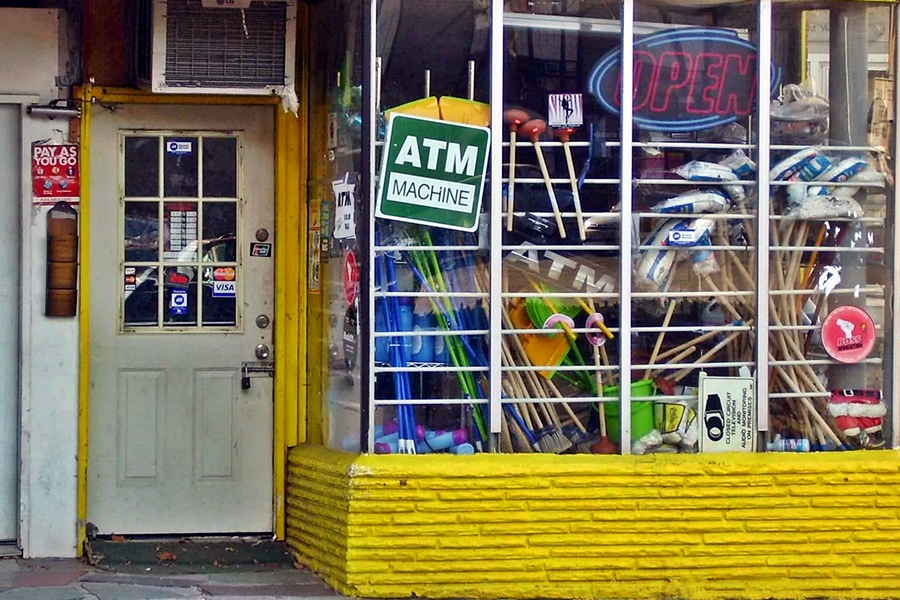
It is those odd little shops I like, the ones you find nestled between abandoned storefronts on side streets in down and out neighborhoods, their signage (if any) sun-bleached to shades of pastel blue and peach, announcing inexplicable names like Solomon’s Spa, Happy Sundries, or Miami Bling Bling Bang Bang (although Florida’s a thousand miles down the coast). There’s a mishmash of mismatched merchandise- a quart can of motor oil, a latex swim cap, a toilet plunger, a 12 oz. bottle of a foreign soft drink – haphazardly displayed behind the large plate glass window almost opaque with grime, an obligatory random houseplant (a gnarled jade tree or a two-foot-high barrel cactus) apparently thriving on dust in the corner. No customers are ever seen on the premises, so you wonder who shops here, fantasize if its all a sham, a front for the mob to launder money, the secret headquarters of the Illuminati or Trilateral Commission. Someday, you think, if you have enough curiosity and courage as you stroll by, you may stop, try the door, jiggle the handle. If it’s not locked, you’ll enter hesitantly, survey the dim interior, the new old stock scattered on shelves, sniff the air and detect a faint not-quite-identifiable scent (spiced cabbage, frankincense, myrrh?), a whiff of the old world or possibly the next. You nod to the gruff wizened man or woman guarding the cash register, their eyes either glaring or averted as if you weren’t even there. Snatch up a Zagnut, a Sky Bar, a tube of medicated muscle rub and attempt a purchase. “Not for you!”, they’ll say in an accent you do not recognize as they stash the item beneath the counter.“Not for you!” they repeat as they wave your money away with an arthritic hand and shoo you out the door. You are the foreigner, the interloper here. This candy bar, this ointment, this store, this side street, this neighborhood is not for you, for who you cannot imagine, but definitely not meant for you or me and that is precisely why I like these odd little shops so much.
—Paul Szlosek (originally published in The Worcester Review)
“Poetry is fun. Why burden it with the humdrum of unexplored memory in the illusion of self expression? At best the poem is an impersonal amusement where the writer and the reader laugh together at finding once again that only reality is the reality of the brain thinking about reality.”
“Just get something on the page, you have nothing to lose except your life, which you’re going to lose anyway. So get with it, enjoy this special moment that brings you to the writing table. Relax into the writing and enjoy the creative bowel movement, remembering all is lost anyway.”
“Poetry is a physical art without a physical presence, so that it often finds itself in cadence to the heartbeat, the thud of days, and in the childish grasp of the reality of rhymes.”
“A good night of writing is like an industrial revolution under a rock being conducted by agitated beetles, where a variety of experimental vehicles and camera-like entertainments are being manufactured at great speed.”
“Anybody who says that his art takes all his time is probably someone whose time doesn’t mean very much. My advice is to schedule one’s ‘artistic works’ with a job that pays. This gives time edge and purpose.”
“I write to be entertained, which means surprised. A good many poets write out of what they call experience. This seems deadened. For me the poem itself, the act of writing it, is the experience, not all the dark crap behind it.”
“This kind of invention [prose poetry] calls for a very sure hand, one that can improvise, without too much care for the future, formal structures in a matter of minutes: The kind of form that is built from the inside out….”
“I never write for people, for the unseen audience. I just write what comes.”
“There’s only the writing, which I admit to knowing very little about. But then it’s probably best not to know. It allows one to work without expectation. Best to let the poem do the thinking while we concern ourselves with what’s called the personal life.”
“The best advice I can give is to ignore advice. Life is just too short to be distracted by the opinions of others. The main thing is to get going with your work however you see it. The beginning writer has only to write to find his art. It’s not a matter of talent. We’re all talented. Desire and patience takes us where we want to go.”
“Poetry is a way of mind; the exploration of a tunnel, where blind albino fish seem to float in nostalgic pools of unremembered memory.”
“All creative writing is storytelling. The two basic approaches are fiction and poetry. Fiction describes what it means, and poetry becomes what it means in images. Fiction is a linear art made of time, poetry is childishly timeless and circular.”
“If one cannot accept failure and scorn, how is he to make his art? It’s like wanting to go to heaven without dying.”
“One might describe the prose poem (a term I just lately come to accept) as an enviroment of poetry; the prose poem as silly fiction; the prose poem as a way of re-thinking the shape of the earth; the prose poem as a way of entering the mystery of a yet undiscovered prose; the prose poem as a homemade art; the prose poem as a current fad; the prose poem even, for the want of a better name, as something that I write; or, more to the point, the prose poem as something I don’t want to talk about!”
“Remember, words are the enemy of poetry.”
“A lot of poets would do themselves a lot of good if they had another art they messed with – be it painting or whatever. A lot of our poets, they write, they teach, they write blurbs, they write some criticism, but they never get out of language. To be able to do something else is a nice thing.”
“The problem with poetry is that it spends so much time scene setting, locating. Most of my pieces are not really located. They just happen.”
“No one is a poet for all of his or her life. One is a poet when one is engaging that way of mind; that is to say, when one is writing. I would say to a son or daughter, ‘go ahead, it’s as good as anything else; your days are numbered anyway no matter what you do – have fun’.”
“The only difficult thing [about writing] is reaching the end, the idea of the finished piece, the party ending, life runs out, the fire dark, the season that passes through the meadow into winter…. This is why one must work fast, each piece an end in itself, as life, which is only lived in the most present of moments.”
“Writing for me is the fun of discovery. Which means I want to discover something I didn’t know forming on the page. Experience made into an artifact formed with the logic of a dream. The poem is the experience no matter the background of experience it is drawn from.”
People who read this blog regularly may be familiar with the Virtual Poetorium, a unique monthly online poetry journal in transcript form that is actually the pandemic version of the Poetorium at Starlite, a live pre-Covid poetry reading series in Southbridge, Massachusetts that was founded and co-hosted by myself and Ron Whittle. One of my favorite aspects of both the Virtual Poetorium and the Poetorium at Starlite are the interviews Ron and I conducted with our featured poets. Today I thought it would be fun and informative to repost in its entirety one of these interviews taken from the Virtual Poetorium for July 28th, 2020 when we questioned—via email—the poet James R. (Jim) Scrimgeour…
James R. Scrimgeour received his BA from Clark University, his MA and PhD from the University of Massachusetts, Amherst and is Professor Emeritus at Western Connecticut State University. He has served as Editor of Connecticut Review, published ten books of poetry, been nominated for several Pushcart Prizes, and given over 250 public readings of his work, including one at an International Conference on Poetry and History, Stirling, Scotland. He has, in addition, participated in NEH Seminars on Modern Poetry at NYU and Princeton and has recently served on panels at the Massachusetts Poetry Festival. He currently conducts poetry programs in libraries, both in New Milford CT and in Rockport MA, where he and his wife spend much of their time. His most recent book, Voices of Dogtown: Poems Arising Out of a Ghost Town Landscape (Loom Press, 2019), was listed as a “must read” by the Massachusetts Center for the Book and can be purchased at the Loom Press online bookstore by clicking here.
A Virtual Poetorium Interview With Poet James R. Scrimgeour
RON: Paul and I really appreciate you agreeing to do this. You know, Jim, I too, spend as much time on the beaches and shoreline as I can. Our attachment to the ocean is probably much the same. I have a great deal of respect and fear of its capabilities, but I also love it. My question is “Was there any single reason that made you fall in love with the ocean?”
JIM: No single reason — don’t think there is a single reason you fall in love with anything (or anyone). Love is more complex than that. But I’ve always been attracted to the ocean (since I first saw it as a kid — love at first sight?) My wife and I have been living at the ocean in Rockport MA for five months of the year for the past nine years, and so it is not surprising that the ocean has seeped into so many of my poems or that my son, who, as you know, also writes poems, said one day: “Dad, haven’t you used up your quota of ocean poems?” And, of course, I had to write another ocean poem to answer his question.
RON: After reading some of your poetry, I couldn’t help but notice how you seamlessly blend history into much of your poetry. What do you call your style of poetry?
JIM: History is a part of life, and I believe that it is an important task of the poet to keep the past (including the child within us) alive, to provide some continuity between past and present (and our past and current selves). This is a task that I have always taken seriously. As far as style goes, I am who I am. My poetry is what it is. It is, I believe, my job to write my poems; it’s the critic’s job to try to define my style. I wish him/her all the best.
RON: You also write as though you were from a different era in time, such as in the Sunset 1904. That must require a considerable amount of research to depict the scene you write about accurately. Is that a fair question to ask?
JIM: I think that any author (poet or prose) has to do the research necessary to create a world that is distinctive, original, and his/her own, a world that the reader may wander around in for a while and maybe even learn something before returning to life in early 21st century America. I hope that I have created such a distinctive original world in all of my books, but especially in the Dogtown one.
RON: Who are your favorite poet or poets and why?
JIM: In alphabetical order: Emily Dickinson (explosive imagery and word choice) John Keats (musical language — sound and content seamlessly merged) Robert Frost (for being his cantankerous self) Mary Oliver, William Wordsworth and so many others (for experiencing and sharing the divinity in the natural world) William Carlos Williams (for showing that poetry can be found everywhere and in everything) William Butler Yeats (for his musical language, vision and willingness to tackle political issues). There are, of course, many others but I have to stop somewhere.
RON: Being a professor you must have seen a great deal of talent from authors and poets in your classes. Did you ever teach anyone who went on to be famous? If so who?
JIM: No — I have taught many who went on to prestigious MFA programs (including Iowa, Emerson, and UMass) and who published books of poetry and poems in well known journals, and are currently teaching at universities, but no one I would call “famous.”
RON: If you had to chose a book of poetry to tell someone to read, who would be the author and what would be the title of the book?
JIM: It depends on who the someone is. I would recommend different books for different people. A person should, I believe, begin with poetry that connects with his/her life in some significant way. If I didn’t know a person well enough to make this kind of connection for him/her, I would say “See my answer to the question about my favorite poets and throw a dart!”
RON: Who was the biggest influence in your becoming a poet?
JIM: My wife has always been my muse, and all of the above mentioned “favorite” poets have been significant influences, but there also have been others, Walt Whitman, Wallace Stevens, Langston Hughes, Elizabeth Bishop, e.g., come immediately to mind. I don’t think there was a “biggest” — they were/are all big; they were all there when I needed them.
RON: What could you tell us about your own poetry, I guess what I’m asking you to do is define your work?
JIM: I’m not comfortable with defining my poetry, but I’ll be glad to tell you a little bit about my writing process and my work. Like Monet, I like to work “in plain air.” I like to take my camera, my notebook, my five senses and go out into the natural world “fishing” for poems. Whenever I come across something odd, unusual or beautiful (or all of the above) I snap a photo or two and then sit down in front of it and write a first draft of a poem in my notebook. Then later, as I revise, tighten, and type it into my computer, I will, if I am lucky, come to a realization as to WHY this experience was significant and then I will have the focus necessary to finish the poem.
RON: Okay…Paul, do you have any questions you’d like to ask Jim?
PAUL: Yes, I do. Thanks, Ron! Congratulations, Jim, on having your book Voices of Dogtown: Poems Arising out of a Ghost Town Landscape selected as a “must read” by Massachusetts Center for the Book! Could you talk a bit about the history of Dogtown itself and what about it that inspired you to write this book?
JIM: Dogtown is a ghost town located in the highland of Cape Ann, Massachusetts. I became bitten by the Dogtown bug shortly after I first began visiting Cape Ann over 20 years ago; I was especially interested in the lives of the last inhabitants who lived there from the end of the Revolutionary War until 1830 when the last inhabitant was taken, shivering and cold, to the poorhouse. The more I read about them, the more interested I became, and I started to take contemporary walks over this semi-mythical terrain with my notebook and camera in hand. I’m not sure exactly when it was that I began to hear the voices of some of these old settlers speaking to me.
PAUL: What was your process for writing this particular book like, and did it differ in any way from writing your previous volumes of poetry?
JIM: Many of my previous projects (like my long poem “The Route” in which I retrace the route in modern day Salem that the authorities took my great great great great great great grandmother on when they hanged her as a witch in 1692) involved significant historical research, but, as I see it, the main difference between this book and my previous ones is one of degree, is the amount of historical research involved. I still took my camera, notebook and five senses with me as I strolled the boulder strewn Dogtown terrain, but this book contains a couple of new dimensions — one of ordinary historical research, of course, but another dimension was made possible by my feeling of kinship with all the other poets and writers who had become fascinated with Dogtown over the years. Also, this is the first time that I “channelled” people who had died many years ago and made them an important part of my work. And, one final difference, another important dimension of the Dogtown book is that it contains a perceptive, well-written introduction by Carl Carlsen.
PAUL: How would you personally define “Poetry” and what do you feel are its most important aspects (imagery, rhythm, word choice, etc.)?
JIM: As noted previously, I usually resist attempting to define my poetry, but here is a working definition: “Poetry is the sharing of significant, valuable, intense human experience.” I believe the most important thing is for a poet to have the courage to share his deepest and most intense feelings openly and honestly with others. Imagery, rhythm (the sound of the language) and precise word choice are all important tools (but only tools) that help the poet say what he/she has to say, that help the poet write his/her stanza in the great poem of the world.
PAUL: In your many years of writing, have you developed a regular writing routine, and if so, can you describe it to us?
JIM: See my answer to Ron’s question about defining my work for a routine that I have found useful, but some of my strongest poems have arisen suddenly and unexpectedly from many different situations. For example: being assigned to do a lecture on Kafka, talking with my father-in-law over his kitchen table, picking up an old photo of my grandfather, sitting in the waiting room of an urologist’s office, or trying to find a can of chicken soup in a cupboard are a few of the situations that triggered some of my best poems.
PAUL: My final question for you is what advice would you give to someone who is just beginning to write poetry?
JIM: I would advise a beginning poet: 1) to be very careful with your diction, your selection of words. Keep in mind the words of Mark Twain: “The difference between the right word and the almost right word is the difference between lightning and a lightning bug.” 2) to ground your poems in actual lived human experience and avoid philosophical abstractions — remember “nesses are messes,” i.e., don’t write about “lonliness,” write about human beings who are lonely, 3) to pay some dues, to spend some time thinking seriously about the ultimate questions of human existence. As Socrates said long ago, the unexamined life is not worth living; as I say today, the unexamined life is not worth writing about, and 4) to keep your senses and your notebook open — wherever you are, wherever you go.
Wow! It’s hard for me to believe but it’s been over two month since my last post on an invented poetry form, so I guess it’s time for me to do another one. Today I will discuss the Singsangsong, a form I invented which is an eighteen line poem consisting of six stanzas. The lines can be metered or not and have no fixed lengths (the length of each line can vary within the poem). The stanzas alternate between couplets (two lines) in which the first line repeats as the second, and quatrains (four lines) in which all four lines rhyme with each other (a monorhyme). The first line of the quatrain also repeats as the fourth line (and in case of the final quatrain, the third line as well). In other words, the singsangsong’s rhyme scheme can be expressed (with capital letters representing repeated lines) as AA BbbB CC DddD EE FfFF.
Like many of the forms I have created, it”s probably more suited for light verse than serious poetry. Also because of its heavy reliance on repetition, the singsangsong is meant to be read out rather than read on the page, and should be recited in a singsong manner (hence its name) or even sung using a spontaneous, improvised melody. Here are three examples that I wrote which you can use as inspiration if you would like to try writing some of your own:
Prelude to a Panic Attack
I can’t shake this strange sensation. I can’t shake this strange sensation
Something’s off-kilter, out of whack Like a hidden widening crack Or something lost I can’t get back. Something’s off-kilter, out of whack.
What it is I cannot phathom, What it is I cannot phathom.
I got this terrible feeling Like a wound that isn’t healing that sends my unsettled mind reeling. I got this terrible feeling,
Can’t explain it but everything seems so wrong. Can’t explain it but everything seems so wrong.
Some inexplicable event is happening here Which floods my heart with paralyzing fear. Some inexplicable event is happening here… Some inexplicable event is happening here!!!
A Reluctant Departure
So long, my love, goodbye… So long, my love, goodbye!
Now it’s time for me to leave you. No, I’m not trying to deceive you, Wish my absence won’t greatly grieve you Now it’s time for me to leave you.
Arrivederci, sayonara… Arrivederci, sayonara!
Our time together’s something we can only borrow. Being away from you will cause me sorrow, Yet I know I’ll be with you again tomorrow. Our time together’s something we can only borrow….
Au revoir, auf Wiedersehen, Au revoir, auf Wiedersehen…
I must go and we must part. Although it is fracturing my heart, I must go and we must part… I must go and we must part.
Nostalgia For Summers Past
Oh, Summertime doesn’t seem the same, Oh, Summertime doesn’t seem the same.
I remember what it was like when I was a kid and all the groovy fun things that we did, all the bike rides and Slip N Slides we slid. I remember what it was like when I was a kid.
Oh, all those perfect August evenings, Oh, all those perfect August evenings
Under cloudless moonlit skies, Feasting upon ice cream and french fries, Picking blackberries and chasing fireflies Under cloudless moonlit skies.
Summer was always my most treasured season, Summer was always my most treasured season.
I miss my wonderful childhood summers a lot. Back then, they didn’t seem so miserable and hot. I miss my wonderful childhood summers a lot, I miss my wonderful childhood summers a lot!
Please let me know what you think of the singsangsong, and if you should write some of your own, don’t hesitate to share. Thanks so much for reading!
“Poetry is rather an approach to things, to life, than it is typographical production.”
“In the business of writing what one accumulates is not expertise but uncertainties. Which is but another name for craft.”
“Poetry is not only the most concise way of conveying the human experience; it also offers the highest possible standards for any linguistic operation.”
“Every individual ought to know at least one poet from cover to cover: if not as a guide through the world, then as a yardstick for the language.”
“Poetry is what is gained in translation.”
“By failing to read or listen to poets, society dooms itself to inferior modes of articulation, those of the politician, the salesman, or the charlatan. In other words, it forfeits its own evolutionary potential. For what distinguishes us from the rest of the animal kingdom is precisely the gift of speech. Poetry is not a form of entertainment and in a certain sense not even a form of art, but it is our anthropological, genetic goal. Our evolutionary, linguistic beacon.”
“A poet is a combination of an instrument and a human being in one person, with the former gradually taking over the latter. The sensation of this takeover is responsible for timbre; the realization of it, for destiny.”
“If a poet has any obligation toward society, it is to write well. Being in the minority, he has no other choice. Failing this duty, he sinks into oblivion. Society, on the other hand, has no obligation toward the poet.”
“In America, a metrical poem is likely to conjure up the idea of the sort of poet who wears ties and lunches at the faculty club. In Russia it suggests the moral force of an art practiced against the greatest personal odds, as a discipline, solitary and intense.”
“Every writing career starts as a personal quest for sainthood, for self-betterment. Sooner or later, and as a rule quite soon, a man discovers that his pen accomplishes a lot more than his soul.”




 Paul's Poetry Playground