Paul Szlosek was born in Southbridge, Massachusetts, but currently resides in the nearby metropolis of Worcester. He was co-founder and host of the long-running Poet’s Parlor poetry reading in Southbridge and Sturbridge, as well as a past recipient of the Jacob Knight Award for Poetry. His poems have appeared in various local publications including the Worcester Review, Worcester Magazine, Sahara, Concrete Wolf, and Diner. He’s probably best known in the Worcester poetry community for his fanatical obsession with obscure poetry forms, and has invented his own including the ziggurat, the streetbeatina, and (most recently) the hodgenelle.
Some of you readers with a good memory may recall a post I did last May discussing the Kindku, an invented poetry form inspired by both traditional Japanese forms (like the haiku and tanka) and Found Poetry. Recently one of that form’s creators, Cendrine Marrouat, contacted me to let me know about a brand new form that she invented just this January called the Sepigram, and asked if I might be interested in sharing it with you all. Like I did with the Kindku, I will once again let Cendrine explain the form and its rules in her own words taken from her website Cendrine Marrouat: Visual Poetry of the Mundane:
“The Sepigram is an unlimited poem that follows a “fractal” (or repetitive) pattern. The word is a portmanteau of “seven” + “pi” + “-gram” (‘something written’ or ‘drawing’). The “pi” part refers to the number π (3.14159 rounded up to 3.1416), which is the ratio of the circumference of a circle to its diameter.
Rules:
Each part of the Sepigram contains 14 lines and must be divided into 2 stanzas + 1 concluding line.
Part 1:
L1–1 word L2–7 words L3–8 words L4 — repeat word from L1 L5–7 words L6–8 words L7 — repeat word from L1 or use a different word
L8 — repeat word from L1 or use a different word L9–7 words L10–8 words L11 — repeat word from L8 L12–7 words L13–8 words
L. 14: Use seven words from preceding lines (in any order) to make a sentence.
The poem can end here or continue.
Part 2:
L15 — repeat word from L8 L16–7 words L17–8 words L18 — repeat word from L8 L19–7 words L20–8 words L21 — repeat word from L8 or use a different word
L22 — repeat word from L15 or use a different word L23–7 words L24–8 words L25 — repeat word from L22 L26–7 words L27–8 words
L. 28: Use seven words from preceding lines (in any order) to make a sentence.
The poem can end here or continue.
As with all my other forms, sepigrams must feature positive / uplifting elements. A reference to nature is encouraged. For example: season, weather, month, time of the day, etc.
Punctuation and titles are optional.“
Cendrine graciously gave me permission to reprint on this blog the following sepigram she wrote as an example :
Night came to us in a soft whisper in the dance of rain at five o’clock. Night settled among the embers of our fireplace like an old friend who knows her place here.
Day followed quietly when night forgot to look an unruly child, we could truly say. Day settled in our chairs, bed and kitchen, bringing smiles on our faces, in our hearts.
And now, here is my own attempt at writing a seprigram:
During My Daily Constitutional Today (a Seprigram)
Greetings to the afternoon sun and the flock of woolly clouds that crowd the sky above. Greetings to the silver sliver of the moon appearing so incongruously in the midst of day. Greetings,
Salutations to each stray cat, all the squirrels scurrying across lawns, clambering up oaks and maples. Salutations to people passing by (the strangers who returned my smile, and the one who didn’t).
Greetings and salutations to one and all!
—Paul Szlosek
Thank you so much for reading! I hope you enjoyed today’s post on the Sepigram, and will try writing some of your own (if you do and share them on your own blog, please make sure to credit the form to Cendrine and to link back to her website @ https://creativeramblings.com/sepigram/ ).
Here is the link to the February 22, 2022 edition of the Virtual Poetorium posted last night on the Poetorium website for you to hopefully peruse and enjoy at your leisure. I want to thank my fellow bloggers Melissa LaFontaine, Diane Puterbaugh, Ken Ronkowitz, and tommywart for graciously accepting the invitation to participate which I previously posted on this blog. I have decided not to repost the entire Virtual Poetorium here on this blog as I have often done with previous editions because I feel that this one turned out to probably be too long a read and thus far too overwhelming for most of my readers (as a result, some really excellent poetry might be skipped, and that would be a real shame). So instead, I will just post this month’s Poetorium group poem (which is always one of my favorite segments of the Poetorium). I must confess it was really looking like that for the very first time since the Virtual Poetorium began, the group poem wasn’t going to happen this month due to lack of interest. However, happily, a pair of last-minute contributions from first-time participants Melissa and tommywart rescued it from the sad fate of never being created. So here it is, a bit briefer than usual (I sincerely hope you like it as much as I do)…
The Top Secrets of Gastronomical Pleasure
The secret to a good cup of coffee is heat. Coffee, bitter, bold, and steaming hot is naturally a bit too much, you see. You can tone that down with a cool splash of cream, So you can drink it fully, without sucking it through teeth.
The secret to enjoying an ice-cold can of Moxie, Like a true veteran Northern Vermont Yankee, is to learn To embrace the bitterness of the gentian root with its vague Hints of dandelions gathered from sunlit fields, savoring The acrid aftertaste of your first swallow, and the strange sensation In your tongue as if it was sensuously sliding over the nipple- End of a D cell battery, while your entire body shudders involuntarily.
The secret to a fine dessert is how much you will crave it. Warm and flaky, creamy, cold, it must satisfy your palate. Otherwise, so I’m told, there’s no reason to even try it.
I am very pleased to announce that this month the Virtual Poetorium is back from its hiatus in January and we will be producing our 19th edition (if you count our special Scaretorium and Ho-Ho-etoriums) with the very talented Robert Eugene Perry (author of Surrendering to the Path) as our featured poet. Once again like we have done in the past, I’d like to once again open up this February’s Virtual Poetorium for anyone who would like to participate and invite all my fellow bloggers and faithful readers (or just anyone just happening to read this) to be a part of our unique online poetry gathering in print.
To be part of our virtual open mic this month, please send us one to three of your own original poems or stories (under 2000 words altogether please) either in a Word document file or pasted in the body of an email along with your name, any opening remarks you care to make, and where your poem has appeared if it was previously published to poetorium@mail.com by Sunday, February 20th.. Also if you like, you can send us a photo of yourself to be posted above your poem, but that is totally optional.
Once again, we also need contributions to this month’s Poetorium Group poem. This month, the group poem will tentatively be titled “Top Secrets”. To participate, please send us one to eight lines starting with the phrase “The secret to [fill in the blank] is…” (for example “The secret to everlasting love…” or “The secret to growing giant cacti is…”, whatever you want, let your imagination run wild, the weirder and the crazier, the better). All contributions (which will remain anonymous unless otherwise requested) will be compiled and included in this month’s Virtual Poetorium Group Poem. Once again, the deadline for submissions is the night of Sunday, February 20th.
If you have any questions about submitting to the virtual open mic, the group Poetorium poem, or anything else about the Virtual Poetorium itself, please leave them in the comments of this post, and I will try to answer them right away.
Thank you so very much for reading, my friends! I really appreciate everyone’s continued support of this blog, and hope to hear from you soon with your contributions to this month’s edition of the Virtual Poetorium!
“That’s the great thing about poetry. It’s worthless in the commodified world and doesn’t belong to anybody. That what is so precious, one of that last things that can’t be sold. Learn poems by heart, and then take them across borders. Put them in your wallet, on your refrigerator, carry them around-that’s what I’ve done all my life! Cut out poems and carry them around. I didn’t have to ask permission, the poem belongs to the world-this gift is one of the last examples that shows how art belongs to all of us.”
“I think poetry is one of the last places where the inner life of someone is held sacred. How it feels to be alive is held sacred. That reading it is a sacrament. Writing it-when one is in the right attitude and position, whether it fails or succeeds-is a kind of sacrament.”
“Poetry stops us and gives us something in common. I still believe that we could get poetry more into the public world. Unfortunately a lot of people believe they can’t read poetry because they were taught in school that it was difficult. Some poems are difficult, but many are not and so people are afraid-they don’t know where to go they don’t know what to do. I feel like we have to ambush them with something to realize that they don’t need to do anything more than just read and they’ll receive it.”
“A poem occurs when it actually is an experience, not the record of an experience. It’s when the writing itself brings me somewhere I never thought I would go, and there’s a discovery in the writing.”
“Poetry to me is oral; it really should be said out loud.”
“The great thing about art is that art helps us to let our hearts break open, rather than close. Everybody has known unimaginable moments of loneliness. Everyone we know has known pain and fear. And yet art can help us open to those moments rather than shut to those moments.”
“Every poem holds the unspeakable inside it. The unsayable… The thing that you can’t really say because it’s too complicated. It’s too complex for us. Every poem has that silence deep in the center of it.”
“We tell each other stories to help each other live. That’s why I read poetry. I read poetry to stay alive. That’s why I went to poetry in the first place, that’s why I stay with it, that’s why I’ll never leave it.”
“Poetry saved my life-growing up and finding poems that reflected back to me psychological and emotional states that I was confronting. It’s an art that addresses the truth that we are living and dying at the same time. What could be stranger than that?”
In today’s post, I’d like to share with you a poem that I wrote which originally appeared in the premiere issue of the Concrete Wolf journal of poetry close to twenty-one years ago. I sincerely hope you enjoy it…
People-Watching at the No-Name Diner
While digesting two cheeseburgers and a side order of fries, you begin to speculate on the circumstances of strangers, assigning stories to the unfamiliar faces. The scraggly fellow with a pen becomes a millionaire poet incognito, transforming the lunch habits of the working poor into the ultimate metaphor for the nature of existence. And the throng of giggling adolescents at the table to the left are plotting the overthrow of the Archdiocese, starting with Saint Ignatius’ School for Wayward Girls. But soon, you find your attention shifting, dwelling upon the two figures furthest from you:
A stick-thin girl, midway through her teens, and a bearded man, at least a generation removed. They could be father and daughter, or illegal lovers, wedged into one side of their corner booth like paupers in Potter’s Field. They sit graveyard still, motionless as upright corpses, neither daring to disturb the ghosts laid buried in their silence.
Something is strangely amiss, someone should be there, her presence or the lack of it, a gaping hole in this tableau. Although you hear no sobs, see no tears, you can sense their mourning, their grief, thick and black as smoke wafting up from the grease-splattered grill. And you must look away out of respect for those who might be dead and those who simply wish to be.
—Paul Szlosek (originally published in Concrete Wolf)
I started this blog “Paul’s Poetry Playground” almost three years ago and have been posting my black and white photography on my WordPress blog “Gargoyles and Grotesques” since 2013. As the new year of 2022 begins, I have decided to create a brand new site to start sharing my color photos with you as well (my usual approach to color photography has been heavily influenced by the super-saturated hues of Kodachrome, which I sorely miss, but occasionally I also use color in a more subtle way)…
Hope everyone had an amazing Christmas and will have an equally fantastic New Year!!
I want to thank my fellow blogger Diane Puterbaugh for graciously accepting my invitation to participate in the following which I hope you will accept as my belated holiday gift to you all…
Paul Szlosek and Friend
PAUL: Good evening, everybody! Hope everyone had a wonderful Christmas?
Welcome to our Second Annual Virtual Ho-Ho-etorium! I really appreciate all you kind folks taking time away from your hectic holiday schedules to be here tonight, as well as all those who supported and participated in the Virtual Poetorium throughout the past year. Like last year’s Ho-Ho-etorium, tonight will be a bit different than our usual show since there is no featured poet or interview, but instead, we will have two virtual open mics featuring Holiday-themed poetry and stories (one before and one after our break) and of course, the good old group poem. We will also be suspending the usual one work limit per person for each open mic.
This year, Joan Erickson, a long-time fixture in the Worcester County poetry community, and a wonderful friend to the Poetorium passed away on May 20th.
Joan Erickson (1937-2021)
Regular attendees of the Poetorium may recall that Joan generously donated the beautifully-crafted wooden podium that her late husband Bob originally built for the Poet’s Parlor (a poetry venue that I once ran and Joan was a dedicated participant) to the Poetorium which we used for our live shows at the Starlite in Southbridge. Although she was never able to attend in person, she frequently participated in our virtual open mic including our first Ho-Ho-etorium. As a tribute to her memory as well as to her incredibly gentle slice-of-life poetry, I’d like to start tonight’s show with her three poems that she presented here last December…
I Shovel a Path
I shovel a path for oil-man to fill tank, use wide shovel – deep snow – two or three feet.
Maybe the man could walk on top – I try it – sink – so know he’ll sink as he drags the hose.
I start shoveling. Dig – lift – throw to one side – dig – lift – throw to one side. Stop and rest – lean on shovel.
Gaze at snow covering yard – field – stone walls. Blue shadows slant across white surface.
I listen – listen some more – silence – pure as the snow – and peaceful – so peaceful.
I dig – lift – throw – too deep to shovel to the ground – remove layers – maybe two layers.
Can see the oil tank lid – keep digging – stop and rest – study the sky – deep blue with wisps of clouds moving slowly.
I dig – lift – throw – move toward target. I know the man will be happy.
Start back – shoveling as I go over my own footprints. Maybe tomorrow I will come out and do some more.
But, if the wind is blowing – if the temperature drops, if the sun hides, I will be in the house playing with these words.
—Joan Erickson (02/23/15)
Red, White, and Blue Day
I hear the snowblower as it does its job clearing away snow and ice from our first big storm.
Sun shines on the snow on cars parked in view from my windows. Their rear red lights glow in the morning sun.
My neighbor’s car is bright blue. My dark blue jeep is parked at the end of this building and waits with others to be shoveled off.
When I go to the windows I can look out at the bright blue sky.
When I finish this poem I will stand up and say good morning to this red, white, and blue day.
—Joan Erickson (11/26/20)
Christmas Present
My oldest Granddaughter, Jennifer, gave me a cat for Christmas – a wooden cat – almost the size of a real cat. It now sits on my harvest table.
It has orange and gray tiger stripes and has white on its nose and paws and on the end of its tail. It is a wooden puzzle made of large pieces – easy to take apart and put together.
I have named this cat ‘Puzzles.’ She is very good – doesn’t scratch the furniture and doesn’t need a litter box and if I get bored during tomorrow’s big snow storm, I can take her apart and put her back together again and not one scratch will I get.
I love my new cat. Thank you, Jennifer.
—Joan Erickson (01/03/2018)
PAUL: Now first up in our first open mic of the night is our good friend of the Poetorium, and the host of the monthly open poetry share at the Booklover’s Gourmet in Webster, Massachusetts, Bob Perry…
Robert Eugene Perry
BOB: Hello Poetorium!
Here are two Christmas poems I recently read at Tidepool Bookshop for my Solstice feature. Both can be found in my most recent collection of poetry, Surrendering to the Path.
Born Anew
What is it that we await to be born in us each Christmas day?
We hold our breath in advent’s hope this year will bring the savior home.
Two thousand years of stories told how can the message not seem old?
What new meaning finds its worth in retelling the Messiah’s birth?
A new star risen in the east to give hope to the lost and least,
the Word has come to impregnate every fertile heart by faith
and Mary shows us in due time we must each give birth to the divine.
—Robert Eugene Perry (originally published in Surrendering to the Path)
Reflecting on Christmas
Before recovery Christmas was painful.
The coming of the giver of Life only highlighted my own self-centeredness.
I hid my face in a barrel of Whiskey hoping I would drown,
till one day He came down, gently lifted my head and said: I can raise you from the dead.
Do you wish to be made well?
Those words broke the sodden spell – shattered
the gates of hell and I whispered yes.
––Robert Eugene Perry (originally published in Surrendering to the Path)
PAUL: Thank you, Bob! And now please welcome to the stage, a long-time regular of the Virtual Poetorium, Meg Smith…
Meg Smith Earlier This Month After the Snowfall at Acton Arboretum in Acton, MA
MEG: It’s amazing how quickly the holidays seem to come as an adult, while as a kid they can’t come fast enough! I think during the winter festivities, people can feel a sense of drawing close together — but there can also be moments of solitude. A person can even be surrounded by family and friends and still feel alone. The following three poems, “Nativity on Boston Common,” “Forest Land,” and “A Man Watches Snow and Disappears”, are inspired by different scenarios of the solitary moments that can make themselves known, even as the holidays draw near…
Nativity on Boston Common
The gilded pillars of the theater have drawn me up to heaven. I remain within it, even when crossing Beacon Street to the T stop. My city is peopled with the angels and ghosts of my father and grandfather, and my grandmother, on a line at Schrafft’s Candy. The Holy Family, in blue and pink and silver, draws my homage. Their shepherds are men in bivouacs of shopping bags. One such is sitting in a wheelchair at the entrance to the Green Line. I give him my scarf. My prayer is for us all to see the other side of winter, in the coming of new light.
—Meg Smith
Forest Land
This place holds gravity in skylights and spiraling conifers in green, blue, red, streamlets of white. A frame conjures Rod Serling and his string theory — binding an unquiet heart. This is the place of children and adults not yet whole, but in light, at least, in the drop crystals of heaven’s outer clouds.
—Meg Smith
A Man Watches Snow and Disappears
It’s this, each night, when white strands unravel, but never reach the earth; something catches them and draws them out again. Such as that dance at a window strewn with red ribbons, approximating joy. There is nothing left to frame the winter, no fading shadow in the frost. There is only falling in silence.
—Meg Smith
PAUL: Thank you, Meg! Believe it or not. Meg was the last poet in our first open mic tonight. I will wrap it up with a poem by Henry Wadsworth Longfellow…
The Meeting
After so long an absence At last we meet again: Does the meeting give us pleasure, Or does it give us pain?
The tree of life has been shaken, And but few of us linger now, Like the Prophet’s two or three berries In the top of the uttermost bough.
We cordially greet each other In the old, familiar tone; And we think, though we do not say it, How old and gray he is grown!
We speak of a Merry Christmas And many a Happy New Year But each in his heart is thinking Of those that are not here.
We speak of friends and their fortunes, And of what they did and said, Till the dead alone seem living, And the living alone seem dead.
And at last we hardly distinguish Between the ghosts and the guests; And a mist and shadow of sadness Steals over our merriest jests.
—-Henry Wadsworth Longfellow
Well, folks, I guess that is the end of our first open mic of the evening. We’ll be taking a really short intermission before we come back and I present tonight’s group Christmas poem (I’ll be skipping the presentation of the previously announced Secret Surrealist Santa Lists because no one submitted any this year). After that, we’ll begin the second virtual open mic.
Now, I, being very fond of past holiday poetry gatherings (like the wonderful Jingle Mingle that our local Worcester area poet Anne Marie Lucci hosted each year at her Streetbeat poetry venue which the Ho-Ho-etorium is meant as a tribute to) and since some of my favorite memories of these gatherings involved food (who in the Worcester poetry community could forget Anne Marie’s blonde brownies at the Jingle Mingle or my mom’s chocolate chip cookies at the Poet’s Parlor?), I was planning to replace the usual virtual vendor’s table with a virtual poet’s banquet table like we did for last year’s Ho-Ho-etorium. and asked people to contribute some imaginary food for a virtual poet’s potluck tonight. Unfortunately, since no one besides myself brought any goodies, I am afraid our poet’s banquet table is rather bare, but please feel free to grab a mug of my special hot beverage I concocted to warm us up on this chilly December night during the break before returning to your seats!
Intermission Begins
The Ho-Ho-etorium Imaginary Poet’s Potluck Banquet Table
Photo by Paul Szlosek
Dollar Store Hot Mulled Mock Cranberry Cider Brought by Paul Szlosek
Perhaps not as tasty as actual spiced cider made from pure apple cider, but a lot cheaper and certainly better than a concoction fashioned from a “just add hot water” powdered mix which you would probably get if you ordered it at a coffeshop (the drops of apple cider vinegar is what gives it the “cider taste”). It will hit the spot and warm your insides on a chilly and can be thrown together in mere minutes from ingredients purchased at the Dollar Tree. An extra bonus is that it is sugar-free and perfect for diabetics and folks on the diet (if you do wish it to be sweeter, just add brown sugar to your desired level of sweetness).
Ingredients: 64-oz. jug of Old Orchard Healthy® Balance (or equivalent brand) Cranberry Apple Juice Cocktail One or two of apple cider vinegar (per each mug served) Two or three lids full of Cafe’ al Fresco (or equivalent brand) Pumpkin Spice Low Carb Syrup (per each mug served) Several shakes of powdered cloves and cinnamon or Chinese 5 spice powder
Directions: Pour as many mugs-full of Cranberry Apple juice cocktail as you wish to serve into a cooking pot, add drops of apple cider vinegar, lid-fulls of pumpkin spice syrup, and powdered cloves and cinnamon or Chinese 5 spice powder to taste. Heat on stovetop (stirring until the spices are no longer floating on the surface of the liquid) to the desired temperature, then pour into mugs and serve.
Intermission Ends
PAUL: Welcome back, everyone! I hope you are enjoying your hot spiced mock cranberry cider! Please find a seat and I’ll kick off the second half of the evening with the Christmas group poem.
As you may recall, I requested that people send in one to eight lines starting with the phrase “This Christmas… ” to be compiled into tonight’s group poem. Since only Bob Perry and Dwayne Szlosek responded, our Christmas group poem tonight will be rather brief…
This Christmas…
This Christmas, after weeks of painstaking preparation, like all the Christmases that came before, will be over before we know it, Will all the trouble and stress be worth it? Yes, perhaps not for the actual presents exchanged, but for fond, precious memories of friends and family that we will store forever in our minds like all those useless unwanted holiday gifts up in our attics.
This Christmas comes with caution Like last year, masked and distanced Yet Love takes many forms Sometimes it is the thing we do not give That makes the difference.
This Christmas… it is just me and my dad on Christmas Day. I will fix a ten-pound turkey with mashed potatoes, carrots, and gravy. Stuffing too with broccoli. We will eat and eat on this day, then we will eat apple pie. But most of all I will want my father on Christmas Day. I do not want presents, I just want my 87-year-old father on this day. Merry Christmas to me and to my 87-year-old dad! Oh happy day for me! I am not sad…
Thank you Bob and Dwayne for contributing!
Okay, we can now start the second open mic. I will start it off with the poem probably most associated with New Years, “Auld Lang Syne” by the 18th-century Scottish poet, Robert Burns:
Auld Lang Syne
Should auld acquaintance be forgot, and never brought to mind ? Should auld acquaintance be forgot, and auld lang syne ?
For auld lang syne, my jo, for auld lang syne, we’ll tak a cup o’ kindness yet, for auld lang syne.
And surely ye’ll be your pint-stowp! and surely I’ll be mine! And we’ll tak a cup o’ kindness yet, for auld lang syne.
For auld lang syne, my jo, for auld lang syne, we’ll tak a cup o’ kindness yet, for auld lang syne.
We twa hae run about the braes, and pu’d the gowans fine. But we’ve wander’d mony a weary fit, sin auld lang syne.
For auld lang syne, my jo, for auld lang syne, we’ll tak a cup o’ kindness yet, for auld lang syne.
We twa hae paidl’d i’ the burn, frae morning sun till dine; But seas between us braid hae roar’d sin auld lang syne.
For auld lang syne, my jo, for auld lang syne, we’ll tak a cup o’ kindness yet, for auld lang syne.
And there’s a hand, my trusty fiere ! and gie’s a hand o’ thine ! And we’ll tak a right gude-willy waught, for auld lang syne.
—Robert Burns
PAUL: Since the Ho-Ho-etorium is a celebration of Christmas and Christmas truly is family, please welcome as our first poet in our second open mic of the evening, a dear friend of the Poetorium and my actual cousin, Dwayne Szlosek…
Dwayne Szlosek
DWAYNE: Hi everyone, I hope you all had a great Christmas! I know I had a fantastic Christmas…
Instead of the latest installment of NINE GUN BILLY saga, I want to give you two Christmas poems tonight:
Santa For a Day
Christmas is the cool time of the year. A tree in the middle of the living room,
with lights and tinsel with glass ornaments, that twinkle in the eyes of children.
Presents under the tree for you and family. Can’t wait to open them on Christmas Day.
Oh, what fun it is going to be on that calendar day. There will be lots of smiles throughout,
and around the Christmas tree. Giggles and laughter, jumping for joy.
Right then, you’ll know you done your job being Santa for a day…
—Dwayne Szlosek (Copyright 12\12\2021)
My Cat at Christmas
Christmas time of the year is a joyful time when I put up a Christmas tree. My cat climbs up to the very top of it. He becomes the star of my tree. Yes, he is no angel, but he keeps me stress-free. by watching him do his dance under the Christmas tree. As the light blink on and off, my cat changes colors, to blue, to green, to red, to orange and yellow. How cute is that? A camouflage cat at Christmas. Wait until Santa sees that. Santa may give me and my cat extra presents because of that. All I got to say about that is to all of you in the audience: “A Merry Christmas to all! Ho, Ho, Ho…”
—Dwayne Szlosek (Copyright 12\10\2021)
PAUL: Thank you, Dwayne! Our next poet will be our good friend from Tennessee, Diane Puterbaugh…
Diane Puterbaugh
DIANE: Here is a prose piece I wrote a few years ago…
Keurig and Santa
Wednesday night I dreamt that when I pushed the handle down on the Keurig coffee machine, a podcast would start.
This may be a divine message to stop drinking so much coffee or to start lis- tening to more podcasts.
In 1988 I was a bank teller. One of my customers was Santa. Really. When he walked up to my window, he gave me his business card and was proud to be Santa at Thalhimer’s Department Store in Richmond, VA.
Santa ate breakfast at Perkins this morning. Really. I would have taken a pic of his red Jeep in the parking lot, but was too busy telling my husband to “be good,” because Santa would be watching.
From our booth I observed everyone who walked by Santa (he was wearing Levi’s and a blue shirt, by the way), said “good morning” and shook his hand. “See,” I earnestly said to Ron, “everyone wants to stay on the nice list.”
I believe in Santa.
I believe in magic cards, too, even though my husband and the guy selling them firmly told me, “no, it’s not real magic.” I still believe.
I believe in puppies and love and happily ever after.
I believe in rainbows and dreams (maybe not the Keurig podcast one) and in that electricity when you hold hands.
I believe in tenderness, hope and “when you wish upon a star.”
I believe in the patient, tolerant smile my husband gives me when I tell him I believe in all this stuff. Puppies and rainbows and electricity and the Keurig- Ron is the reason I believe, so he better be good. Santa is watching.
—Diane Puterbaugh
Thanks. I wish you all a healthy and happy Christmas season!
PAUL: Thank you, Diane! Our final poet of the evening is the host of the brand new monthly Poetry Extravaganza poetry reading series at the Root & Press Bookstore and Cafe in Worcester, Joe Fusco Jr….
Joe Fusco Jr. and Friend
JOE: The following are two traditional Holiday pieces in the Fusco household:
The King and Christmas Eve
“Elvis died on the toilet!” My seven-year-old son announces at the dinner table Christmas Eve. We’re feasting on shrimp cocktail, stuffed lobster tails, and steaks with my mother and brother, A Fusco holiday tradition we haven’t shared in Twenty-three years.
“He was taking a dump and a man in black shot him in the head!” My mom’s visit is quite a blessing, She’s been hospitalized five times in ‘98. My brother and I talk every Monday night on the phone, But are rarely seen in the same building, For security reasons.
“I’m not kidding everyone, that’s how Elvis really died!” After strawberry shortcake, we relax in the living room and open presents. My brother and I exchange novels containing explicit sex and graphic violence. The family watches a traditional holiday video “Seven.”
“Took a dump and got shot. That’s how it happened!” Mom stays the night. My brother returns home to Webster. My wife and I clean up fast and prepare for Christmas morning. My son’s fast asleep with visions of sugar plums and a sweaty fat guy with long sideburns in a sequined jump suit dancing in his head.
Merry Christmas Long live the King!
—Joe Fusco Jr.
2nd Night Worcester
We took the family to 2nd Night Worcester, the eve of New Year’s Day. We arrived downtown around 9:00 p.m., Parking on Main St. was ample. We walked over to the new improved Union Station but it was locked, Ditto for Mechanics Hall. We lit a candle for the six fallen firefighters in the United Congregational Church. We bought sausage grinders from the vendor in front of Sh-Booms while waiting for the shuttle. The night was cold but serene, a few bright stars twinkling in the dark sky. Our children played hackie-sack on the Aud’s steps. “What happened to the fireworks Daddy,” my nine-year-old son asked a little after midnight. “There are no fireworks, my son,” I mused, “Life is a series of minor disappointments. Expect nothing more.” “We came the wrong night,” my 14-year-old daughter wisecracked, “Daddy’s a moron.” A little after 1:00 a.m., we walked back to our car, discovering the passenger-door jimmied. Nothing was missing except our “Best of the Moody Blues”cassette, my wife’s favorite. Driving down Route 9, I reflected on my forty-five odd years, Looked forward to the new Millennium, then rear-ended a Shrewsbury police cruiser near Spag’s. “Happy New Year, officer,” I offered after rolling down my window. “License & registration, moron,” he replied.
—Joe Fusco Jr.
Merry Xmas!
PAUL: Thank you so much, Joe! By the way, I will be the featured poet at Joe’s Poetry Extravaganza poetry reading at the Root & Press on Thursday, December 30th. Hope to see you there!
WOW! Thank you, everyone! You were just all amazing tonight. Your kindness, support, and poetry have been the best Christmas present I could ever wish for!
I am going to close out the show this evening with the same poem of mine that I ended last year’s Ho-ho-etoriim (I hope you like it). By the way, the poem is an hodgenelle, a poetry form I created inspired by one of my poetry idols, John Hodgen:
I’m Not Santa
It doesn’t mean I’m Santa just because I wear a white beard. It seems I can’t even walk down the street without being jeered With Ho Ho Ho’s by nasty little brats, their faces smeared With jam. Adults even worse, drunk, voices slurred, all-teared Up, whining I never brought them a certain doll or multi-geared Erector set. What would they do if I turned to them and sneered “It doesn’t mean I’m Santa just because I wear a white beard,
And don’t try to climb upon my lap – that would just be weird!”? My facial hair is real, I’m no mall Santa with fake whiskers adhered To my cheeks with spirit gum. It might be easier if I sheared The whole thing off, but I won’t. I have persevered, Endured stupid jokes about reindeer and elves, silently steered Past taunting teens. St. Nick’s a figure, not to be mocked, but feared. It doesn’t mean I’m Santa just because I wear a white beard,
Yet all my tormentors, one day, might find themselves speared With sprigs of holly through their hearts, or basted and seared Over an open flame like a Christmas goose, or simply disappeared Down a chimney. So now that we have this matter all cleared, Please don’t Santa me anymore! I’d much rather be King Leared, (Or from all you poets) Walt Whitmanned or John Greenleaf Whittiered. It doesn’t mean I’m Santa just because I wear a white beard.
––Paul (“I’m Not Santa“) Szlosek
2021, like 2020, was a difficult year for most of us, but you, my dear Poetorium friends, made it bearable for me with all your kindness, support, and poetry! So thank you, thank you, thank you from the bottom of my heart. Hopefully, we will be seeing you all next year (perhaps not in January because I am contemplating putting the Poetorium on hiatus for that month, so I can recover from 2021, but sometime soon in 2022). As you probably know, my co-host and cohort Ron Whittle is still recovering from his recent cancer surgery, so please keep him in your hearts and prayers. Please take care, stay safe and healthy, and have the most fantastic, fabulous, and amazing New Year humanly possible!
“All poets, all writers are political. They either maintain the status quo, or they say, ‘Something’s wrong, let’s change it for the better.’”
“The poem is the dance of the page. When you give it out to an audience, it has got to be there, pulling up, getting ready to soar, dance, spread itself, do the magic that needs to be done, to capture them, to make them enter your arena, and they don’t get released until you are at the end of that poem, then you release them. That’s the power that you and that poem will have over an audience. You’ve got to understand that there’s music in those lines and in those words. There’s magic in them. But there’s also authority in there. There’s also a responsibility—that is a part of what I teach, the responsibility that you have when you give these words out in an auditorium, in the classroom, to the universe.”
“I write to keep in contact with our ancestors and to spread truth to people.”
“The joy of poetry is that it will wait for you. Novels don’t wait for you. Characters change. But poetry will wait. I think it’s the greatest art.”
“Poetry is subconscious conversation, it is as much the work of those who understand it and those who make it.”
“To me, poetry is many things. Poetry is life, it is water, it is earth, it is sound, it is music, it is language that allows us to stay alive. Poetry is ancient, it is new, it is old, it is current. Poetry is a baby’s smile when he or she is smiling at you. Poetry is a burp from a child who is well fed. Poetry is a kiss from your lover. Poetry is a handshake from comrades. Poetry is a hug. But most of all, poetry is a language that says, ‘stay alive, do not die on me, do not move away from life.’ Because poetry is life, and it keeps people alive.”
“Art… reacts to or reflects the culture it springs from.”
“What I’m trying to do is to tell young people that I teach them how to breathe before I teach the haiku. That one breath, that one breath, because the haiku keeps you alive. It keeps you going. If you learn how to breath the haiku, you learn how to breathe. If you learn how to breathe, you’re much healthier.”
“I probably have not killed anyone in America because I write, I’ve maintained good controls over myself by writing.”
“What is the beauty of the haiku is that it is not simplistic. The beauty of the haiku I just said is very complex. It reaches all the complexities of our life on this Earth. Peace – that’s a very complex idea, peace, so we can’t get it as human beings.”
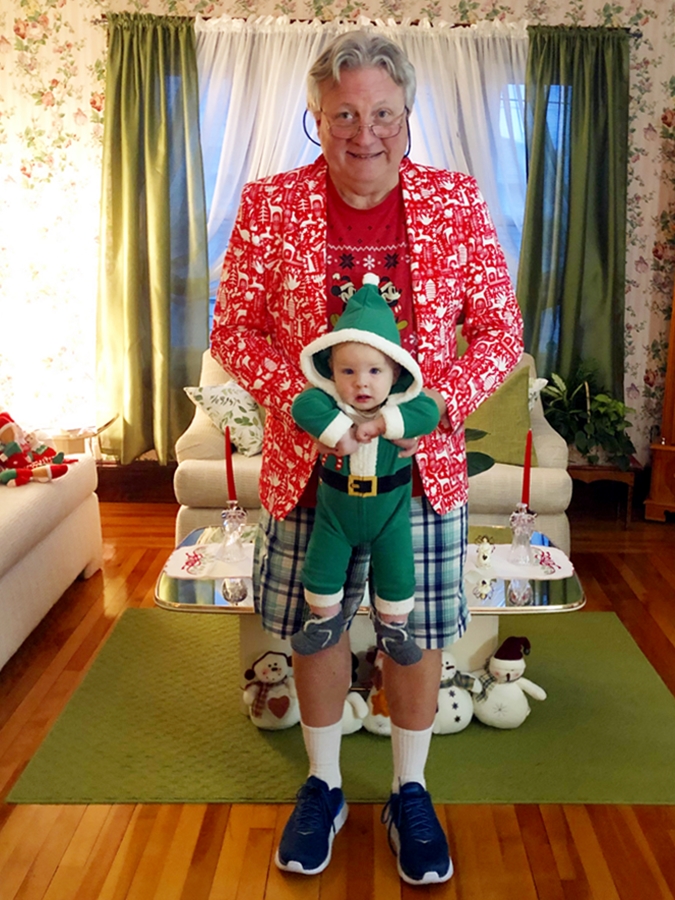
I am very pleased to announce that this month, we will be once again producing a special Christmas-themed edition of the Virtual Poetorium which this year we are dubbing our Second Annual Virtual Ho-Ho-etorium. And like last year, we would like to once again open it up for anyone who would to like participate and invite all my fellow bloggers and faithful readers (or just anyone just happening to read this) to be a part of this special yuletide online poetry gathering in print. Unlike a regular edition of the Virtual Poetorium, there will be no featured poet, but instead, we will have two open mics — one regular and another for Christmas and New Year-themed work. Because of this, we are lifting our usual one piece per person limit and requesting that you send us up to three of your own original poems or stories (ones that have a Holiday or Winter theme are preferred though not required) either in a Word document file or pasted in the body of an email along with your name, any opening remarks you care to make, and where your poem has appeared if it was previously published to poetorium@mail.com by Friday, December 24th. Also if you like, you can send us a photo of yourself (extra brownie points rewarded if you are dressed in a festive holiday costume) to be posted above your poems, but that is totally optional.
Our Second Annual Virtual Ho-Ho-etorium will be posted on the Poetorium website (and on this blog as well) on the last Tuesday of this month which will be December 28th, 2021. However, as always, like a normal Poetorium (but in this case even more because you, our dear friends and readers, are the whole show) for it to be successful, we really need folks to participate. So please, please send us your poems and stories!
We also need contributions to the Ho-Ho-etorium Christmas-themed group poem. If you would like to participate, please send us one to eight lines starting with the phrase “This Christmas… “. All contributions (please let us know if you wish to have your name listed as a contributor or if you wish to remain anonymous) will be compiled into the group poem and included in the Virtual Ho-Ho-etorium. Once again, the deadline for submissions is Christmas Eve, Friday, December 24th.
Although we have jettisoned most of the segments associated with the Poetorium, like last year we will once again be including two special ones we created just for the Ho-Ho-etorium. Since some of my favorite memories of actual past holiday poetry gatherings involved food, those exquisite tasty treats which we would all bring in to share with each other (who could forget Anne Marie’s blonde brownies at the Jingle Mingle or my mom’s chocolate chip cookies at the Poet’s Parlor?), we will once again have a Virtual Poet’s Banquet table. Since this is an imaginary poetry reading in the form of a transcript, I think it would be fitting for all of us to contribute some imaginary food for a virtual poet’s potluck. Just mention what delicious imaginary dish you are bringing. It could be something you might have actually brought, or something totally fanciful (like caviar from the flying carp of the planet Neptune). For extra (blonde) brownie points, include a photo of your delicious dish and/or a recipe so everyone can sample it in their own kitchen.
Also what Christmas gathering would be complete without the tradition of gift-giving? I remember us staging Yankee Gift Swaps at the Poet’s Parlor as well as making everyone salt dough Santa ornaments (I was so much more ambitious and energetic back then). So to add the traditional present-giving element to our imaginary holiday gathering, we are utilizing a variation on the old surrealist game Time Travelers’ Potlatch. In case you are not familiar with it (by the way, a potlatch is a gift-giving competition practiced in certain cultures), the game is played by having each person describe the gift that they would present to various historical, mythical, or fictional figures of their choice on the occasion of meeting them. Our variation will be called the Surreal Secret Santa List in which we all list up to six historical, mythical, or fictional figures and the Xmas presents we would give them if we were their surreal Secret Santas. To help inspire you, here is the list I created for last year’s Ho-Ho-etorium:
Paul Szlosek’s Secret SurrealistSanta List
For Alexander Hamilton, a kevlar vest and frockcoat. For Lois Lane, lead-lined lingerie. For Sherlock Holmes, an Occam’s safety razor and shaving brush set. For Danny Pudi, good coffee and warm socks. For Robert Johnson, a textbook on contract law. For Mankind, a digital doomsday clock with snooze alarm.
Remember you can choose any historical, mythical, or fictional figure you wish, and the gifts can be as practical or wacky as you want. Of course, you don’t have to submit a list if you don’t want to, but it would be so much fun if everyone did.
If you do have any questions about submitting to the two virtual open mics, the group poem, or anything else about the Virtual Ho-Ho-etorium itself, please leave them in the comments of this post, and I will try to answer them right away.
Thank you so very much for reading! I really appreciate everyone’s continued support of this blog, and hope to hear from you soon with your yuletide contributions!
“You say to yourself, Well, this poem isn’t going to be any good, but I’ll write it anyway.”
“My feeling is that poetry is also a healing process, and then when a person tries to write poetry with depth or beauty, he will find himself guided along paths which will heal him, and this is more important, actually, than any of the poetry he writes.”
“Poetry keeps longing alive.”
“One day while studying a Yeats poem I decided to write poetry the rest of my life. I recognized that a single short poem has room for history, music, psychology, religious thought, mood, occult speculation, character, and events of one’s own life.”
“The language you use for your poems should be the language you use with your friends.”
“A poem in fact may be a sort of nourishing liquid, such as one uses to keep an amoeba alive. If prepared right, a poem can keep an image or a thought or insights on history or the psyche alive for years, as well as our desires and airy impulses.”
“Those of us who make up poems have agreed not to say what the pain is.”
“Reclaiming the sacred in our lives naturally brings us close once more to the wellsprings of poetry.”
“When anyone seriously pursues an art – painting, poetry, sculpture, composing – over twenty or thirty years, the sustained discipline carries the artist down to the countryside of grief, and that descent, resisted so long proves invigorating. . . . As I’ve gotten older, I find I am able to be nourished more by sorrow and to distinguish it from depression.”
“The best poems take long journeys. I like poetry best that journeys–while remaining in the human scale–to the other world, which may be a place as easily overlooked as a bee’s wing”









 Paul's Poetry Playground