At Long Last, a Second Batch of Paul’s Poetry Playground Photo Poetry Prompts…

Dear Readers,

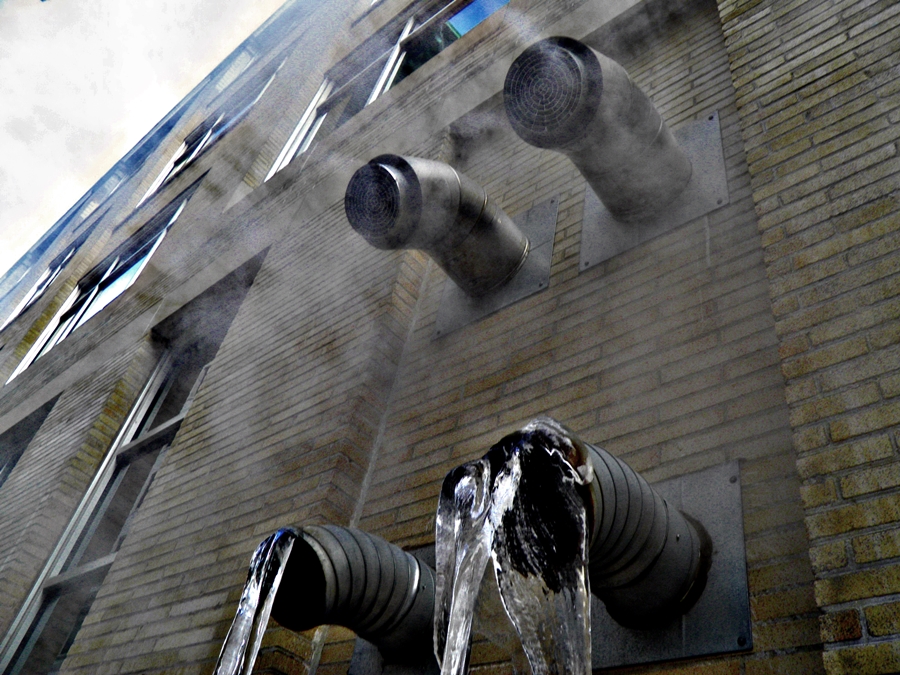
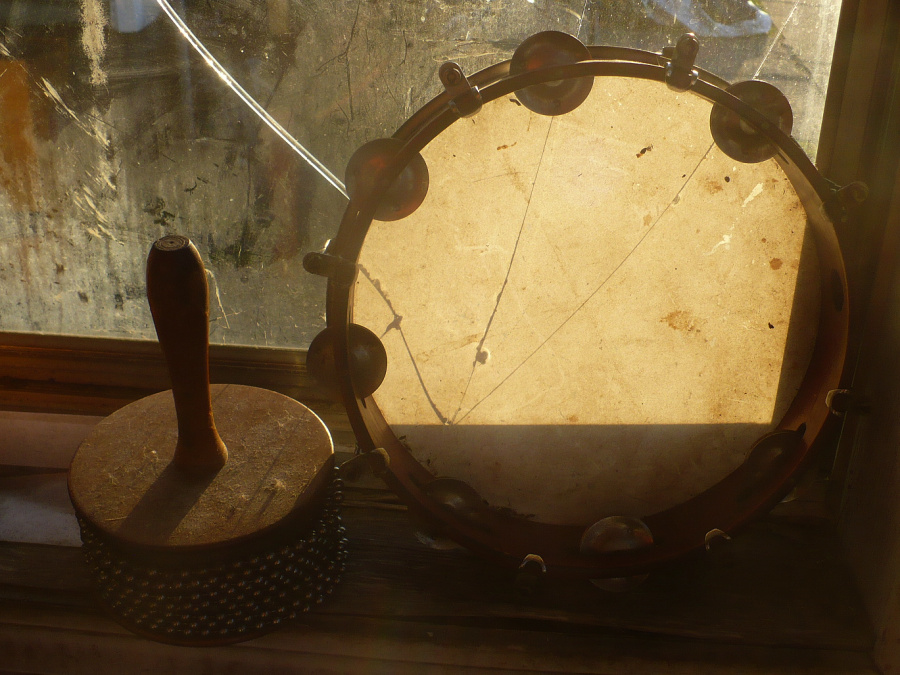
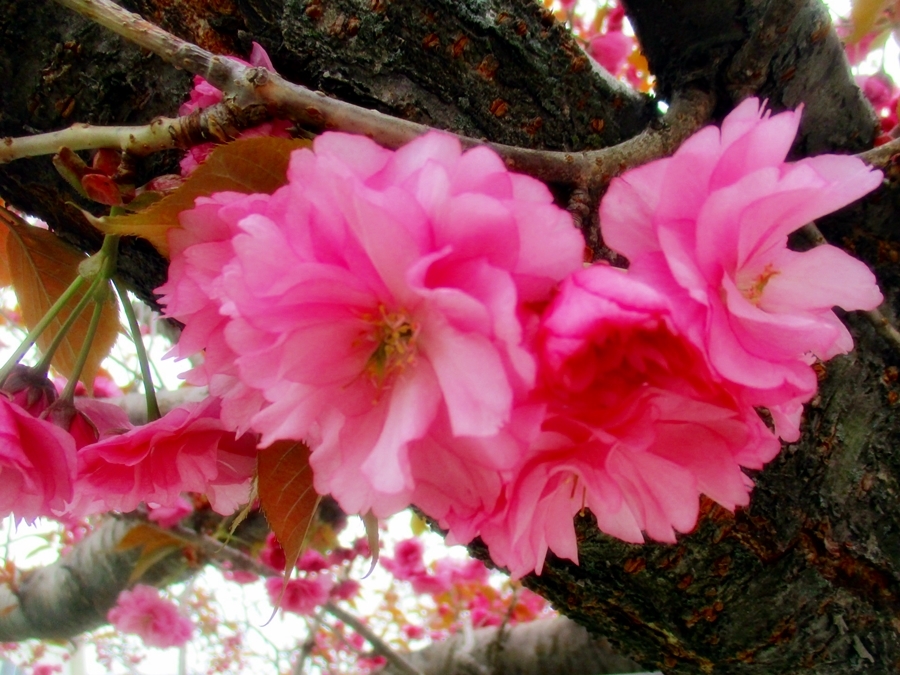
Please forgive me! In November of last year, I posted on this blog what I announced would be the first in a planned series of monthly photo prompts to help inspire you to write new poetry, flash fiction, or whatever you like to write. Now we are in the second week of March 2025, and I suddenly realize that I have yet to post another one. So after an inexcusibly long time, here is a second batch of six photos (all of them come from my color photography blog “Paul’s Wonderful World of Color” @ https://thewonderfulworldofcolor77109243.wordpress.com which I hope you will check out). Hopefully at least one of these photos might inspire you to start writing some brand-new work based upon it. What you decide to do with the finished piece, of course, is totally up to you although we’d love for you to share it with us on your own blogs. If you do decide to post it online or submit it to be published in a literary journal, you have my permission to include the photo as well as long as you agree to give me credit as the photographer:

Photo by Paul Szlosek

Good luck, my friends! Hope these photos will help trigger your own poetic and literary muses, and you will be blessed with a bounty of new writing ( I also promise to try my best to get the next batch of pics up on this blog on time). Thank you so much for reading! Please take care, and keep writing, and living the literary life!

10 Great Quotes About Poets, Poetry, and Writing by E.E. Cummings

Photo by Paul Szlosek

“Well, write poetry, for God’s sake, it’s the only thing that matters.”

“Why should I be able to be a capital “I”? I’m just a cynical old poet, no one cares for what I have to say in society, they just enjoy my work.”

“It is with roses and locomotives (not to mention acrobats Spring electricity Coney Island the 4th of July the eyes of mice and Niagra Falls) that “my poems” are competing. They are also competing with each other, with elephants, and with El Greco.”

“A poet is somebody who feels, and who expresses his feelings through words.”

“My advice to all young people who wish to become poets is: do something easy, like learning how to blow up the world — unless you’re not only willing, but glad, to feel and work and fight till you die.”

“Poetry is feeling — not knowing or believing or thinking.”

“At least my theory of technique [for writing poetry], if I have one, is very far from original; nor is it complicated. I can express it in fifteen words, by quoting The Eternal Question And Immortal Answer of burlesk, viz. ‘Would you hit a woman with a child? — No, I’d hit her with a brick.’ Like the burlesk comedian, I am abnormally fond of that precision which creates movement.”

“When I write I try to be as original as possible, in order to distinguish myself from all the other writers who make their fortunes off of simple rhymes.”

“If a poet is anybody, he is somebody to whom things made matter very little – somebody who is obsessed by Making. Like all obsessions, the Making obsession has disadvantages; for instance, my only interest in making money would be to make it. Fortunately, however, I should prefer to make almost anything else including locomotives and roses.”

“Ineluctable preoccupation with The Verb gives a poet one priceless advantage: whereas nonmakers must content themselves with the merely undeniable fact that two times two is four, he rejoices in a purely irresistible truth (to be found, in abbreviated costume, upon the title page of the present volume [Is Five]).”

—E. E. Cummings

Another 10 More Great Quotes About Poets, Poetry, and Writing by Ada Limón

Photo by Paul Szlosek

“Poetry does millions of things, but if there’s one thing it does is that it helps you feel things. Poetry reminds us that we’re full human beings with thoughts and feelings … and that might be enough.” 

“Really great poems can surprise us and move us in unexpected ways. A great poem often has the perfect combination of music, story and emotional content. So it’s matching all three of those things all at once, and they come together in a harmonious way that feels sort of indescribable. You can’t figure out what it is that you love about it, but somehow you’re moved to tears or you’re moved to laugh or you’re suddenly, like, “Oh, I feel more in my body,” or, “I feel more connected to the world.” There’s some sort of indescribable moment or experience that the reader goes through, and it’s usually because those three things are working together, and in ways that are surprising. I feel like the best poems can really change a whole day. And sometimes they can change your whole life.” 

“I used to think I wrote poems in order to help readers recommit to the world. I wanted to believe I was using my intense attention to nature, to beauty, to language in order to offer proof that we should keep surviving. But through the years, I’ve realized the person I am writing for the most is myself. I am the one who needs to be reminded that this life holds all sorts of goodness even when it is often shoved to the edges by the enormity of ugliness or fear. The poems I write, the ones that offer shreds of hope or gratitude, are written because I need that hope or gratitude desperately in that moment—I need it the way plants need light.” 

“All writing to me, the act of writing, feels like a way of connecting.” 

“I wish poems came out fully formed. Sometimes I think they do come out more done than I expect. Usually, that’s because it’s something that’s been moving in my body for a long time before I put it down on the page; either if it’s the language, the music, or the image, so that by the time it comes out, and I’m actually writing, it’s somewhat complete. Those are the days where you have to go play the lottery or something because it’s so rare. But it does happen.” 

Poetry doesn’t have answers, it just has questions — they have endless possibilities. That’s what I love…poetry carries complexity, mystery, and clarity all at once.” 

“There has been a push over the last 10 years to make poetry accessible. It’s not always in the classroom. Sometimes it’s on the subway. Sometimes it’s on social media—Twitter, Instagram. That kind of access has ignited a passion, not only to read poetry, but to write it.” 

“I think as a younger poet, there was always this focus on what was right in front of me, you know, it was always about that next good bright thing, the reading and this and that. And I think now it’s really about what is it to live as long as possible, to survive in this world, that is very hard. And I’m going to experience losses, right, as they come.”  

“If you love poetry and making poems, you’ll find a way to make them no matter what. They’ll be knocking on your chest to get out, and when you’re ready, when you’ve cried enough, and slept enough, you’ll open your mouth and those poems will come flying out.” 

“I work at it [writing poetry], I edit for months, years sometimes, I throw away hundreds of drafts poems that just don’t seem to want to come to life yet, but at the core of me, making poems, writing poems is not hard. Writing poems is the good part, it’s the gift, it’s the part that doesn’t require tenacity. Poems come when I am not gritting my teeth; they come when I make myself available. So if there was one thing I could offer about how to keep going is to follow your joys when you can, follow the bright edges, let yourself be drawn to what you love and then make poems from that place. What we pay attention to is how we show our love. If it feels too hard to write, don’t write for awhile, take time off, take a nap, call a friend, work at something else, weep. Poems will come. Time will pass.”

—Ada Limón

10 Great Quotes Abouts Poets, Poetry, & Writing by Ann Darr

Photo by Paul Szlosek

“The poems I write and read help me to handle the feelings that would otherwise shred me.”

‘Poetry may not have saved my life, but I can’t imagine a life without it.”

“If I don’t write every day, it’s as if my blood stagnates, scum collects on the pond of my mind.”

“I stumbled on Prufock at the age of nine, and the world opened for me.”

“Poetry is what I do, by necessity, by luck, by desire.”

“It [poetry] is a gift I could not have imagined, if I’d been in the creator’s seat, a gift most dreadful, most magnificent.” 

“If poems aren’t the most wonderful way to communicate, I don’t know what is…”

“[Poetry] helps us understand what happens in our lives.”

“There are those poems that one reads and you say “Oh, yes, that is the way it is” and you think too “I wish I said that. Well, it has been said for me.”

“The poet has to be aware, has to be looking all time, feeling all the time, and registering in some way that can be then translated into the language we all use because that is how we communicate with each other.”

—Ann Darr

Introducing a New Monthly Series of Paul’s Poetry Playground Photo Poetry Prompts…

Dear Readers, 

I am pleased to announce that today’s post is the first in a planned series of monthly photo prompts to help inspire you to write new poetry, flash fiction, or whatever you like to write. All the photos will come from my color photography blog “Paul’s Wonderful World of Color” @ https://thewonderfulworldofcolor77109243.wordpress.com which I hope you will check out (If you do, as an extra bonus, you may also find that each blog post’s title such as “A Study in Brown” or “Monkey Behind the Door” may provide additional inspiration for your writing. Also while visiting the site, if there is any way that you can like a post or subscribe to follow my blog, I would truly be grateful to you).

Hopefully at least one of these photos will inspire you to start writing some brand-new work based upon it. What you decide to do with the finished piece, of course, is totally up to you although we’d love for you to share it with us on your own blogs,. If you do decide to post it online or submit it to be published in a literary journal, you have my permission to include the photo as well as long as you agree to give me credit as the photographer.

And now here are your six photographic poetry prompts for this month:

Photo by Paul Szlosek

Good luck, my friends! Hope these photos will help trigger your own poetic and literary muses, and you will be blessed with a bounty of new writing.

Thank you so much for reading! Please take care, and keep writing, and living the literary life!

Invented Poetry Forms – The Blitz Poem

Photo by Paul Szlosek

My dear readers, believe it or not, I have not written a post on an invented poetry form since June 2022, so to make up for that omission, I have decided today we will be discussing the Blitz poem. The blitz poem is a 50-line stream-of-consciousness poetry form invented by Robert Keim consisting of short phrases and images and emphasizing repetition and rapid flow.

If you would like to try your hand at writing one, I would highly recommend first numbering the page from 1 to 50 to help keep track of the different lines. You begin by writing a short phrase for line number one such as “Keep on smiling” (it probably works best if the phrase is a well-known cliche or popular saying).. Then for the second line, you write a short phrase beginning with the same word as the first such as “Keep on keeping on”.The first 48 lines should be short but contain at least two words.

You then write the third and fourth lines starting with the last word of the second line (for example in this case “On a roll”), .Then both the fifth and sixth lines begin with the last word of the fourth, and so and so on, continuing with each subsequent pair of lines starting with the last word of the line above them thus establishing the poem’s pattern of repetition. You keep doing this for the first 48 lines. Then in the 49th line, you repeat the last word in the 48th and finally conclude the poem with the last word of the 47th as the 50th line.

Another one of the rules for the blitz poem is that the title of your poem should be only three words, with a preposition or conjunction joining the first word from the third line with the first word from the 47th. Also, do not use any punctuation in your blitz poem. When reading your blitz out loud, be sure to read very quickly, only pausing to breathe.

As I have done with all my previous posts on poetry forms, here is a blitz poem I’ve written to help serve both as an example and an inspiration for yours:

Bullet of Office

Stray dog
Stray bullet
Bullet-ridden
Bullet-proof
Proof of purchase
Proof of life
Life sentence
Life insurance
Insurance policy
Insurance fraud
Fraud squad
Fraud scheme
Scheme and plot
Scheme and dream
Dream a little dream
Dream big
Big deal
Big shot
Shot of courage
Shot heard around the world
World hunger
World record
Record player
Record store
Store receipt
Store brand
Brand X
Brand new
New year
New kid
Kid gloves
Kid you not
Not me
Not you
You rule
You suck
Suck on this
Suck on that
That girl
That thing that you do
Do the right thing
Do it until the cows come home
Home advantage
Home run
Run away
Run for office
Office politics
Office party
Party
Politics

—Paul Szlosek

So what do you think of the blitz poem, my dear readers? I sincerely wish you will try writing one for yourself, and if you do, I think you will find it fairly easy and very fun to write once you master all the form’s seemingly complicated rules (it is probably even more fun to read out loud). And if you write one, please don’t hesitate to share. I hope you enjoyed this post, and thank you so much for reading!

10 More Great Quotes About Poets, Poetry, and Writing by Ada Limón

Photo by Paul Szlosek

“Poetry isn’t a place of answers and easy solutions. It’s a place where we can admit to an unknowing, own our private despair, and still, sometimes, practice beauty.”

“When I began as a poet, I thought it was all about knowing. I thought it was about truth, and beauty. And every poem I read, felt wise to me. I could read Anne Sexton, Philip Levine, Lucille Clifton and I would find this deep wisdom. So I thought that’s what I should work towards, a knowingness. And then, the old cliché – and it is a cliché because it’s true – that the more you learn, the more you witness, the more you realize you don’t know. And I think I’m very scared now of certainty. Even when someone says, what’s your opinion about this? Often, I’m like, I don’t know. I don’t 100% know. And that’s because the world is changing so fast. And I can have a sense of morality, of course, and right and wrong, and goodness, but beyond that, I hope I can remain porous and open enough to not think that I know all the answers. And I think a lot of harm comes from that false certainty, that is so attached to our egos, when not only are we completely convinced that we’re right, but to be proven wrong would be almost deadly. And I don’t ever want to be in that position.”

“It’s very easy for me to expound on the power of poetry. But I’m not naïve enough to think that it can fix the climate crisis. Or that it can save all of our souls. But I do believe that it does have the power to reconnect us with ourselves, and I think it has the power to reconnect ourselves with the earth. I think it’s also important for us to recognize that in its power to just be—it’s just a poem, one poem at a time, as we say—it can actually move around the world in a way that it’s not asking too much.”

“I think any writer worth their salt is always trying to get better, trying to push out of their own comfort zones. I know that we are told we write the same poems over and over, but I am always trying to make those poems exciting for me as the writer.”

“Part of what makes poetry an art form that’s growing is that the currency of poetry is the single poem. You can send one poem, share one poem on a social media platform and people will immediately interact with those words. It’s a powerful experience and something that’s more difficult to do with long-form writing.”

“I tend not to think about readership. Instead, I think about a reader, the person I am trying to communicate with, but I don’t have the idea that a lot of people are ever going to read anything.”

“I always want to make work that matters, even if it’s just to myself. I didn’t know how to really process what I was going through in my own personal life without just writing about it. Writing is how I make sense of the world, so it would be hard not to write the poems.”

“I’ll sometimes go months without writing, which is not something I used to do. I used to write every day. I still take a lot of notes, but I think I allow myself more time to be receptive to the world, as opposed to always worrying about saying something.”

“I always think poets actually tend to switch over genres better than other kinds of writers. We start out so little. Right? We start with a sound and a syllable. So, that attention to language is there, which I think is the hardest part to teach. The musicality of language. But musicality of language can only take you so far. Turns out there’s other things, too. Like plot.”

“You must love to write poems and read poems because if you’re a poet, you’re going to have to have another job. And that job, whatever it is, is going to be your main job. And it’s going to be the thing that puts food on the table and pays your rent and makes sure you have healthcare occasionally. You know? Hopefully you’ll be writing all along, and doing things and creating. And that is going to bring joy into every part of your life. If it’s just about what you can get published, then I think that’s when it kind of falls apart.”

—Ada Limón

The Latest Edition of the International Imaginarium For Word & Verse (July 29th, 2024)…

Dear Readers,

Believe it ot not, this blog, Paul’s Poetry Playground, is not the only poetry-related project that I have seriously neglected for an inexcusably long time.. Readers may remember The International Imaginarium for Word & Verse, a rather unique online poetry journal which takes the form of a transcript of an imaginary poetry reading which I’ve posted links to past edition here on this blog.. Well, after more than a whole year in the making (I started putting it together last September with an announced publication date this May which I later postponed to June),  here is finally the link to the latest edition featuring the incredibly talented poet Katherine Gregoire, which was eventually posted at the very end of this July on our Imaginarium website for you to hopefully peruse and enjoy at your leisure:.

I want to thank my fellow blogger Diane Puterbaugh, along with all the other amazing poets who participated in our Imaginarium virtual open mic.  Like previous times, I have decided not to repost the entire Imaginarium here on this blog because I feel that it is probably too long a read and thus far too overwhelming for most of my readers (as a result, some really excellent poetry might be skipped, and that would be a real shame). So instead, I will just post this month’s Imaginarium group poem (which is probably one of my favorite segments of the Imaginarium). This month’s Imaginarium Group poem was based on the surrealist game of Prophecies (also known as Conditionals). Participants were asked to write and send us four lines including one each of the following:

1. A short phrase in the present tense starting with the word “When” such as “When the oceans begin to boil,”.

2. A short phrase in the present tense starting with the word “If” such as “If your right elbow itches,” .

3. A short statement in the future tense using either the word “will” or “shall” such as “The President will sprout horns.” or “Hamsters shall rule the world.” .

4. A command written in the imperative such as “Lock the doors and hide beneath your bed”.

People‘s lines from 1 & 2 were then randomly paired with someone else’s lines from 3 & 4 to form brand new lines for our poem. Six folks (including myself) contributed with the results being the following poem:

Weird Prophecies and Strange Advice From the Imaginarium

When you find yourself alone in a dark alley,
reconsider your options.

When it rains Swedish Fish,
new insights will evaporate old science.

When the Aurochs mate in the shade of ginkgo trees,
that nor’easter from last January will circle back
declaring I am a mandala made of wind.

When the sea shells end their ceaseless rhetoric,
heave your answers against the echoing hills.

When water molecules can fracture and fly off into clouds,
you will read me a book about time.

When salmon swim upstream carrying salmonella,
then all that was lost will be lost again.

If the angle of descent is too steep,
wear a red shirt to camouflage the blood.

If photons of light strike with perfect angle,
look at the pages of a beloved book and rejoice!

If the crabs and oysters line up in alphabetical order,
the Florida peninsula will break off and sink to the bottom of the sea.

If children’s books become real,
report any abnormalities to your physician.

If the clouds spill their blood,
you will be disappointed.

If you want to live to see another day,
rethink those suspect equations and maybe SAVE us…

—The July 2024 International Imaginarium Group Poem

I want to thank Ariel Potter, Diane Puterbaugh, Brian Mosher, Howard Kogan, and Karen Durlach for contributing and making the preceding poem possible.
10 Great Quotes About Poets, Poetry, and Writing by Ada Limón

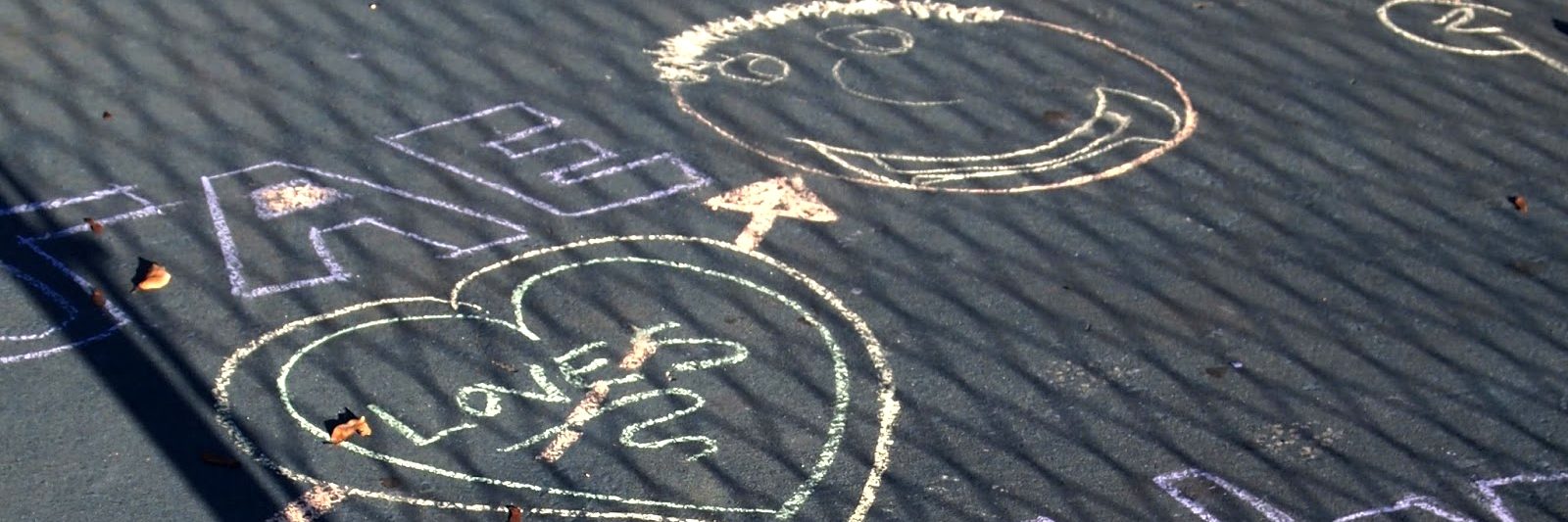
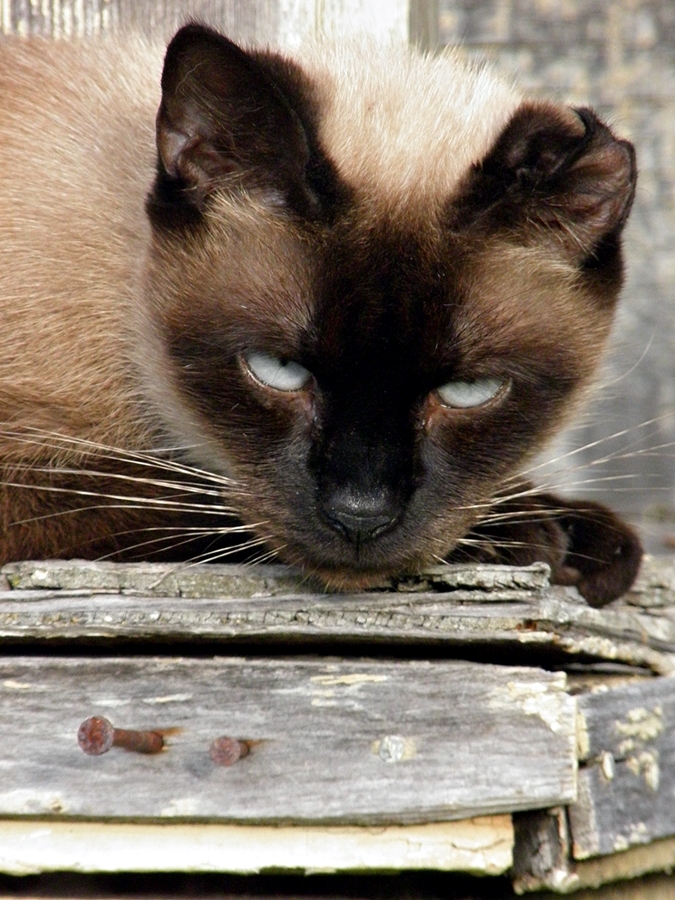
Digital Image by Paul Szlosek

“Poetry is a place where both grief and grace can live, where rage can be explored and examined, not simply exploited.”

“One question that I often get asked is how to overcome writer’s block. And the funny thing is, I overcome it, by not overcoming it. I think it’s okay to not write. I think it’s okay not to talk, not to make, not to create, not to produce, produce, produce. How can we listen to the world if we are always talking to the world?”

“I love poetry for numerous reasons, but one very essential reason is that poetry is the only creative writing art form that builds breath into it. It makes you breathe. It not only allows for silence, it demands it. We enter the poem with our own breath. For me, it’s also very simply about the units, the building blocks, of poems. The units of poetry begin with just the syllable, and then the phrase, then the line, then the stanza. It’s as much about the ear as it is the eye and it’s as much about the images and narrative as it is about pacing and rhythm. No other art form quite has that same mix of chaos and control. I love writing essays and I even write fiction from time to time, but the musicality of poetry, the breath and mystery and exactness of poetry, always wins.”

“I think poetry is a way of carrying grief, but it’s also a way of putting it somewhere so I don’t always have to heave it onto my back or in my body. The more I put grief in a poem, the more I am able to move freely through the world because I have named it, spoken it, and thrown it out into the sky.”

“It’s as important to infuse my poetry with joy as it is to infuse my life with joy. They are the same thing. My life. My poems. I lose joy sometimes. It makes me feel hopeless and it’s not a livable space. I need to point out the things that are good, that are worth living for, that make me laugh, the dog sleeping on my face in the morning, the smell of garlic and onions on the stove, the friend’s text that makes you laugh, the robin poking his head into the sprinkler, food and shelter, safety.”

“Some of my all-time favorite experiences of my life are staying up too late and talking about poetry with other poets or other poetry lovers. It’s like a drug. One person mentions a line of poem and then we have to look up another poem that goes along with it and soon we’re talking about books and meetings with older poets we admire and it’s addictive. I am grateful all the time for the community of writers that I call friends. I get to read their new poems and they do the honor of reading mine. I love it when a friends sends me a poem. I stop everything and read it immediately. I think poetry is something that really can only take place in the silence and isolation of the self, but we need to be reminded we aren’t alone. We need to have that friend that helps us to keep going.”

“Poetry is so vital and flourishing right now. People are getting turned on by poetry every day. I can feel it and I can see it first-hand. I think there’s an essential need for stories that aren’t easy or simple or solved. There’s a need for an art form that allows someone to stand inside of it, that lets people lean in and see into a person’s life without having to commodify suffering or personal pain for someone else’s pleasure. I love memoirs and novels, but we often want something big to happen in those forms, at least the market does. We desire a great trauma and then a recovery, a massive fight and then a solution, but poetry, poetry doesn’t do that. Thankfully. What it does is live in the liminal spaces. It’s not interested in showing off wounds for coins, it’s interested in living, day to day, breathing moment by moment and staring out into the sea and noticing the small thing and saying the real thing and because of that, I believe it’s the most human type of art form. It is messy and complex and real and doesn’t have any answers for us, for that reason, I think it’s something we can trust.”

“I think of poetry as the compression of language. A pressure cooker. Something distilled. And so whether or not the poem is lineated, what I am most interested in is the way the language is holding its truth. Have you ever been in a room with a couple you don’t know very well, but suddenly, by witnessing only one interaction you are able to discern so much about their entire relationship? That’s poetry to me, the moments in life where everything is revealed. A poem doesn’t have to have line breaks to do the work of revealing; what it does have to do is expose life in a new way, unearth a larger thing through one small moment. A reader only needs to know that the biggest difference between a lineated poem and a prose poem is pacing. The prose poem moves faster. It doesn’t have the line breaks to slow it down so it’s supposed to read like you’d read any piece of prose. The speed allows for a sort of surreality to take place, for the pressure cooker to get turned up.”

“Most poets I know, at one point or another, get asked the question, “What are your poems about?” And the truth is… all of the subjects are the same. We are all writing about the same things: grief, death, love, sex, desire, dreams, being alive, loneliness, nature, gratitude, pain, mortality, mortality, mortality, and so forth. How do we have answers to those big ticket topics? We don’t. We can only return to them again and again and dig our finger in the wound again. It seems after we surrender to that, there’s a way in which the poems are saying: I am here, I am here. That’s their great gift: we are simply shouting or whispering that we exist, and in doing so someone else might open a book or read a singular poem and think, “Oh wow, I exist too.” Sometimes that is all it is, and sometimes that is exactly enough.”

“One of the biggest things about poetry is that it holds all of humanity. It holds the huge and enormous and tumbling sphere of human emotions.”

Ada Limón

Paul’s Poetry Playground Is Finally Reopened For Play…

The last eighteen months have been very eventful for me, with my life being a whirlwind of things happening, both bad (multiple bouts of illness and a family crisis that unexpectedly took half a year to resolve) and good (dozens of publications in poetry journals and anthologies, featured readings across Massachusetts, and even a few fairly prestigious awards including the Stanley Kunitz Medal in 2023 and the Frank O’Hara Poetry Prize this year). Being so active in my local poetry community which I love so much (I’ve been either hosting or attending an average of three local poetry events a week when not sick) has been really wonderful, but unfortunately, it also has taken up so much of my time that I have neglected this incredible online community of fellow poets, writers, and bloggers which I value just as much. I must apologize to you all for shamefully not posting on Paul’s Poetry Playground since last September, and express how grateful I am to all of you who are amazingly still regularly viewing and leaving likes for this blog. Although things haven’t seemed to have calmed down all that much for me, I am happy to announce that Paul’s Poetry Playground is finally being re-opened for play and I intend to write a post at least once a week, if not more. Thank you so much, dear readers, for your continuous interest and support, and I pledge to try not to let you down again. See you soon!